
How Retail Banks Cut Customer Acquisition Cost With AI Agents
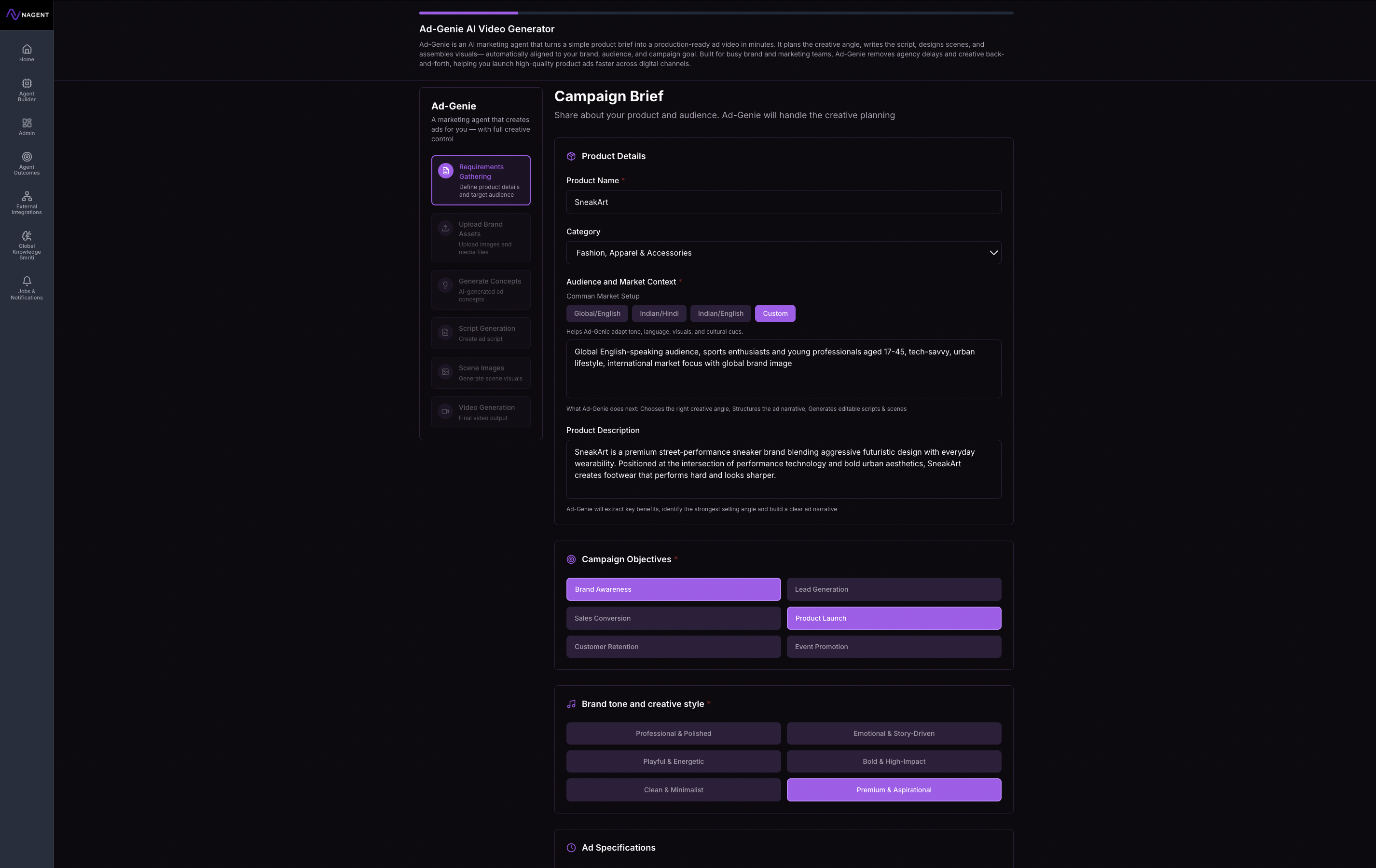
How Retail Banks Cut Customer Acquisition Cost With AI Agents
Retail banks that use AI agents across campaign targeting, creative rotation and bidding can lower their cost per acquired account without adding headcount. The reason is structural: traditional digital acquisition runs on static audience segments and weekly optimisation cycles. AI agents run on continuous signal processing. Every impression teaches the system something, and every conversion sharpens the next decision.
That gap compounds fast.
Why Is Customer Acquisition So Expensive in Retail Banking?
The core problem is latency, not budget.
Most retail bank acquisition teams operate on a weekly or bi-weekly optimization cycle. A campaign manager reviews last week's performance, adjusts targeting, refreshes creative, updates bids, and waits another week to see results. By the time the signal reaches the decision, the market has moved.
Meanwhile, fintech challengers and digital-first banks run continuous feedback loops. Their systems adjust in hours, not weeks.
The result: traditional banks spend more to acquire the same customer, and for premium products like wealth management accounts or mortgages the gap widens.
Static campaigns don't fail because the budget is wrong. They fail because the optimization cycle is too slow.
What Does "Agentic AI" Actually Mean for a Bank's Growth Team?
Agentic AI means the system acts, not just advises.
A conventional AI tool might surface an insight: "Your 28 to 34 age segment is converting at 2× the rate of your 45 to 55 segment." A human then decides whether to shift budget. That decision might happen in three days. Or three weeks.
An AI agent closes that loop automatically. It detects the signal, reallocates budget, generates a new creative variant for the 28 to 34 segment, updates the bidding floor, and logs the outcome, all within the same campaign window.
On Nagent, the loop is closed with a person in it. NIA, the AI performance marketing teammate for Google Ads, proposes the change with its reasoning, a person approves it, and the outcome (booked, dropped or converted) is recorded. AI teammates earn more autonomy level by level as that record shows they are right.
No ticket. No sprint. No three-week wait for a decision.
How Do AI Agents Actually Reduce Customer Acquisition Cost in Banking?
AI agents reduce CAC by compressing the time between signal and action across three campaign layers simultaneously.
Here is where the gains come from:
1. Audience signal processing
Broad targeting is expensive because you pay for impressions that will never convert. AI agents process behavioral signals, page dwell time, product comparison activity, search intent, device patterns, and continuously narrow the audience to highest-probability converters.
A static campaign might target "25 to 45, urban, income bracket A." An agent-managed campaign targets "users who compared savings account rates in the last 72 hours, on mobile, between 7 to 9 PM, in metro markets." The difference in conversion rate, and therefore CAC, is not marginal.
2. Creative variant rotation
Most bank campaigns run 3 to 5 creative variants per quarter. That is not a testing strategy. That is a guess.
On Nagent, HOOK (Beta) turns one brief into angles, hooks and scripts and checks every claim against your proof, and Alpha plans video ads to a preset and quotes them before anything renders. More variants reach review sooner, and a person approves what runs. HOOK never changes live ads.
That speed compounds. A team running 100 creative variations per month learns faster than a team running 6.
3. Bidding logic
Programmatic bidding is only as smart as the signals feeding it. When audience data and creative performance data update in real time, the bidding logic can be precise. Agents adjust floor prices, dayparting, and placement mix based on live conversion probability, not last week's averages.
The combined effect across all three layers is less wasted spend. Measure it against a baseline you set before you start.
What Role Does Memory Play in Continuous Campaign Optimization?
Memory is what separates a smart campaign from a learning system.
Most AI tools are stateless. Every campaign starts from zero. The system has no memory of what worked for the mortgage product six months ago, which audience segment burned out after week three, or which creative angle drove the highest-quality accounts, not just the most accounts.
On Nagent, the shared record solves this. Prior campaign outcomes, audience fatigue and conversion quality sit in the team room, the ad account history and the Knowledge Hub, so a savings account push in Q3 starts from what happened in Q1, not from zero.
This matters for banks specifically because account quality is not uniform. A high-volume campaign that acquires low-balance, high-churn accounts is not a win. With downstream outcome data from prior cohorts on record, the team can optimise for account lifetime value, not just acquisition volume.
"The amnesia tax of stateless AI tools is real. Every campaign restart costs you the institutional knowledge your last campaign bought."
How Do Multiple AI Teammates Change the Acquisition Workflow?
A single agent optimises one layer. A chief of staff connects all of them.
A real acquisition workflow involves at least five distinct functions: audience research, creative production, copy variation, media buying, and performance reporting. In most banks, these are separate teams with separate tools and separate weekly meetings to sync.
On Nagent, a growth lead briefs MIRA, the AI chief of staff for Marketing, in plain English: "Acquire 5,000 new savings account holders in metro markets this quarter at under $180 CAC." MIRA plans the work and hands each piece to the teammate who owns it: NIA builds Google Ads campaigns from the brief, paused for approval, and proposes changes to live ones, while HOOK and Alpha handle paid social creative. Every change waits for a person.
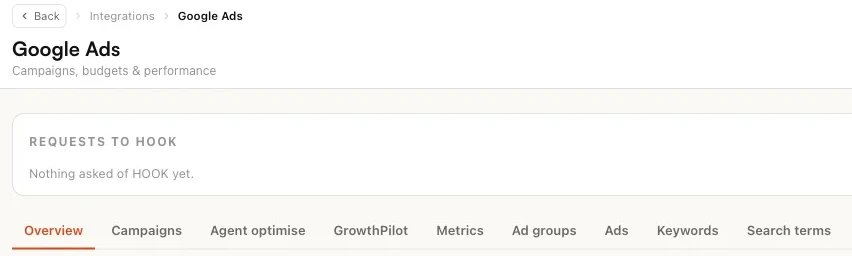
NIA's Google Ads surface, with campaigns, ad groups, keywords and search terms.
The output is not a recommendation deck. It is a running campaign, with a person approving each change that goes live.
For performance marketing managers at retail banks, this changes the job. Less time in spreadsheets reconciling last week's data. More time on strategy, product positioning, and offer design, the decisions that actually require human judgment.
What Does Implementation Look Like for a Digital-First Bank?
Deployment is faster than most growth teams expect.
The standard objection from bank technology teams is integration complexity. Core banking systems, compliance review cycles and brand approval workflows are real constraints. On Nagent they are part of the plan: every action is proposed, approved, run and audited, so brand and compliance reviewers approve what goes live. Where the plan includes it, a Nagent forward deployed marketer joins the team and owns the number with you.
A typical deployment sequence:
Week 1 to 2: Audit current campaign architecture, identify the three highest-spend acquisition channels, map the signal-to-action latency in each.
Week 3 to 4: Deploy agents for audience segmentation and creative variation on the highest-spend channel. Establish baseline CAC.
Week 5 to 8: Introduce bidding changes, proposed and approved, and connect the outcome record to downstream account quality data.
Week 9 to 12: Expand to all active acquisition channels, with MIRA running the plan across the full workflow.
Measure each phase against the baseline you set in week four, and expand only where the record shows the change worked.
For banks on regulated infrastructure, Nagent's Enterprise plan runs in the bank's own private VPC, with your own model and key, so customer data stays in the institution's environment.
Is Agentic Acquisition Only for Large Banks?
No, and mid-market digital banks often see faster results.
Large banks have scale advantages in media buying but face slower internal approval cycles. A regional bank or digital-first challenger with 50 to 500k accounts can deploy an agentic acquisition system faster, iterate faster, and see CAC reduction faster, because the governance overhead is lower and the feedback loops are tighter.
The structural shift happening in digital discovery reinforces this [^1]. As AI-synthesized responses replace traditional search result pages, the acquisition channels themselves are changing. Banks that build agentic acquisition infrastructure now will have a compounding advantage as the channel mix evolves.
The banks building this capability in 2025 will not be playing catch-up in 2027.
Related Reading
Frequently Asked Questions
How much can AI agents reduce customer acquisition cost in retail banking?
It depends on your channel mix, current optimisation cycle and baseline. The gains come from compressing the signal-to-action latency that makes static campaign management expensive, not from increasing budget, so set a baseline CAC before you start and measure each change against it.
What is the difference between AI-assisted campaign management and agentic AI?
AI-assisted tools surface insights for a human to act on. Agentic AI acts directly, adjusting bids, rotating creatives, reallocating budget, within the same campaign window the signal appears. The difference is speed, and in acquisition marketing, speed is the compounding variable.
Do AI agents work within banking compliance and data governance constraints?
Yes. On Nagent's Enterprise plan, AI teammates run inside the bank's own private VPC, so customer data stays in the institution's environment. Nagent is ISO/IEC 27001:2022 certified; SOC 2 Type II programme underway; tenant isolation, RBAC, append-only audit and private VPC available today. Every change waits for a person's approval, so existing brand and compliance review stays in the loop.
How long does it take to deploy an agentic acquisition system at a retail bank?
A phased deployment, one channel at a time, is usually the fastest path: audit first, then targeting and creative on the highest-spend channel, then bidding, then the rest. Connecting core banking data depends on your stack, so scope it early.
Can smaller digital-first banks use agentic AI for customer acquisition?
Yes, and they often see faster results than large institutions. Lower governance overhead means faster iteration cycles. Regional and digital-first banks with 50k-500k accounts are well-positioned to deploy agentic acquisition infrastructure and compound the advantage before larger competitors move.
What's Next
If your acquisition team still runs on weekly optimisation cycles, you are leaving gains on the table. Book a demo to see how MIRA, NIA and HOOK would map to your current campaign architecture, with a person approving every change.
Sources
AI ranking optimisation _(pdf)_
The Agentic FMCG Playbook _(pdf)_