
Banking Lead Nurture Automation Without a CRM Team

Banking Lead Nurture Automation Without a CRM Team
Mid-sized banks don't lose deals because their products are wrong. They lose them because follow-up stops. A prospect downloads a business loan guide, gets one email, then silence, because the two-person CRM team is already underwater. Banking lead nurture automation fixes this without adding headcount: agentic AI monitors trigger signals, sequences content across channels, and switches tactics when a contact goes cold, all without a Marketing Operations team running the workflow.
Why do mid-market banks struggle with lead nurture in the first place?

Most regional banks run nurture on willpower, not infrastructure.
The average mid-sized bank has fewer than three dedicated CRM or MOps staff. They manage campaigns, data hygiene, segmentation, reporting, and follow-up simultaneously. Multi-touch nurture sequences, the kind that convert a cold SME prospect into a booked appointment, require consistent trigger logic, content mapping, and channel decisions. That's a full-time job for a team of five at a software company. Banks rarely have that.
So what happens? Sequences get built, then abandoned. Triggers fire once. No one notices when a prospect re-engages six weeks later.
The result: qualified leads decay in the CRM while the team chases the next campaign brief.
What does "always-on" lead nurture actually mean for a bank?

Always-on nurture means the follow-up system keeps working continuously, so no prospect waits on someone remembering to act.
It's not a drip campaign with fixed intervals. It's a system that:
Detects a trigger (a prospect revisits your SME lending page at 11 PM on a Tuesday)
Selects the right next message based on where that prospect is in the journey
Delivers it on the channel most likely to get a response
Waits, observes the reaction, and decides the next step
No one has to build and babysit the sequence. The system prepares each next step, a person approves what goes out (on Nagent, nothing is sent without approval), and the team learns from what works.
This is what banking lead nurture automation built on agentic AI delivers. It's not a smarter e-mail tool. It's a workflow that takes on the preparation and decisions that usually need a team, with a person keeping the final say.
How does agentic AI handle trigger-based follow-ups without a MOps team?
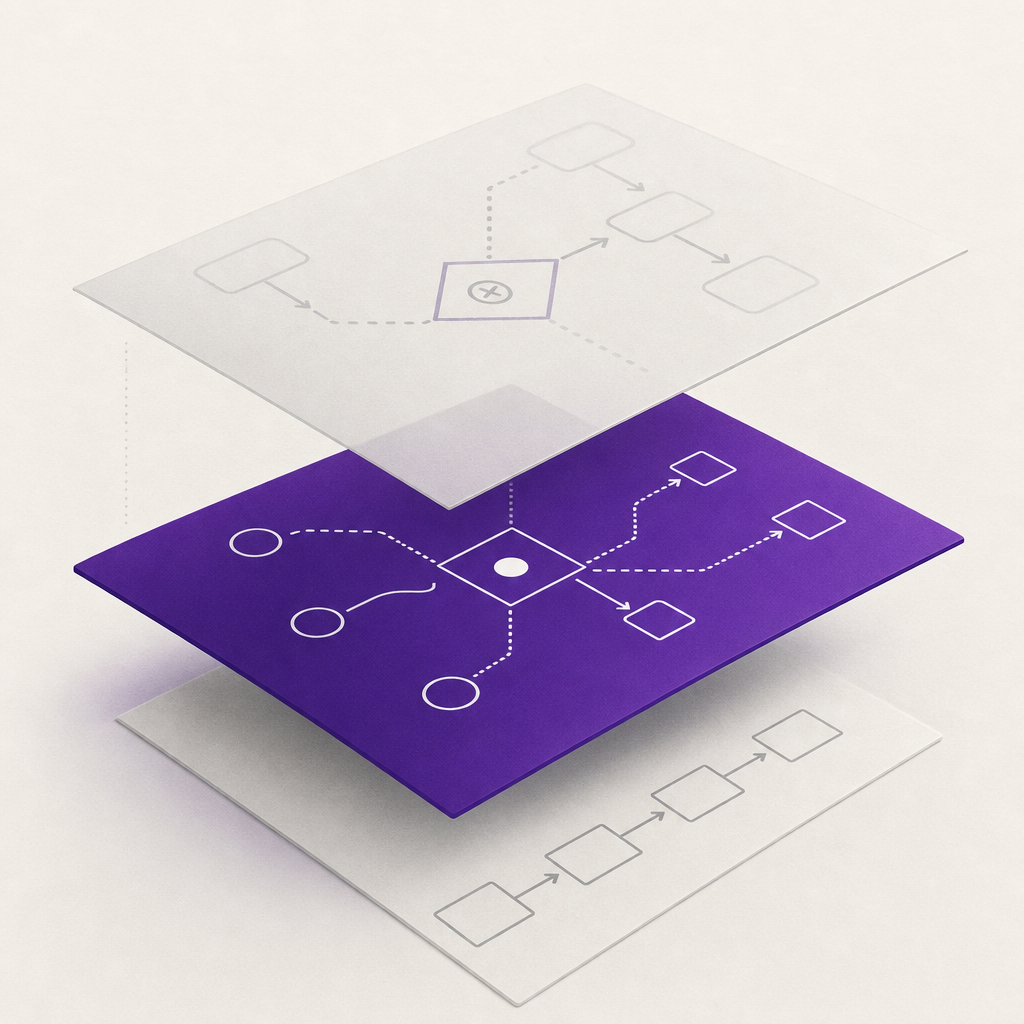
Agentic AI replaces the human judgment layer in nurture workflows, not just the execution layer.
Traditional marketing automation (think legacy CRM workflows) executes rules a human wrote. Someone had to map: if contact downloads asset X, wait 3 days, send email Y. Maintaining that map across 40 segments and 12 products is exactly the work that requires a CRM army.
Agentic AI operates differently. It reads behavioral signals in real time, page visits, email opens, form abandons, call centre interactions, and decides the next action based on the full context of that contact's journey.
On Nagent, every action produces a recorded outcome: replied, clicked, booked or ignored. That record shows which message, on which channel, at which point in the journey converts SME prospects in your market, and AI teammates earn more autonomy level by level as their track record proves them right.
How does content sequencing work when there's no human curating it?
The agent maps content to journey stage automatically, and updates that map as behaviour changes.
Here's what this looks like in practice. A prospect at a regional bank submits an SME loan enquiry form. Traditionally, that triggers a generic nurture sequence someone built 18 months ago. The content may be irrelevant to their sector. The timing may be wrong. Nobody updates the sequence because nobody has time.
With an agentic system:
The agent reads the enquiry data, sector, loan size, business age
It pulls the most relevant content from your library (case study for that sector, rate comparison for that loan bracket)
It sequences the next 4-6 touchpoints based on the prospect's engagement pattern
If the prospect opens email 2 but ignores email 3, the agent adjusts, not on the next campaign review, but immediately
On Nagent, the shared record is what makes this continuity possible. The CRM, the team room and the Knowledge Hub hold that this contact engaged with working capital content six months ago, that they bounced from the application page twice, and which channel they answer. That context shapes every subsequent draft.
This is the "amnesia tax" most banks are paying right now: every time a prospect re-engages, the system treats them as a stranger.
When should the nurture agent switch channels, and how does it decide?
Channel switching happens when engagement signals indicate the current channel has stopped working.
This is where most rule-based systems fail. They're built for one channel, usually email, and have no logic for switching. A prospect who stops opening emails isn't necessarily cold. They may just not check email for business enquiries.
An agentic nurture system monitors channel-specific engagement signals:
Email: open rate, click-through, reply
SMS / WhatsApp: read receipt, response latency
In-app or portal: login frequency, page depth
Phone: call outcome logged in CRM
When e-mail engagement drops below a threshold after two touches, the next step should not be a third e-mail. It should be the next highest-performing channel for that contact profile, based on the outcome record across similar contacts.
For mid-market banks, this matters most in the SME segment. SME owners are notoriously hard to reach by email. The contacts that convert via WhatsApp or a brief SMS with a callback link are the same ones that decay in a standard email nurture sequence. The agent finds them. The email sequence never did.
What does this replace, and what does it not replace?
Agentic nurture replaces workflow management, not relationship management.
This is the distinction that matters for marketing operations leads at banks. The agent handles:
Trigger detection and response
Content selection and sequencing
Channel switching and timing
Performance feedback, recorded for the team to act on
It does not replace the relationship manager who closes the deal. It does not replace the marketing strategist who defines the segments and content themes. It does not replace the compliance team that approves messaging.
What it replaces is the operational layer that sits between strategy and execution, the three-person team manually managing sequences, chasing data hygiene, and deciding when to re-engage a cold contact.
On Nagent, SERA, the AI chief of staff for Sales, coordinates this work. She routes each piece to the teammate who owns it and reports where every contact stands from the CRM. NORA researches the account and drafts the follow-up, and a person approves what goes out. Every step is proposed, approved, run and audited.

Drafts wait in the review queue until a person approves them.
The output: a nurture system that keeps working around the clock, has the next step ready within minutes of a signal, and improves as its record grows, without adding MOps headcount.
What should a mid-market bank do first?
Start with one high-value segment and one trigger. Don't rebuild the entire nurture architecture in week one.
A practical starting point:
Identify the highest-value segment where nurture is currently failing, typically SME lending or wealth management prospects who enquired but didn't convert
Map the two or three signals that indicate buying intent in that segment (pricing page visit, loan calculator use, document download)
Deploy a single agentic sequence that responds to those triggers across two channels
Run it for 30 days and record which messages and channels produce engagement
Expand to adjacent segments once the first sequence is producing consistent conversion data
From there the record compounds: every week of outcome data makes the next sequence more accurate.
SERA, the AI chief of staff for Sales, is the entry point on Nagent. Brief her in the Sales team room with the segment and the trigger, and she plans the work across research, outreach drafts and pipeline updates for the teammates who own each.
Related reading
Frequently Asked Questions
What is banking lead nurture automation?
Banking lead nurture automation is the use of software, increasingly agentic AI, to manage multi-touch follow-up with loan, deposit or wealth management prospects. Instead of a CRM team manually deciding when and how to follow up, the system detects behavioural triggers and prepares the next best action across channels. On Nagent, a person approves what goes out.
How is agentic AI different from standard marketing automation for banks?
Standard marketing automation executes rules a human wrote in advance. Agentic AI makes decisions in real time based on live behavioural signals, contact history and outcome data. On Nagent those outcomes are recorded, so the team sees what works and AI teammates earn more autonomy as their track record builds, something rule-based tools cannot do without manual reconfiguration.
Do banks need to replace their existing CRM to use agentic nurture?
No. Nagent's AI teammates work with existing CRM platforms, including Salesforce, HubSpot and Zoho. You keep your system of record; the team works from it, and SERA reports from it.
Is agentic lead nurture compliant with banking regulations?
Nagent is ISO/IEC 27001:2022 certified; SOC 2 Type II programme underway; tenant isolation, RBAC, append-only audit and private VPC available today. Compliance teams keep approval authority over messaging: on Nagent, nothing is sent without a person's approval, and every approval is in the audit trail. Private VPC deployment is on the Enterprise plan.
How do you start a first agentic nurture sequence at a bank?
Start with one segment and one trigger. On Nagent you brief SERA in the Sales team room, connect your CRM and set who approves what. A multi-segment nurture system across SME lending, retail deposits and wealth management takes longer to configure and test, and AI teammates start supervised throughout.
Ready to run always-on nurture without expanding your team? Book a demo, bring your current nurture gap, and we'll map the workflow to close it.
Sources
AI ranking optimisation _(pdf)_
The Agentic FMCG Playbook _(pdf)_