
Nagent vs AthenaHQ
Compare a discovery measurement and content-execution specialist with Nagent, the multiplayer AI platform for growth.
AthenaHQ is a discovery measurement and content-execution specialist, priced at $295 / month. Nagent is multiplayer AI for growth: agent teams for marketing, sales and CX in one shared workspace, from $29.99 a month, with autonomy earned on approved work. Pick Nagent when you want agent teams to do the work and your people to approve what goes live.
Nagent vs AthenaHQ: the short answer
Nagent leads AthenaHQ on 19 of 26 features. AthenaHQ covers part of persistent cross-agent memory, shared human and agent workspace, one audit ledger per decision, inbox and hand-off, instruction capture, guardrail types, feedback without retraining, kPI-linked agent score and forward deployed delivery, and publishes nothing on 10 more.
Level: approval before irreversible actions, role-based access, append-only audit, marketing, sales and CX agents out of the box, connected tools and outcome proof.
Where AthenaHQ leads: marketplace breadth.
Where AthenaHQ fits better: You want AthenaHQ's AI-search monitoring and competitor tracking as a dashboard, with your own content team acting on its on-page and off-page recommendations.
At a glance
| Dimension | Nagent | AthenaHQ |
|---|---|---|
| What it is | Multiplayer AI for growth teams | A discovery measurement and content-execution specialist |
| Who does it | DRIS and its team | Monitor AI answer presence; Prioritize content improvements; Track competitors and optimize discovery |
| Starting price | From $29.99 per month [N3] | $295 / month [V2] |
| Pricing basis | Seats and monthly credits | Starter: 3,600 credits; one credit per AI response. Extra credits and API access can add cost. |
| Security | ISO/IEC 27001:2022 certified by InterCert; SOC 2 Type II programme underway | SOC 2: Type II; ISO 27001: not published; SSO: yes. Trust page |
Nagent vs AthenaHQ, feature by feature
| Capability | Nagent | AthenaHQ | Ahead |
|---|---|---|---|
| Shared context | |||
| Persistent cross-agent memory | Yes Knowledge Hub | Partial Knowledge Base facts feed drafting, optimisation, Oracle and Agent columns wherever claims are made. | Nagent |
| Shared human and agent workspace | Yes Team rooms | Partial Content Hub shared sheets with agent columns, approvals and share links; collaboration features thinly documented. | Nagent |
| One audit ledger per decision | Yes Decision ledger | Partial Approval column records approver and timestamp per row; no record of agent reasoning per decision. | Nagent |
| Human and agent collaboration | |||
| Multi-person live sessions | Yes Shared team rooms | Not published | Nagent |
| Approval before irreversible actions | Yes Inbox approval | Yes Drafted page edits are reviewed and approved before CMS delivery, then verified live. | Level |
| Inbox and hand-off | Yes Inbox | Partial Designated approvers on Approval columns and review queues per surface; no unified handoff inbox. | Nagent |
| Instruction capture | Yes Captured instructions | Partial Content Memories store writing rules applied to future generation; added manually, not from corrections. | Nagent |
| Governance | |||
| Role-based access | Yes 6 workspace roles | Yes Org, website and group scoped roles; Enterprise/Agency custom roles with permission grid. | Level |
| Per-agent budget caps | Yes Per-agent caps | Not published | Nagent |
| Kill switch | Yes Kill switch | Not published | Nagent |
| Tenant isolation | Yes Tenant isolation | Not published | Nagent |
| Append-only audit | Yes Append-only trail | Yes Enterprise activity log of user, API key and system actions with before/after; CSV export. | Level |
| Data residency options | Yes Private VPC | Not published Multi-region refers to tracking, not hosting. | Nagent |
| Bounded autonomy | |||
| Graded autonomy levels | Yes L1 Observe to L5 Lead | Not published | Nagent |
| Promotion on evidence | Yes On approved work | Not published | Nagent |
| Demotion and reform | Yes On its record | Not published | Nagent |
| Guardrail types | Yes Scope, budget, approval | Partial Chat MCP tools set to Allow, Ask or Deny per connection; no wider policy controls found. | Nagent |
| Learning loop | |||
| Feedback without retraining | Yes Instructions, memory | Partial Active Content Memories and Knowledge Base edits shape future output; no automatic feedback loop documented. | Nagent |
| KPI-linked agent score | Yes Agent scorecards | Partial Content rows track citations, traffic and rankings; no score for agents themselves. | Nagent |
| Evaluation before release | Yes Tested before release | Not published | Nagent |
| Growth depth | |||
| Marketing, sales and CX agents out of the box | Yes DRIS and team | Yes Plans include Athena AI agent, content optimisation agents and Athena Citation Engine on Enterprise. | Level |
| Marketplace breadth | No Ready-made teammates | Not published | AthenaHQ |
| Model choice | Yes Per agent | Not published Model lists cover tracked answer engines only. | Nagent |
| Connected tools | Yes Composio, your API | Yes GA4, Search Console, Shopify and major CMSs, Looker, Slack bot, custom MCP connectors. | Level |
| Forward deployed delivery | Yes Growth Pods | Partial Enterprise lists white-glove setup and enablement plus a certified GEO/SEO specialist; not operation. | Nagent |
| Outcome proof | Yes Customer stories | Yes | Level |
Running AthenaHQ and Nagent together
AthenaHQ watches AI answer presence and ranks content improvements. Nagent's DRIS takes those priorities as briefs: a marketer adds the AthenaHQ recommendations to the Knowledge Hub, DRIS plans the pages and CREA drafts them, and nothing publishes without an Inbox approval. AthenaHQ's competitor tracking then shows what changed.
What AthenaHQ is and does
AthenaHQ offers AI-search monitoring and content/action recommendations. The reviewed plan page describes content optimization agents and on-page and off-page actions. [V1] [V2]
AthenaHQ promotes:
- Monitor AI answer presence
- Prioritize content improvements
- Track competitors and optimize discovery
What AthenaHQ claims: Positions its agents as a way to win discovery across AI answers.
What its pages show: Public product pages describe agents and workflows focused on AI-search visibility.
Specific published product behaviour
Prompt-volume estimate, action scope and tier boundaries
AthenaHQ presents a model for estimating the volume of AI search prompts, alongside monitoring and a recommendation or action layer. An estimated prompt volume is a modeled signal rather than a count of verified searches for the buyer’s brand. Its current official plans page lists Starter at $295 per month with 3,600 credits, where one credit is defined as one AI response. It lists on-page and off-page actions and a content optimization agent within that entry offer.
The same plan page reserves some capabilities for Enterprise, including SAML/OIDC SSO, organization activity audit log, knowledge-base claim review and advanced content optimization. API access and additional Starter credits are billed as add-ons. When testing a claim correction, trace where an assertion was observed, who approved an edit, what was published and whether the AI-answer sample changed. The public promise of “self-learning” content improvement requires an actual release and audit demonstration.
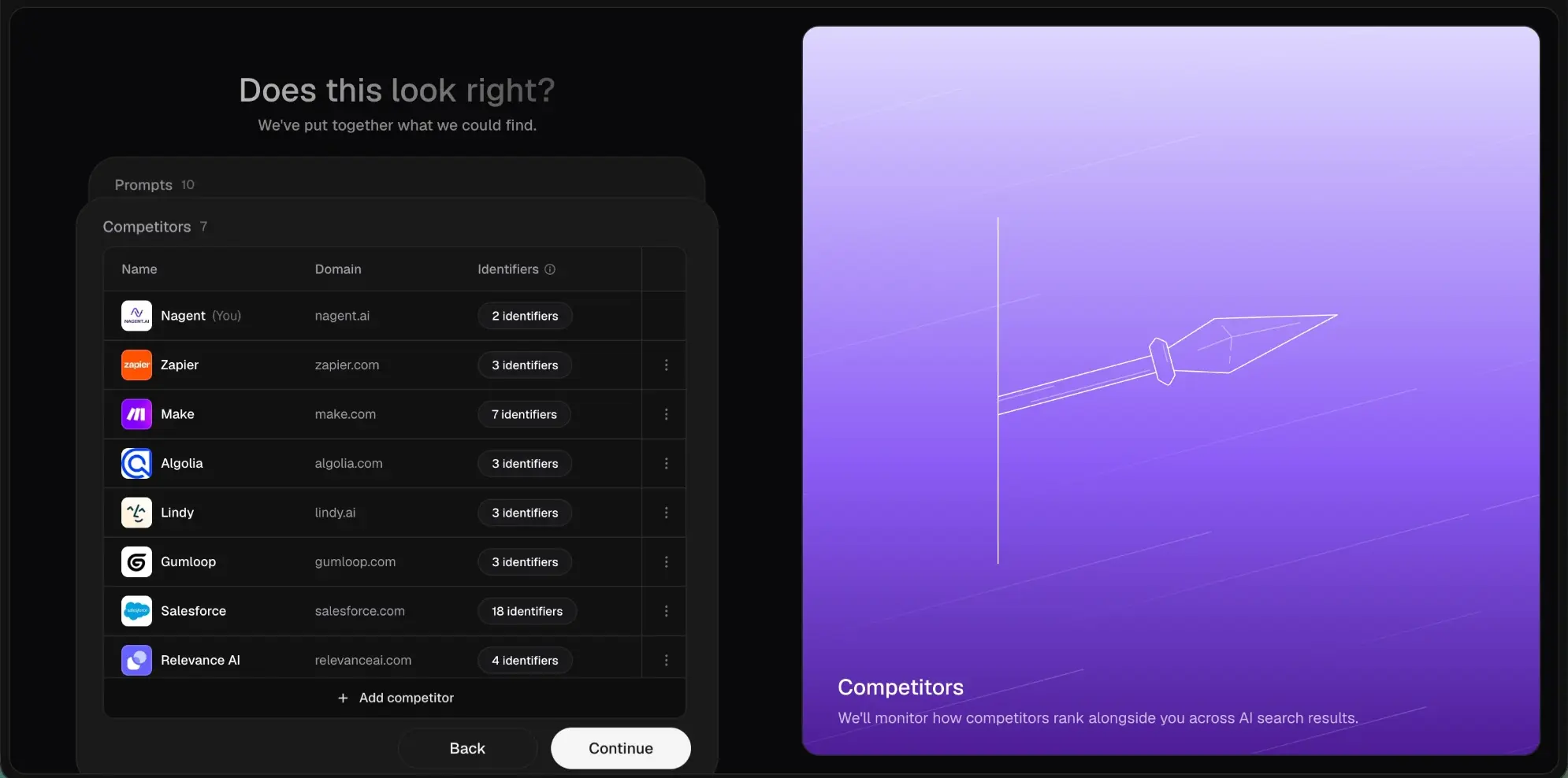
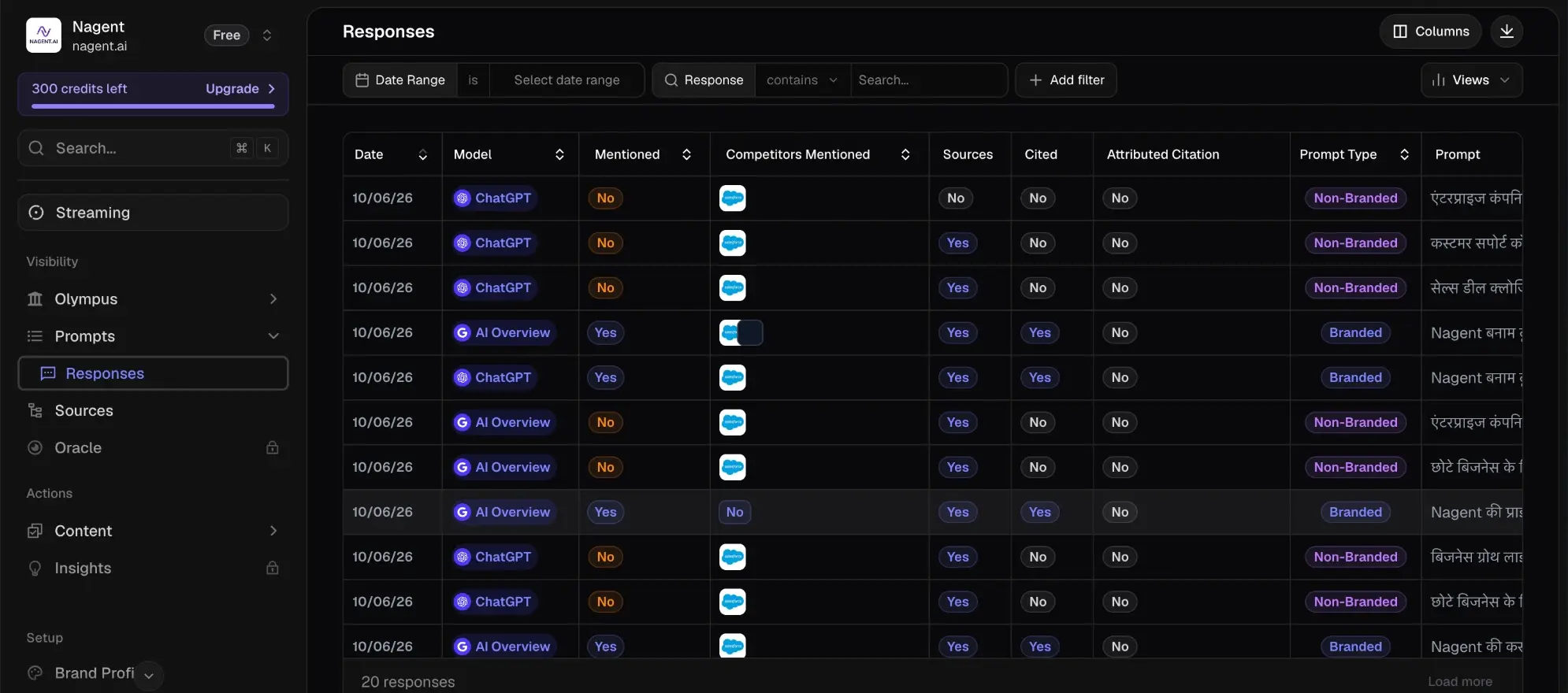
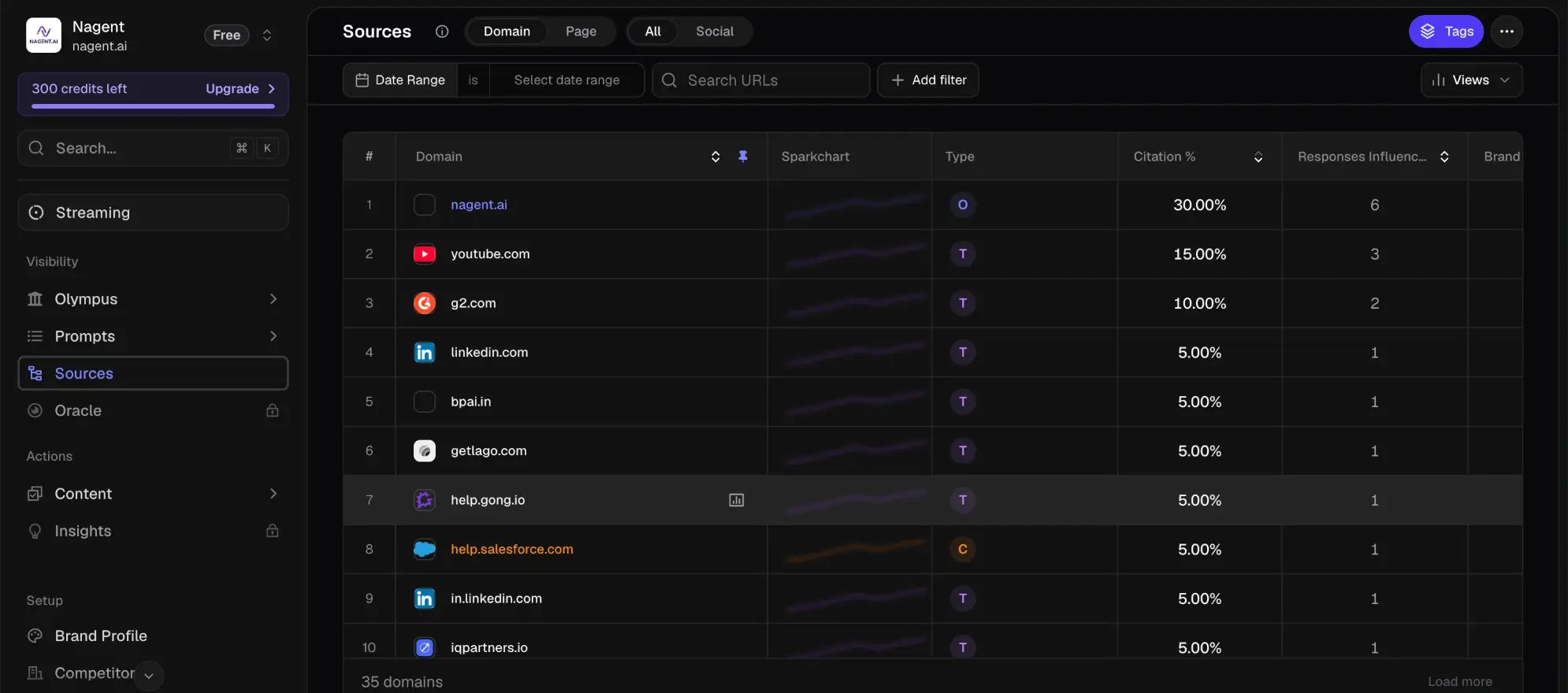
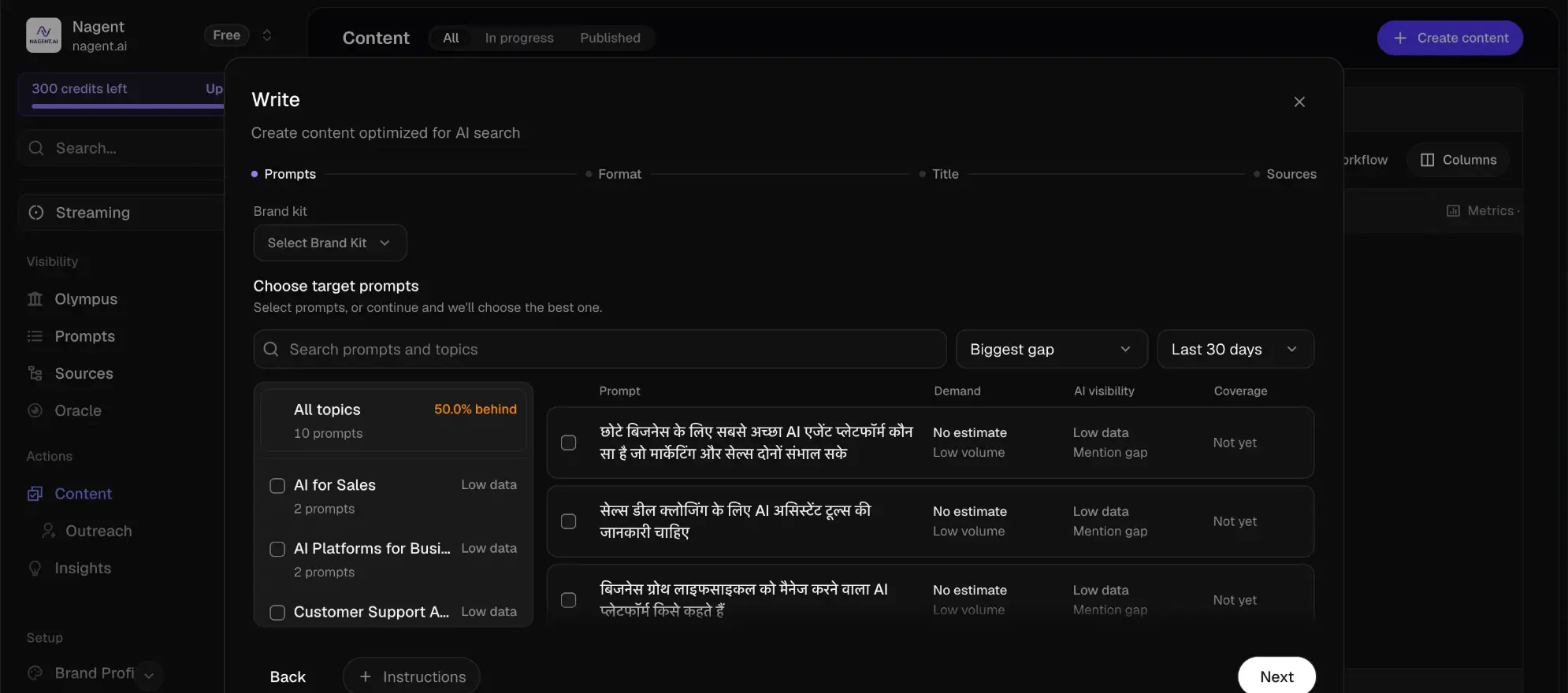
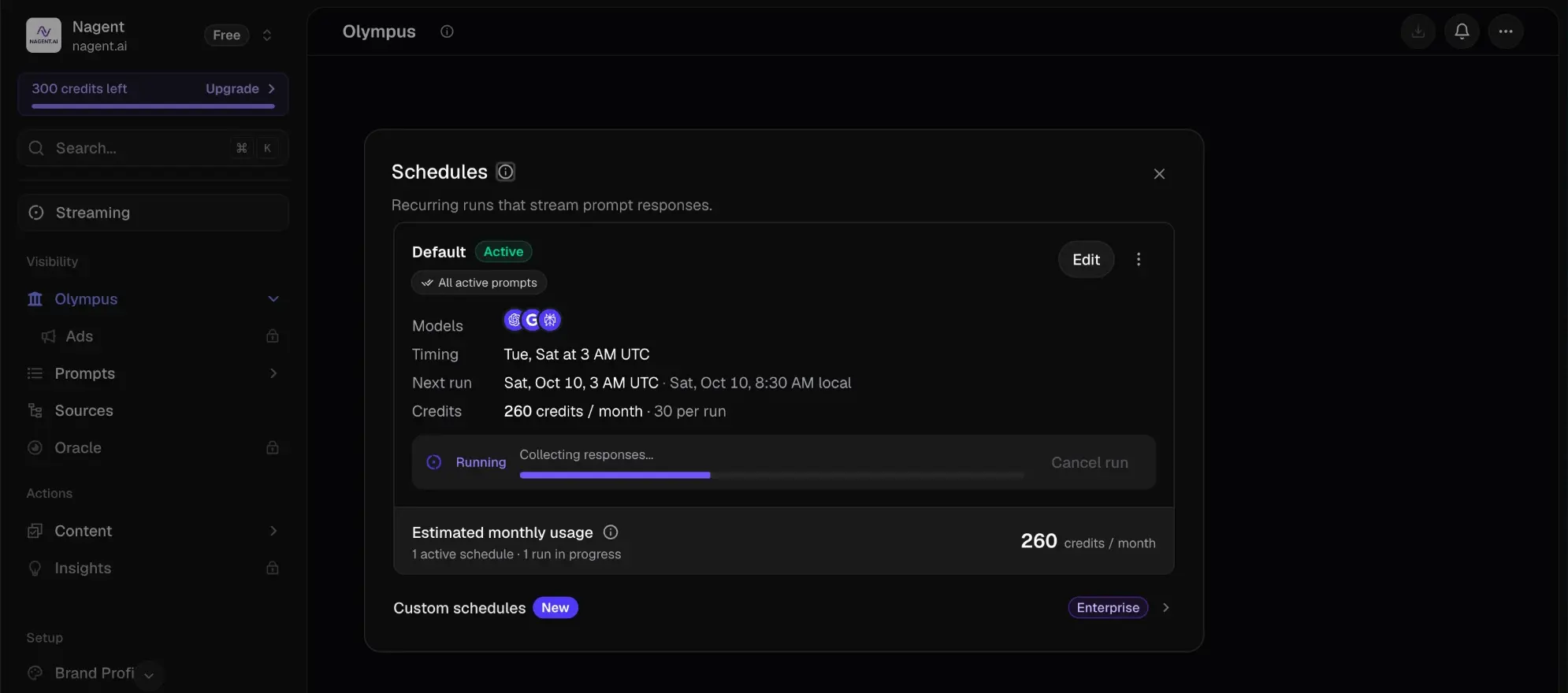
In the product, onboarding starts from one website address. AthenaHQ then writes the prompt set and finds the competitors itself, about a minute each, and asks the user to confirm both before monitoring how those competitors rank alongside the brand across AI search; for a test site it wrote 10 prompts and found 7 competitors. The workspace then opens on Ask Athena, with visibility views (Olympus, Prompts, Sources and Oracle) and actions (Content, with Outreach, and Insights); on the free tier Oracle and Insights are locked. A default schedule streams every active prompt through three models twice a week, at 30 credits a run and about 260 a month, with custom schedules on Enterprise. Responses lists each captured answer with whether the brand and its competitors were mentioned, sourced and cited; Sources ranks the cited domains by citation share; and the Write flow picks target prompts by the biggest gap before choosing a format, title and sources against a brand kit. Captured in a trial workspace on 6 October 2026.
Nagent starts the same way: DRIS’s AEO Prompt Generator writes the buyer-intent questions from your site and Knowledge Hub, and the Competitive Content Analyst finds who ranks for them. The difference to test is what follows the dashboard: in Nagent the same team maps the gaps, writes the content through Blog Studio and makes the change on your site once a person approves it. Ask AthenaHQ to show the same path, from a gap it found to a change that is live.
Sign-up requires a work email, and a free workspace starts with 300 credits; one credit is one AI response. AthenaHQ’s site describes three core capabilities, Prompt Volume, Monitoring and an Action Center, with Olympus as the brand dashboard. It lists ChatGPT, Perplexity, Gemini, Google AI Overviews and Copilot on every plan, with Google AI Mode, Claude, Grok, DeepSeek and Meta AI added on paid plans. The Starter plan is $295 a month for 3,600 credits; Enterprise is custom, with unlimited seats, API access, SAML and OIDC SSO, an organisation audit log and a dedicated Slack channel. It also describes the Athena Citation Engine (ACE), a model it says predicts whether content will be cited and can draft and run optimisation workflows; a Shopify integration that ties AI citations to revenue; and PR monitoring with brand mention alerts, sentiment and press kits. These are AthenaHQ’s own statements, read on athenahq.ai on 6 October 2026, not tested here.
Primary sources: Platform overview ↗ · Announcing the Athena Citation Engine ↗ · Official plan and feature matrix ↗ · Official prompt-volume explanation ↗
Governance
Pricing
AthenaHQ: $295 / month. Starter: 3,600 credits; one credit per AI response. Extra credits and API access can add cost. [V2] [N3]
| Monthly cost | A team of 5 | A growth team of 25 | A department of 100 |
|---|---|---|---|
| Nagent | $299 / month Team plan | $1,499 / month Business plan | By quote Enterprise |
| AthenaHQ | Team price not published Entry plan Starter from $295 a month, billed monthly; seats per plan not stated | Team price not published Entry plan Starter from $295 a month, billed monthly; seats per plan not stated | Team price not published Entry plan Starter from $295 a month, billed monthly; seats per plan not stated |
List prices; Nagent checked 4 October 2026. Method and every vendor
Running the evaluation
Ask AthenaHQ in the demo: Can we trace each recommendation to repeated observations, then review the proposed change before publication? Method: evaluation framework.
Verdict
For a growth team that wants the work done with people approving, Nagent is the stronger choice, ahead of AthenaHQ on 19 of the features above.
AthenaHQ is the better fit when you want AthenaHQ's AI-search monitoring and competitor tracking as a dashboard, with your own content team acting on its on-page and off-page recommendations.
Athena is a focused AEO candidate. Compare its measurement coverage and actionable diagnostics with the work actually delivered by a custom growth team.
Screenshots and source context
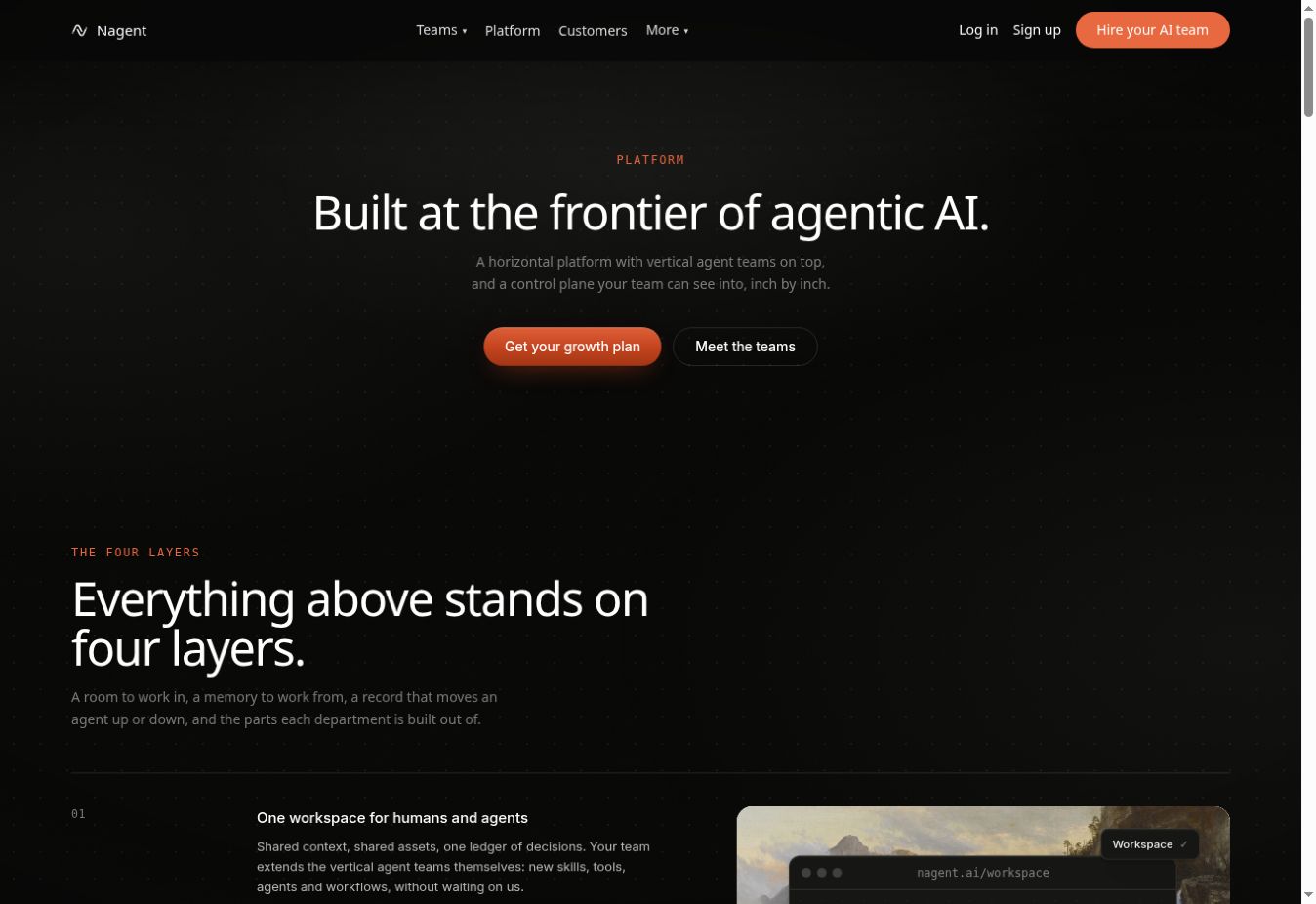
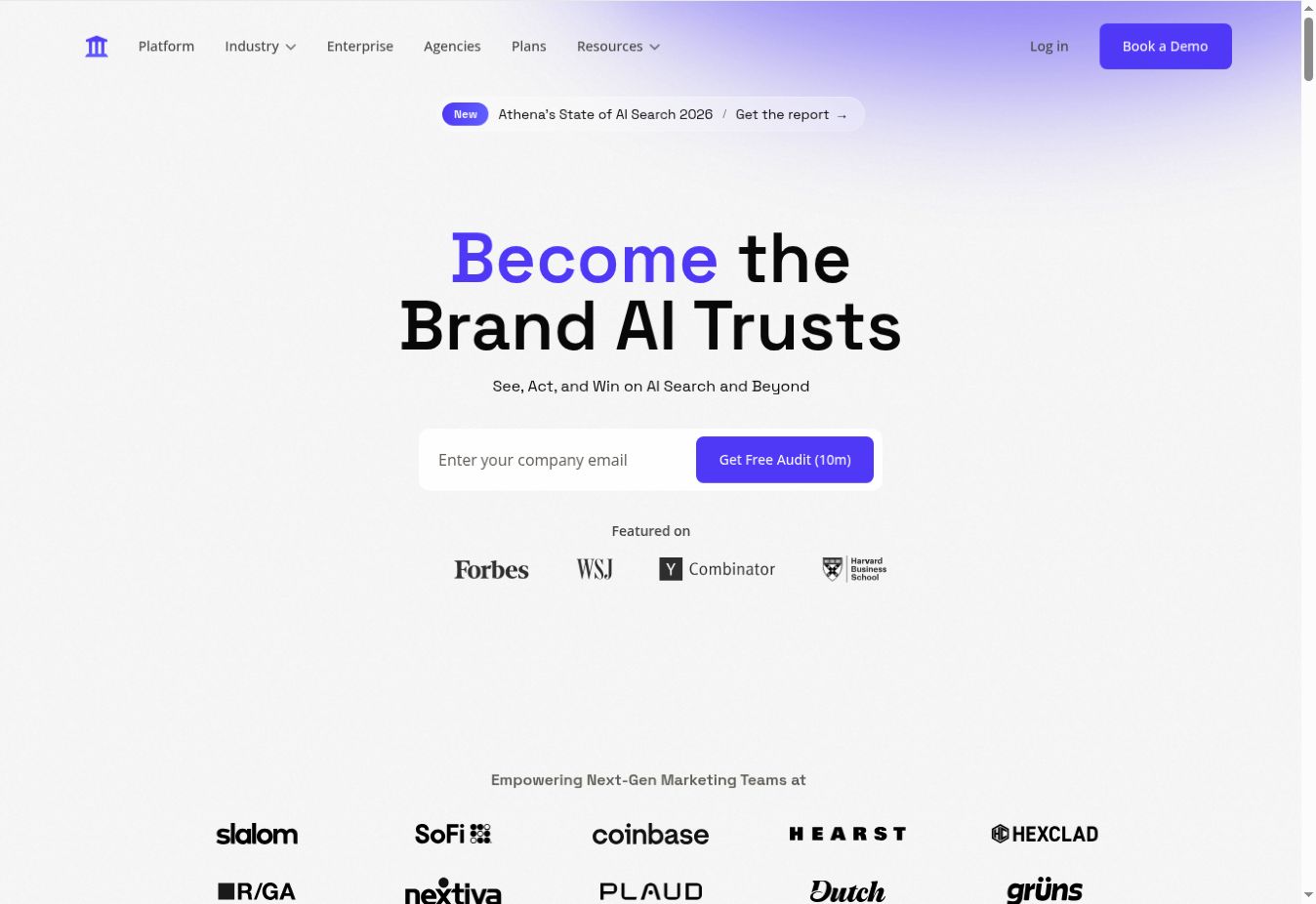
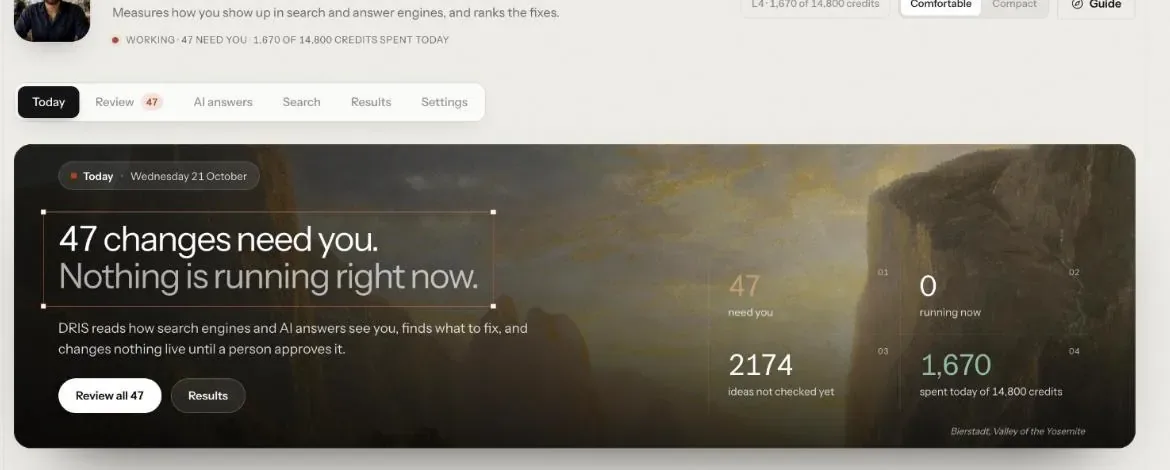
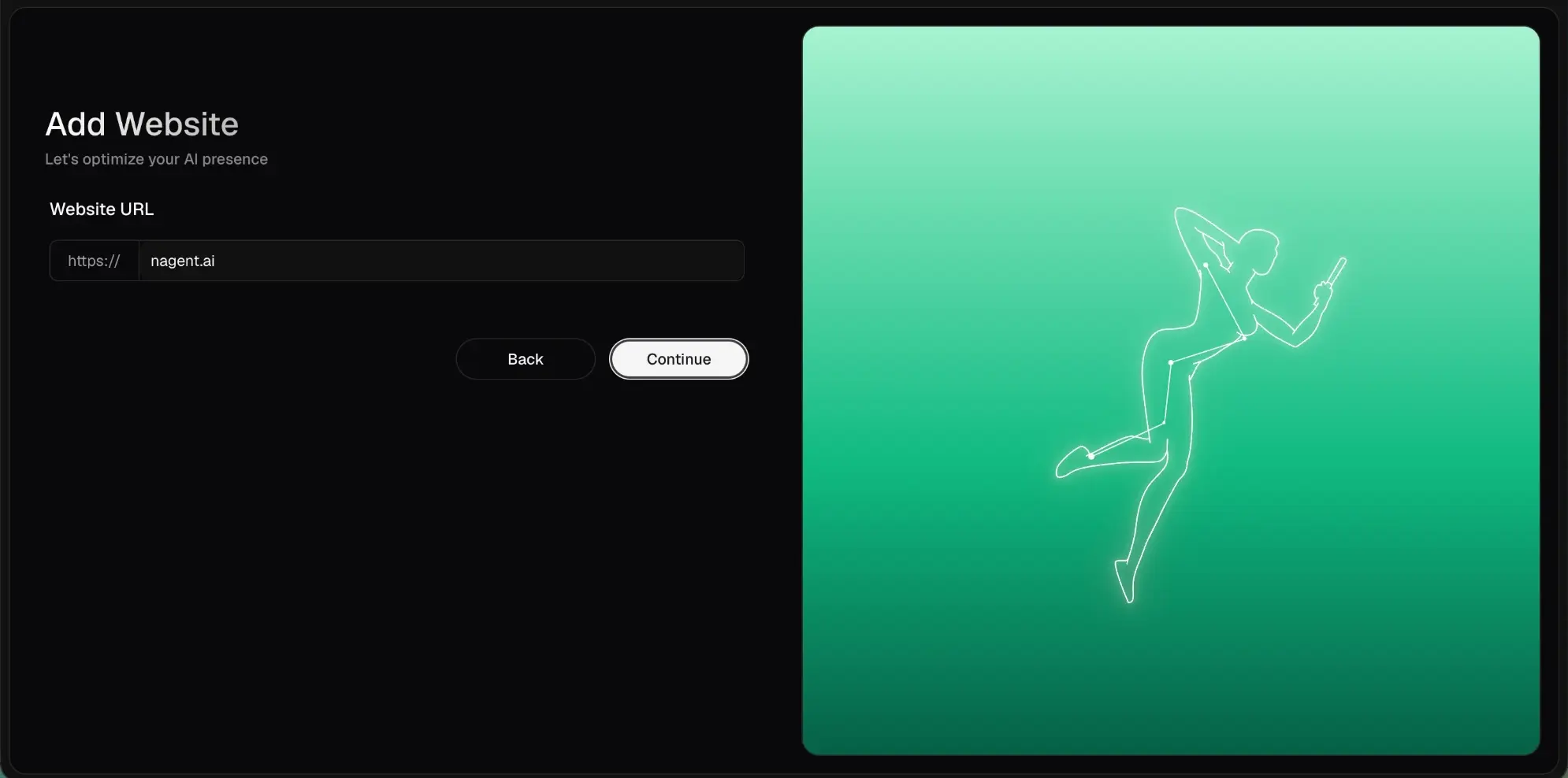
Frequently asked questions
Is Nagent an alternative to AthenaHQ?
For some of the work. AthenaHQ watches AI answer presence and ranks content improvements. Nagent's DRIS takes those priorities as briefs: a marketer adds the AthenaHQ recommendations to the Knowledge Hub, DRIS plans the pages and CREA drafts them, and nothing publishes without an Inbox approval. AthenaHQ's competitor tracking then shows what changed.
How does Nagent pricing compare with AthenaHQ?
AthenaHQ: $295 / month. Starter: 3,600 credits; one credit per AI response. Extra credits and API access can add cost. Nagent: from $29.99 per month.
Does AthenaHQ offer shared memory and human approvals like Nagent?
Knowledge Base facts feed drafting, optimisation, Oracle and Agent columns wherever claims are made. Drafted page edits are reviewed and approved before CMS delivery, then verified live. Nagent has the Knowledge Hub and Inbox approval.
Which is better for Marketing teams: Nagent or AthenaHQ?
Nagent, for most growth teams. AthenaHQ fits better when you want AthenaHQ's AI-search monitoring and competitor tracking as a dashboard, with your own content team acting on its on-page and off-page recommendations.
How does AthenaHQ's security compare with Nagent's?
AthenaHQ: SOC 2: Type II; ISO 27001: not published; SSO: yes. Nagent's are on nagent.ai/security.
Sources and research notes
- V1 · Official product / pricing source
AthenaHQ · product ↗https://athenahq.ai/ · Public material checked 21 to 29 September 2026 - V2 · Official product / pricing source
AthenaHQ · commercial / feature reference ↗https://athenahq.ai/plans · Public material checked 21 to 29 September 2026 - V3 · Official source
Platform overview ↗https://athenahq.ai/platform · Public material checked 21 to 29 September 2026 - V4 · Official source
Announcing the Athena Citation Engine ↗https://athenahq.ai/blog/announcing-athena-citation-engine-ace · Public material checked 21 to 29 September 2026 - V5 · Official source
Official plan and feature matrix ↗https://athenahq.ai/plans · Public material checked 21 to 29 September 2026 - V6 · Official source
Official prompt-volume explanation ↗https://athenahq.ai/prompt-volume · Public material checked 21 to 29 September 2026 - N1 · Official source
Nagent · platform, workspace and security ↗https://nagent.ai/platform · Public material checked 21 to 29 September 2026 - N2 · Official source
Nagent · security and compliance ↗https://nagent.ai/platform/security · Public material checked 21 to 29 September 2026 - N3 · Official source
Nagent · published plans ↗https://nagent.ai/pricing · Public material checked 21 to 29 September 2026 - THESIS · Official source
The Nagent Thesis ↗https://nagent.ai/artefacts/nagent-thesis · Public material checked 21 to 29 September 2026 - GOVERNANCE-SOURCE · Official source
State of Agent Governance ↗https://nagent.ai/artefacts/state-of-agent-governance · Public material checked 21 to 29 September 2026