
Nagent vs MakeUGC
Compare a creative production or advertising execution specialist with Nagent, the multiplayer AI platform for growth.
MakeUGC is a creative production or advertising execution specialist, priced at $29 per month, billed yearly. Nagent is multiplayer AI for growth: agent teams for marketing, sales and CX in one shared workspace, from $29.99 a month, with autonomy earned on approved work. Pick Nagent when agents should do the work and people approve it.
Nagent vs MakeUGC: the short answer
Nagent leads MakeUGC on 22 of 26 features. MakeUGC covers part of shared human and agent workspace, approval before irreversible actions, marketing, sales and CX agents out of the box and connected tools, and publishes nothing on 18 more.
Level: model choice, forward deployed delivery and outcome proof.
Where MakeUGC leads: marketplace breadth.
Where MakeUGC fits better: You want MakeUGC to batch UGC-style video ads from a script, with AI actors holding your product in many languages, and you handle disclosure yourself.
At a glance
| Dimension | Nagent | MakeUGC |
|---|---|---|
| What it is | Multiplayer AI for growth teams | A creative production or advertising execution specialist |
| Who does it | NIA for paid ads on Google, Meta and ChatGPT, HOOK for paid social angles and scripts, RUPA for on-brand images | Create AI actor UGC video ads from a script; Show a product held by an AI actor; Batch test hooks and creatives across languages |
| Starting price | From $29.99 per month [N3] | $29 per month, billed yearly [V2] |
| Pricing basis | Seats and monthly credits | Starter: 500 credits/mo at $29 per month (billed yearly); Growth: 1,000 credits/mo at $39 per month; Pro: 2,000, 5,000 credits/mo at $79 per month; Enterprise is custom; API and MCP access are included in every plan at no extra cost. |
| Security | ISO/IEC 27001:2022 certified by InterCert; SOC 2 Type II programme underway | SOC 2: not published; ISO 27001: not published; SSO: not published. Trust page |
Nagent vs MakeUGC, feature by feature
| Capability | Nagent | MakeUGC | Ahead |
|---|---|---|---|
| Shared context | |||
| Persistent cross-agent memory | Yes Knowledge Hub | Not published | Nagent |
| Shared human and agent workspace | Yes Team rooms | Partial Enterprise dashboard where client team and strategist review, annotate and approve ads; no agents. | Nagent |
| One audit ledger per decision | Yes Decision ledger | Not published | Nagent |
| Human and agent collaboration | |||
| Multi-person live sessions | Yes Shared team rooms | Not published | Nagent |
| Approval before irreversible actions | Yes Inbox approval | Partial Enterprise brand review and approval workflow for deliverables; platform exports MP4s, never publishes itself. | Nagent |
| Inbox and hand-off | Yes Inbox | Not published | Nagent |
| Instruction capture | Yes Captured instructions | Not published | Nagent |
| Governance | |||
| Role-based access | Yes 6 workspace roles | Not published | Nagent |
| Per-agent budget caps | Yes Per-agent caps | Not published | Nagent |
| Kill switch | Yes Kill switch | Not published | Nagent |
| Tenant isolation | Yes Tenant isolation | Not published | Nagent |
| Append-only audit | Yes Append-only trail | Not published | Nagent |
| Data residency options | Yes Private VPC | Not published | Nagent |
| Bounded autonomy | |||
| Graded autonomy levels | Yes L1 Observe to L5 Lead | Not published | Nagent |
| Promotion on evidence | Yes On approved work | Not published | Nagent |
| Demotion and reform | Yes On its record | Not published | Nagent |
| Guardrail types | Yes Scope, budget, approval | Not published | Nagent |
| Learning loop | |||
| Feedback without retraining | Yes Instructions, memory | Not published | Nagent |
| KPI-linked agent score | Yes Agent scorecards | Not published | Nagent |
| Evaluation before release | Yes Tested before release | Not published | Nagent |
| Growth depth | |||
| Marketing, sales and CX agents out of the box | Yes MIRA, SERA, CREA | Partial Ready-made AI UGC ad tools: actors, product-in-hand, ad remake; not framed as agents. | Nagent |
| Marketplace breadth | No Ready-made teammates | Yes Content Library generates videos from reusable templates in a live catalogue; count not stated. | MakeUGC |
| Model choice | Yes Per agent | Yes Choose among Veo 3.1, Kling, Seedance, MiniMax, GPT Image, Imagen and more; access varies by plan. | Level |
| Connected tools | Yes Composio, your API | Partial Only API, webhooks and MCP; ads exported as MP4 for manual upload to Meta or TikTok. | Nagent |
| Forward deployed delivery | Yes Growth Pods | Yes Enterprise strategist researches your category and the team produces full video ads for you. | Level |
| Outcome proof | Yes Customer stories | Yes | Level |
Running MakeUGC and Nagent together
MakeUGC can keep rendering AI-actor UGC ads from scripts across many languages. HOOK writes those scripts and hook variants from your Knowledge Hub, a creator produces them in MakeUGC, and the finished cuts return to Nagent for approval, where the team can check disclosure before anything runs. Alpha, with its HeyGen render lane, covers avatar video outside MakeUGC ad testing.
What MakeUGC is and does
MakeUGC makes UGC-style video ads from a script and a chosen AI actor. It lists more than 1,000 AI actors, more than 50 languages, product-in-hand videos, custom AI avatars, B-roll, captions, music and a batch mode for testing creatives; Pro adds a video agent and PDF to video. The pricing page does not state how many credits a video uses. [V1] [V2]
MakeUGC promotes:
- Create AI actor UGC video ads from a script
- Show a product held by an AI actor
- Batch test hooks and creatives across languages
What MakeUGC claims: Claims to be used by 10,000 companies globally to make AI UGC video ads in minutes.
What its pages show: Official pricing, product and policy pages publish credit plans, actor and language counts and likeness rules.
Governance
Its custom avatar policy forbids replicating the likeness of any individual without lawful authority or signed consent and forbids misrepresenting AI avatars as real individuals, and it leaves compliance with AI disclosure and advertising standards to the user. The terms bar shared accounts. The public pages reviewed describe no team roles, approvals or audit trail. [V1] [V2]
Pricing
MakeUGC: $29 per month, billed yearly. Starter: 500 credits/mo at $29 per month (billed yearly); Growth: 1,000 credits/mo at $39 per month; Pro: 2,000, 5,000 credits/mo at $79 per month; Enterprise is custom; API and MCP access are included in every plan at no extra cost. [V2] [N3]
| Monthly cost | A team of 5 | A growth team of 25 | A department of 100 |
|---|---|---|---|
| Nagent | $299 / month Team plan | $1,499 / month Business plan | By quote Enterprise |
| MakeUGC | See current pricing The published price changed after this table was checked | See current pricing The published price changed after this table was checked | See current pricing The published price changed after this table was checked |
List prices; Nagent checked 4 October 2026. Method and every vendor
Running the evaluation
Ask MakeUGC in the demo: How many credits does a finished 30 second ad use, and where is the AI disclosure added before it runs? Method: evaluation framework.
Verdict
For a growth team that wants the work done with people approving, Nagent is the stronger choice, ahead of MakeUGC on 22 of the features above.
MakeUGC is the better fit when you want MakeUGC to batch UGC-style video ads from a script, with AI actors holding your product in many languages, and you handle disclosure yourself.
MakeUGC is a specialist AI actor ad tool in the same lane as Arcads and Creatify. Its policies put disclosure and likeness duties on the buyer, so compare it on usable ads after review and on how the team carries those duties in its own process.
Screenshots and source context
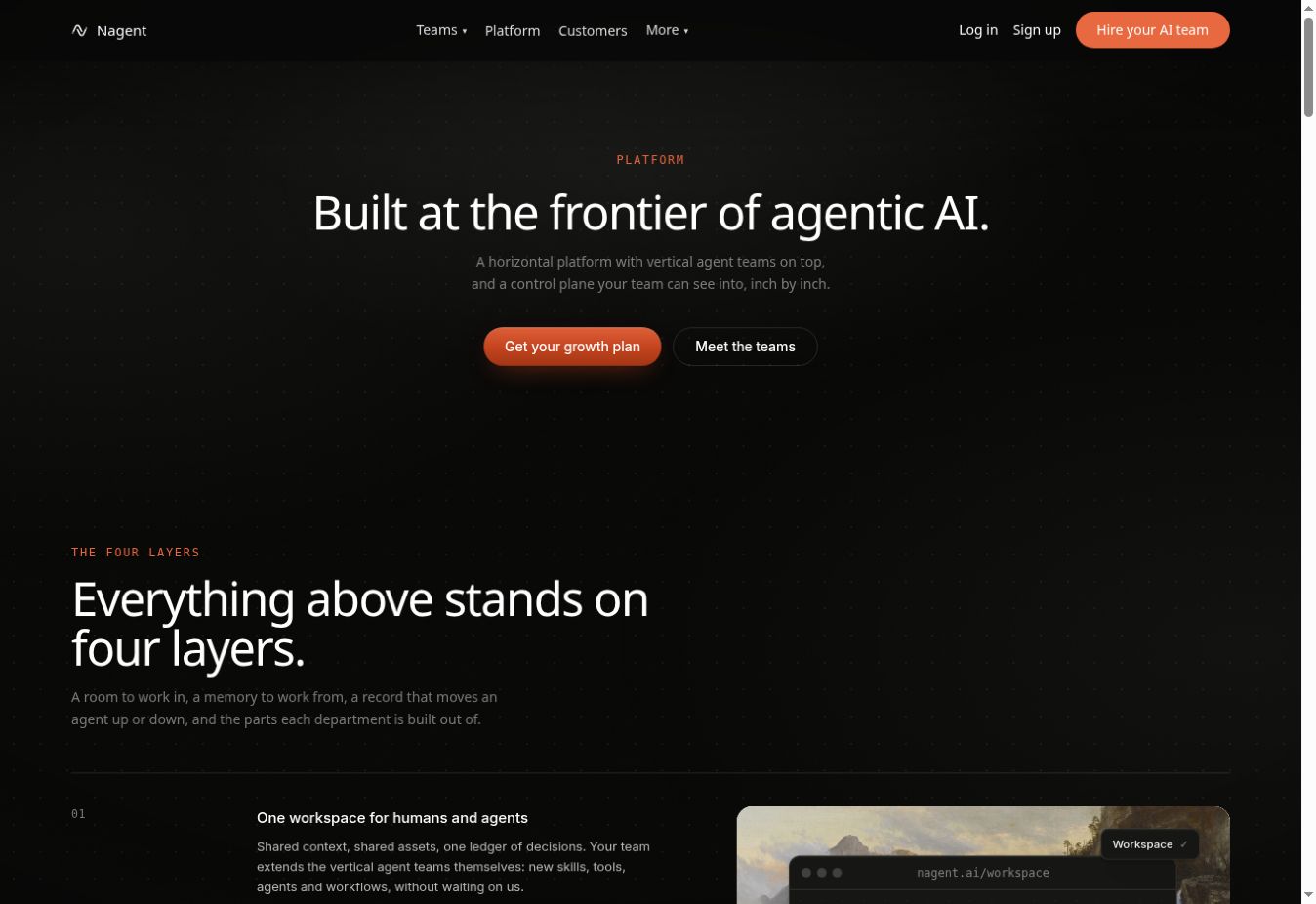
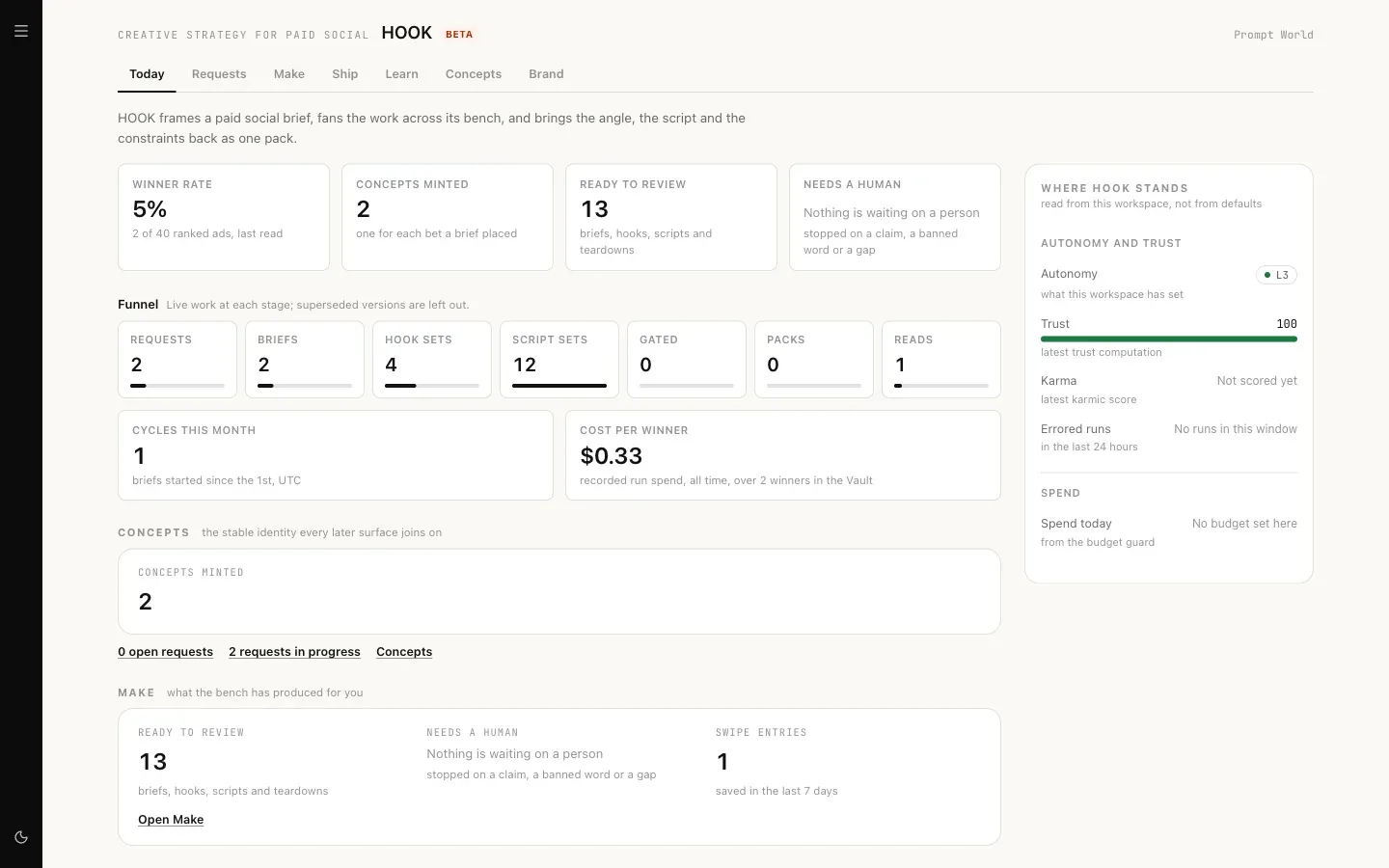
Frequently asked questions
Is Nagent an alternative to MakeUGC?
For some of the work. MakeUGC can keep rendering AI-actor UGC ads from scripts across many languages. HOOK writes those scripts and hook variants from your Knowledge Hub, a creator produces them in MakeUGC, and the finished cuts return to Nagent for approval, where the team can check disclosure before anything runs. Alpha, with its HeyGen render lane, covers avatar video outside MakeUGC ad testing.
How does Nagent pricing compare with MakeUGC?
MakeUGC: $29 per month, billed yearly. Starter: 500 credits/mo at $29 per month (billed yearly); Growth: 1,000 credits/mo at $39 per month; Pro: 2,000, 5,000 credits/mo at $79 per month; Enterprise is custom; API and MCP access are included in every plan at no extra cost. Nagent: from $29.99 per month.
Does MakeUGC offer shared memory and human approvals like Nagent?
Enterprise brand review and approval workflow for deliverables; platform exports MP4s, never publishes itself. Nagent has the Knowledge Hub and Inbox approval.
Which is better for Marketing teams: Nagent or MakeUGC?
Nagent, for most growth teams. MakeUGC fits better when you want MakeUGC to batch UGC-style video ads from a script, with AI actors holding your product in many languages, and you handle disclosure yourself.
How does MakeUGC's security compare with Nagent's?
MakeUGC: SOC 2: not published; ISO 27001: not published; SSO: not published. Nagent's are on nagent.ai/security.
Sources and research notes
- V1 · Official product / pricing source
MakeUGC · product ↗https://www.makeugc.ai/ · Public material checked 21 to 29 September 2026 - V2 · Official product / pricing source
MakeUGC · commercial / feature reference ↗https://www.makeugc.ai/pricing · Public material checked 21 to 29 September 2026 - V3 · Official source
Pricing · official ↗https://www.makeugc.ai/pricing · Public material checked 21 to 29 September 2026 - V4 · Official source
Product overview · official ↗https://www.makeugc.ai/ · Public material checked 21 to 29 September 2026 - V5 · Official source
Custom avatar policy · official ↗https://makeugc.ai/custom-avatar-policy · Public material checked 21 to 29 September 2026 - V6 · Official source
Terms of service · official ↗https://makeugc.ai/terms-of-service · Public material checked 21 to 29 September 2026 - N1 · Official source
Nagent · platform, workspace and security ↗https://nagent.ai/platform · Public material checked 21 to 29 September 2026 - N2 · Official source
Nagent · security and compliance ↗https://nagent.ai/platform/security · Public material checked 21 to 29 September 2026 - N3 · Official source
Nagent · published plans ↗https://nagent.ai/pricing · Public material checked 21 to 29 September 2026 - THESIS · Official source
The Nagent Thesis ↗https://nagent.ai/artefacts/nagent-thesis · Public material checked 21 to 29 September 2026 - GOVERNANCE-SOURCE · Official source
State of Agent Governance ↗https://nagent.ai/artefacts/state-of-agent-governance · Public material checked 21 to 29 September 2026