
Nagent vs Microsoft Foundry (Azure)
Compare cloud infrastructure for building and operating an application with Nagent, the multiplayer AI platform for growth.
Microsoft Foundry (Azure) is cloud infrastructure for building and operating an application, with pricing listed as consumption-based cloud pricing. Nagent is multiplayer AI for growth: agent teams for marketing, sales and CX in one shared workspace, from $29.99 a month, with autonomy earned on approved work. Pick Nagent when agents should do the work and people approve it.
Nagent vs Microsoft Foundry (Azure): the short answer
Nagent leads Microsoft Foundry (Azure) on 15 of 26 features. Microsoft Foundry (Azure) covers part of persistent cross-agent memory, shared human and agent workspace, one audit ledger per decision, inbox and hand-off, instruction capture, per-agent budget caps, kill switch, graded autonomy levels, feedback without retraining, marketing, sales and CX agents out of the box and forward deployed delivery, and publishes nothing on 4 more.
Level: approval before irreversible actions, role-based access, tenant isolation, append-only audit, data residency options, guardrail types, evaluation before release, model choice, connected tools and outcome proof.
Where Microsoft Foundry (Azure) leads: marketplace breadth.
Where Microsoft Foundry (Azure) fits better: You are building your own agent application on Microsoft Foundry in Azure, with a platform engineering team to evaluate, observe and run it.
At a glance
| Dimension | Nagent | Microsoft Foundry (Azure) |
|---|---|---|
| What it is | Multiplayer AI for growth teams | Cloud infrastructure for building and operating an application |
| Who does it | Ready-made growth teams on a governed workspace | Build custom enterprise agents; Evaluate and observe agent applications; Connect AI execution with Azure infrastructure |
| Starting price | From $29.99 per month [N3] | Consumption-based cloud pricing [V2] |
| Pricing basis | Seats and monthly credits | Model, tools, storage and related services have separate meters; no single platform seat rate. |
| Security | ISO/IEC 27001:2022 certified by InterCert; SOC 2 Type II programme underway | SOC 2: Type II; ISO 27001: certified; SSO: yes. Trust page |
Nagent vs Microsoft Foundry (Azure), feature by feature
| Capability | Nagent | Microsoft Foundry (Azure) | Ahead |
|---|---|---|---|
| Shared context | |||
| Persistent cross-agent memory | Yes Knowledge Hub | Partial Managed long-term memory stores that agents read and write across sessions, by scope; Memory is public preview. | Nagent |
| Shared human and agent workspace | Yes Team rooms | Partial Published agents can be added to a Teams chat for permitted participants; no shared space to steer agent work. | Nagent |
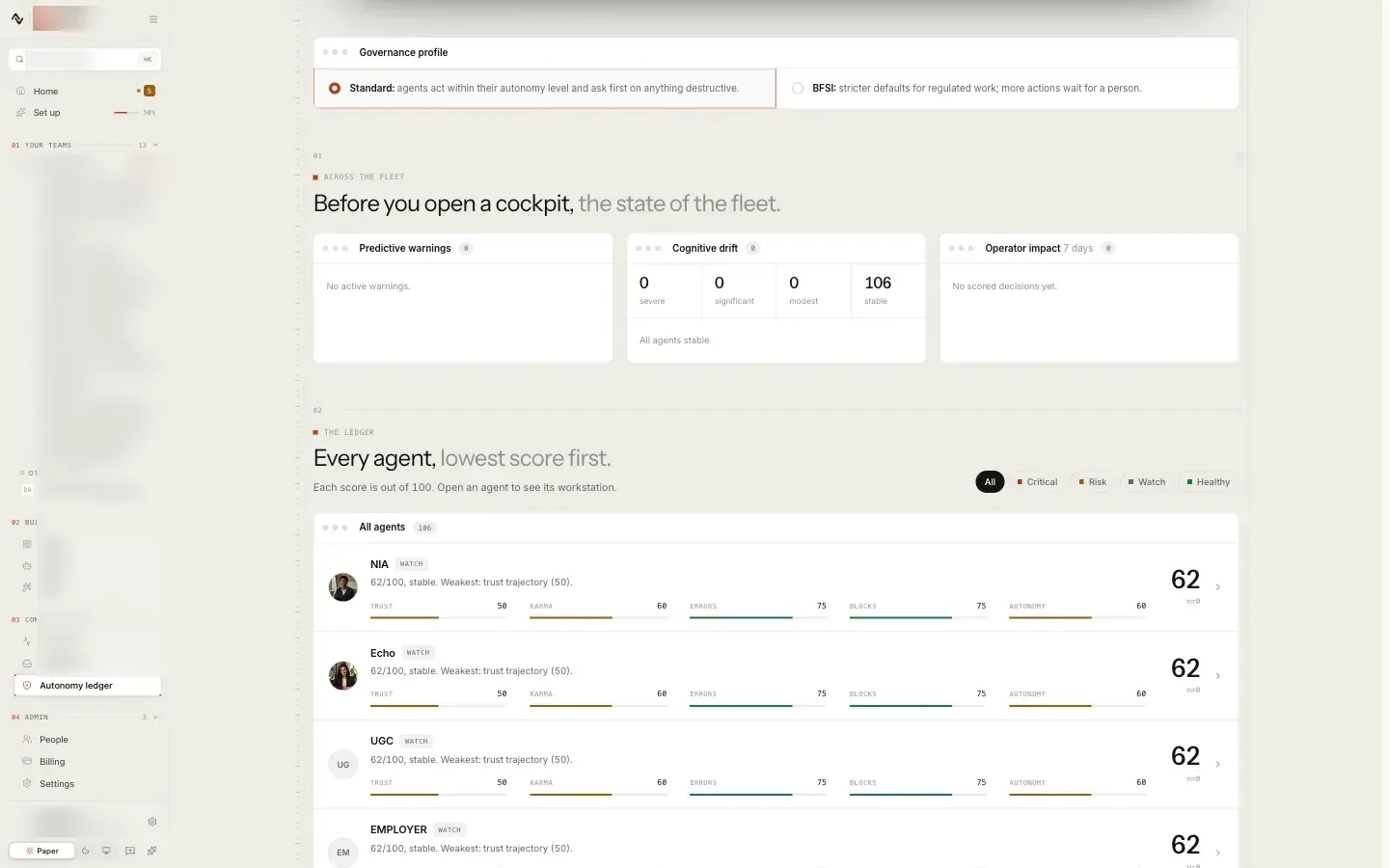
| One audit ledger per decision | Yes Decision ledger | Partial Tracing captures LLM calls, tool invocations and agent decisions; no per-decision approver record. | Nagent |
| Human and agent collaboration | |||
| Multi-person live sessions | Yes Shared team rooms | Not published | Nagent |
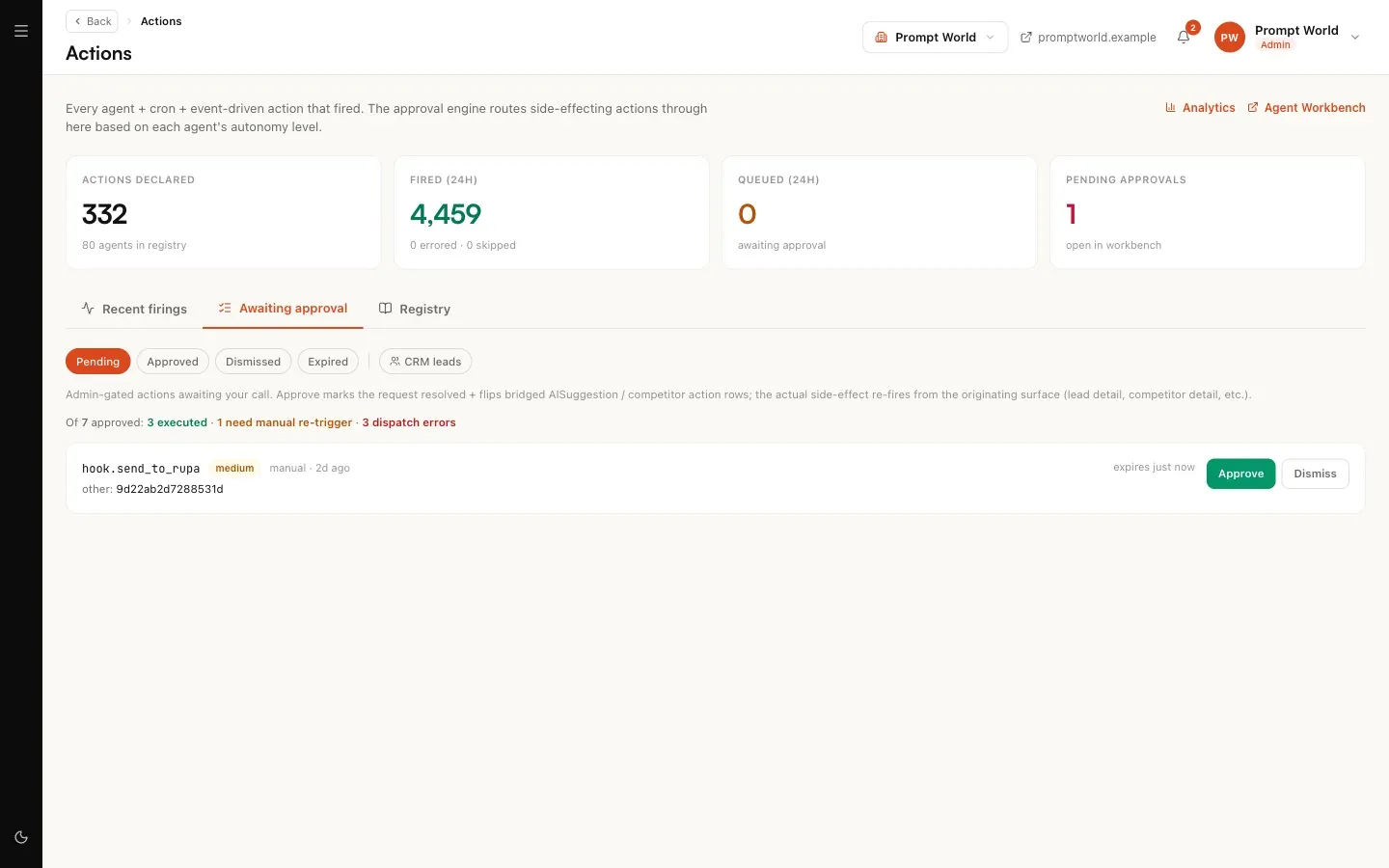
| Approval before irreversible actions | Yes Inbox approval | Yes MCP tool require_approval pauses the run for an approval response before calling tools; customer builds approval UX. | Level |
| Inbox and hand-off | Yes Inbox | Partial Human-in-the-loop workflow asks the user and waits for approval; preview, workflows retire 1 December 2026. | Nagent |
| Instruction capture | Yes Captured instructions | Partial Procedural and user-profile memory infer routines and preferences from interactions for reuse; preview. | Nagent |
| Governance | |||
| Role-based access | Yes 6 workspace roles | Yes Built-in Foundry roles including Agent Consumer, custom roles, assignable at resource, project or single-agent scope. | Level |
| Per-agent budget caps | Yes Per-agent caps | Partial AI Gateway applies tokens-per-minute limits and token quotas per project; no per-agent cap documented. | Nagent |
| Kill switch | Yes Kill switch | Partial Control Plane stops a published agent, but existing runs are not terminated. | Nagent |
| Tenant isolation | Yes Tenant isolation | Yes Prompts, completions and your data are not available to other customers; stored in your Azure tenant. | Level |
| Append-only audit | Yes Append-only trail | Yes Purview Audit captures Foundry prompts and responses in the unified audit log; eDiscovery export supported. | Level |
| Data residency options | Yes Private VPC | Yes Choose region; private networking in your virtual network with bring-your-own storage keeping agent data in your tenant. | Level |
| Bounded autonomy | |||
| Graded autonomy levels | Yes L1 Observe to L5 Lead | Partial Per-tool approval setting (always or never) on MCP tools; no graded autonomy levels per agent. | Nagent |
| Promotion on evidence | Yes On approved work | Not published | Nagent |
| Demotion and reform | Yes On its record | Not published | Nagent |
| Guardrail types | Yes Scope, budget, approval | Yes Content harms, prompt shields, protected material, PII, task adherence controls; agent tool-call intervention points in preview. | Level |
| Learning loop | |||
| Feedback without retraining | Yes Instructions, memory | Partial Preview agent optimizer rewrites instructions and tool descriptions from evaluation scores; not driven by human feedback. | Nagent |
| KPI-linked agent score | Yes Agent scorecards | Not published Fleet KPIs cover runs, cost and compliance only. | Nagent |
| Evaluation before release | Yes Tested before release | Yes Pre-production evaluation with built-in and custom evaluators, red teaming, and automated quality gates in CI/CD. | Level |
| Growth depth | |||
| Marketing, sales and CX agents out of the box | Yes MIRA, SERA, CREA | Partial Starter manifests such as Marketing Copy Drafter and Meeting Prep Briefing; templates to adapt, not shipped agents. | Nagent |
| Marketplace breadth | No Ready-made teammates | Yes Foundry catalog lists 48 agent starter manifests alongside model and solution template catalogs. | Microsoft Foundry (Azure) |
| Model choice | Yes Per agent | Yes Agents use many catalog models such as GPT-4o, Llama and DeepSeek; swap models without code changes. | Level |
| Connected tools | Yes Composio, your API | Yes More than 1,400 prebuilt connections to business systems; MCP, OpenAPI, SharePoint and Fabric tools documented. | Level |
| Forward deployed delivery | Yes Growth Pods | Partial Agent Factory offers co-building with Microsoft forward deployed engineers for eligible customers via account team. | Nagent |
| Outcome proof | Yes Customer stories | Yes | Level |
Where Nagent works with Microsoft Foundry (Azure)
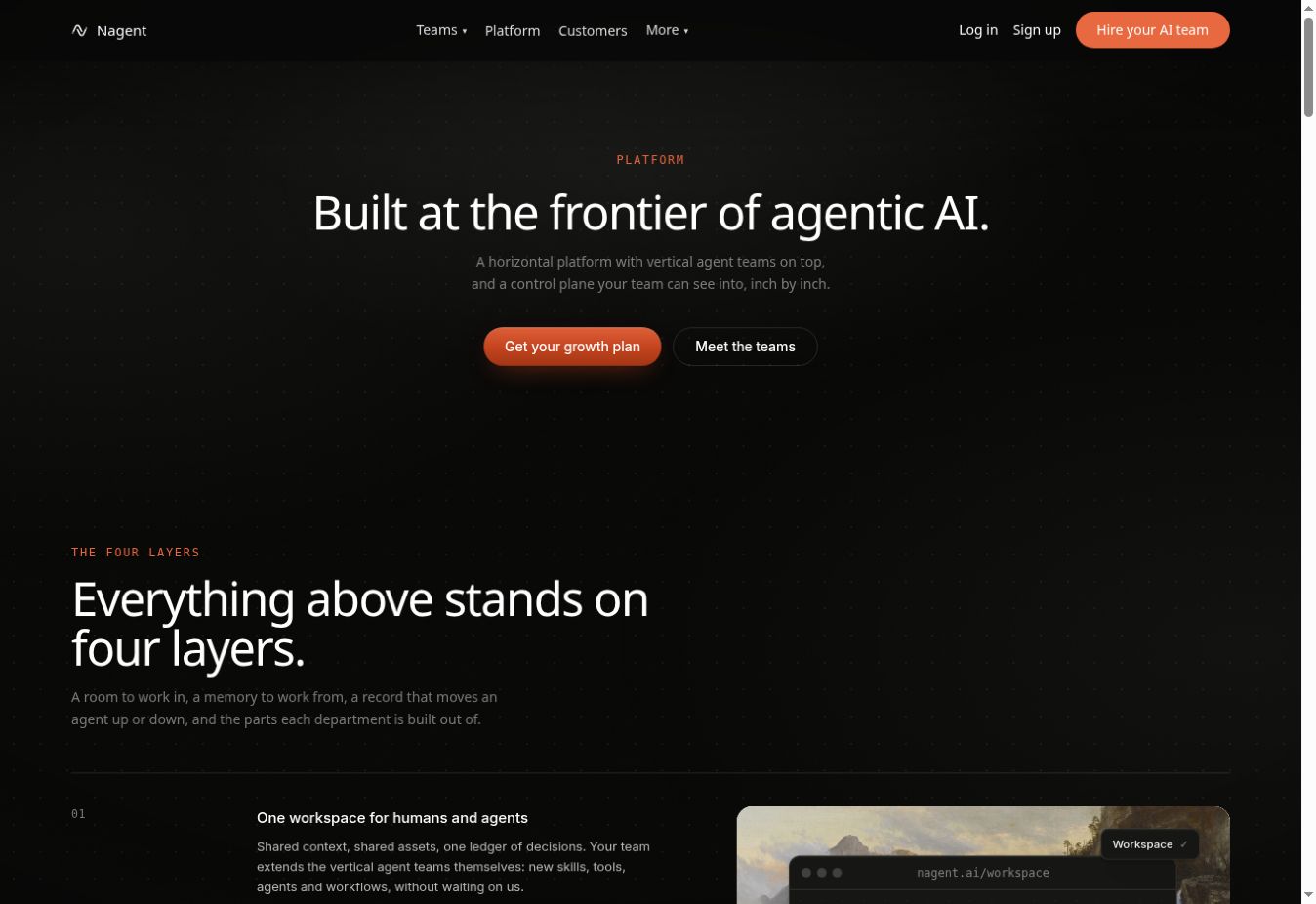
Foundry suits engineering teams building custom agents on Azure for internal apps. Nagent is the ready-made growth layer beside it: Azure is among the tools Nagent connects to, and Enterprise adds private VPC deployment with bring-your-own model and key. Your platform team keeps Foundry for its own builds while MIRA, SERA and CREA run marketing, sales and content.
What Microsoft Foundry (Azure) is and does
Microsoft Foundry provides model and agent development within Azure. Its pricing surface links multiple services and tools rather than one all-inclusive growth-team subscription. [V1] [V2]
Microsoft Foundry (Azure) promotes:
- Build custom enterprise agents
- Evaluate and observe agent applications
- Connect AI execution with Azure infrastructure
What Microsoft Foundry (Azure) claims: Positions Foundry as an enterprise platform for production AI applications and agents.
What its pages show: Official Azure material covers model access, agent development, evaluation, observability, safety and enterprise controls.
Specific published product behaviour
Agent runtime, consumption layers and isolation design
Microsoft Foundry Agent Service supports managed hosted agents built with external frameworks, and the documentation lists search, code, API and other tool paths. Its pricing page charges service resources and connected models or tools through separate meters. A hosted runtime therefore needs an application design, identity boundary and operating budget; it does not arrive as a ready-made sales and marketing team.
Microsoft’s agent application guidance flags an isolation limitation for managed conversation history among end users within the same project, so a buyer must design the correct project and data boundary rather than assume chat history is automatically isolated. Check the selected hosting mode, network configuration, tokens, tools, evaluations and team responsibilities. A custom Nagent deployment could use Foundry as infrastructure; they are not always exclusive alternatives.
Primary sources: Official hosted agent documentation ↗ · Official Foundry Agent Service pricing ↗ · Official agent applications guidance ↗
Governance
Pricing
Microsoft Foundry (Azure): Consumption-based cloud pricing. Model, tools, storage and related services have separate meters; no single platform seat rate. [V2] [N3]
| Monthly cost | A team of 5 | A growth team of 25 | A department of 100 |
|---|---|---|---|
| Nagent | $299 / month Team plan | $1,499 / month Business plan | By quote Enterprise |
| Microsoft Foundry (Azure) | Usage based Priced on cloud consumption | Usage based Priced on cloud consumption | Usage based Priced on cloud consumption |
List prices; Nagent checked 4 October 2026. Method and every vendor
Running the evaluation
Ask Microsoft Foundry (Azure) in the demo: Which team owns every policy decision, integration, on-call response and model regression after launch? Method: evaluation framework.
Verdict
For a growth team that wants the work done with people approving, Nagent is the stronger choice, ahead of Microsoft Foundry (Azure) on 15 of the features above.
Microsoft Foundry (Azure) is the better fit when you are building your own agent application on Microsoft Foundry in Azure, with a platform engineering team to evaluate, observe and run it.
Foundry is a foundation on which a Nagent-like system can be built. Compare build-and-operate cost with buy-and-configure cost; model consumption alone is not an alternative-service quote.
Screenshots and source context
Frequently asked questions
Is Nagent an alternative to Microsoft Foundry (Azure)?
Partly, and the two also work together. Foundry suits engineering teams building custom agents on Azure for internal apps. Nagent is the ready-made growth layer beside it: Azure is among the tools Nagent connects to, and Enterprise adds private VPC deployment with bring-your-own model and key. Your platform team keeps Foundry for its own builds while MIRA, SERA and CREA run marketing, sales and content.
How does Nagent pricing compare with Microsoft Foundry (Azure)?
Microsoft Foundry (Azure): Consumption-based cloud pricing. Model, tools, storage and related services have separate meters; no single platform seat rate. Nagent: from $29.99 per month.
Does Microsoft Foundry (Azure) offer shared memory and human approvals like Nagent?
Managed long-term memory stores that agents read and write across sessions, by scope; Memory is public preview. MCP tool require_approval pauses the run for an approval response before calling tools; customer builds approval UX. Nagent has the Knowledge Hub and Inbox approval.
Which is better for Marketing, Sales, CX teams: Nagent or Microsoft Foundry (Azure)?
Nagent, for most growth teams. Microsoft Foundry (Azure) fits better when you are building your own agent application on Microsoft Foundry in Azure, with a platform engineering team to evaluate, observe and run it.
How does Microsoft Foundry (Azure)'s security compare with Nagent's?
Microsoft Foundry (Azure): SOC 2: Type II; ISO 27001: certified; SSO: yes. Nagent's are on nagent.ai/security.
Sources and research notes
- V1 · Official product / pricing source
Microsoft Foundry (Azure) · product ↗https://azure.microsoft.com/en-us/products/ai-foundry · Public material checked 21 to 29 September 2026 - V2 · Official product / pricing source
Microsoft Foundry (Azure) · commercial / feature reference ↗https://azure.microsoft.com/en-us/pricing/details/microsoft-foundry/ · Public material checked 21 to 29 September 2026 - V3 · Official source
Foundry product overview ↗https://azure.microsoft.com/en-us/products/ai-foundry · Public material checked 21 to 29 September 2026 - V4 · Official source
Official hosted agent documentation ↗https://learn.microsoft.com/en-us/azure/foundry/agents/concepts/hosted-agents · Public material checked 21 to 29 September 2026 - V5 · Official source
Official Foundry Agent Service pricing ↗https://azure.microsoft.com/en-us/pricing/details/foundry-agent-service/ · Public material checked 21 to 29 September 2026 - V6 · Official source
Official agent applications guidance ↗https://learn.microsoft.com/en-us/azure/foundry/agents/how-to/agent-applications · Public material checked 21 to 29 September 2026 - N1 · Official source
Nagent · platform, workspace and security ↗https://nagent.ai/platform · Public material checked 21 to 29 September 2026 - N2 · Official source
Nagent · security and compliance ↗https://nagent.ai/platform/security · Public material checked 21 to 29 September 2026 - N3 · Official source
Nagent · published plans ↗https://nagent.ai/pricing · Public material checked 21 to 29 September 2026 - THESIS · Official source
The Nagent Thesis ↗https://nagent.ai/artefacts/nagent-thesis · Public material checked 21 to 29 September 2026 - GOVERNANCE-SOURCE · Official source
State of Agent Governance ↗https://nagent.ai/artefacts/state-of-agent-governance · Public material checked 21 to 29 September 2026