
Nagent vs Muse (Meta)
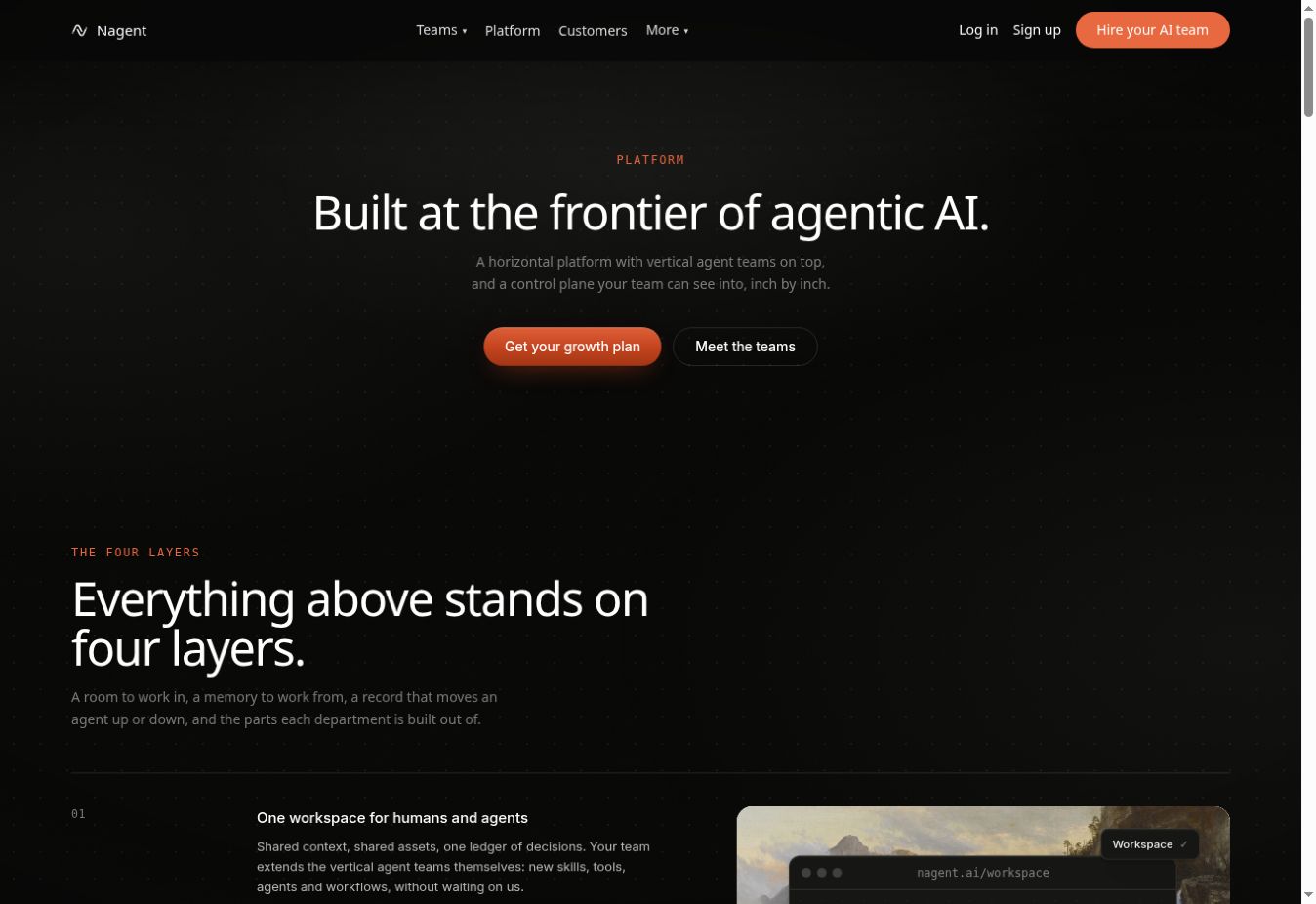
Compare a general autonomous agent adjacent to a growth operating platform with Nagent, the multiplayer AI platform for growth.
Muse (Meta) is a general autonomous agent adjacent to a growth operating platform, with pricing listed as free core; paid plans. Nagent is multiplayer AI for growth: agent teams for marketing, sales and CX in one shared workspace, from $29.99 a month, with autonomy earned on approved work. Pick Nagent when agents should do the work and people approve it.
Nagent vs Muse (Meta): the short answer
Nagent leads Muse (Meta) on 22 of 26 features. Muse (Meta) covers part of persistent cross-agent memory, one audit ledger per decision, inbox and hand-off, instruction capture, kill switch, append-only audit, graded autonomy levels, evaluation before release and connected tools, and publishes nothing on 13 more.
Level: approval before irreversible actions, tenant isolation and guardrail types.
Where Muse (Meta) leads: marketplace breadth.
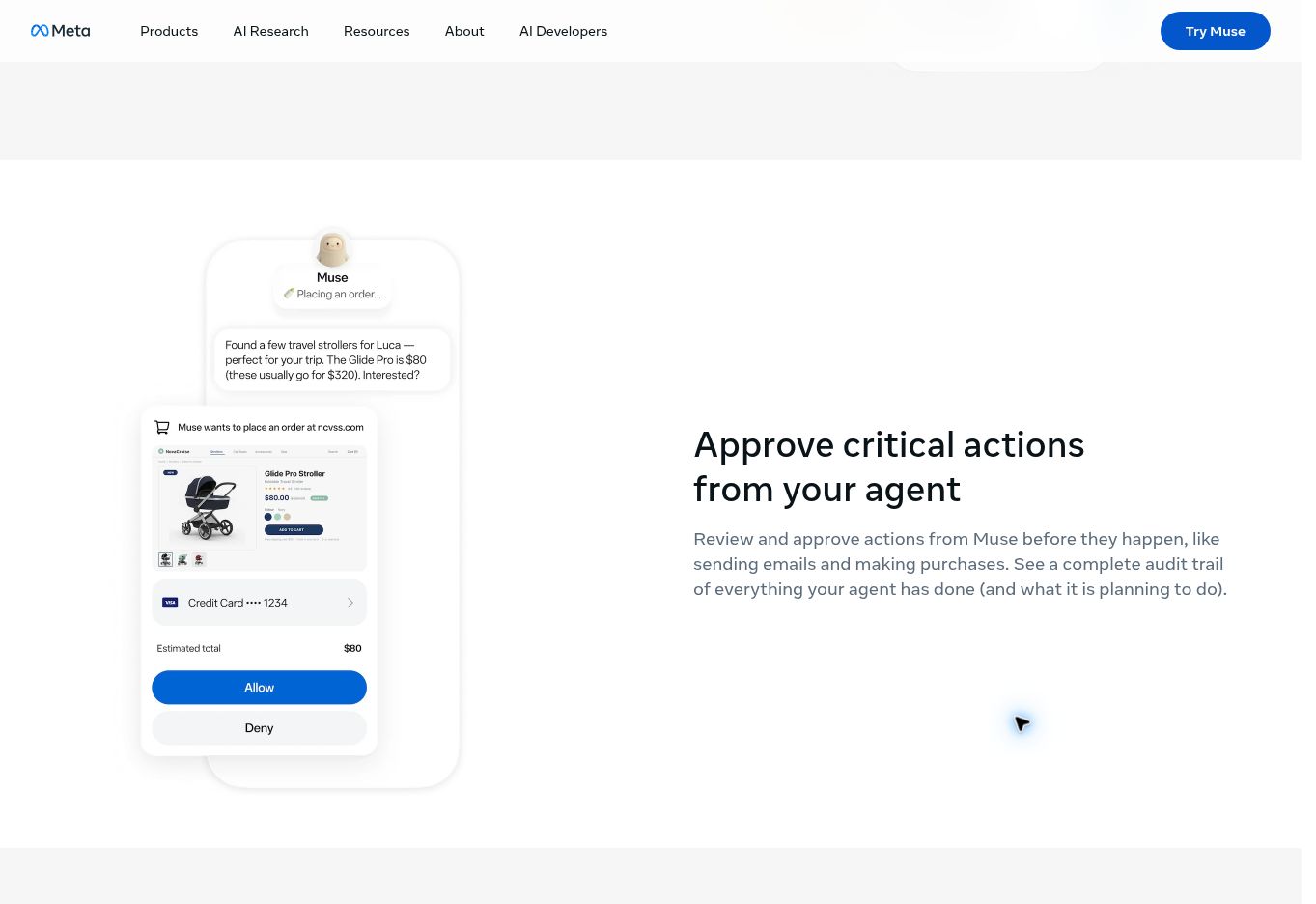
Where Muse (Meta) fits better: You want Muse from Meta to handle personal travel, appointments, shopping and email for you, with approval prompts on its own virtual machine.
At a glance
| Dimension | Nagent | Muse (Meta) |
|---|---|---|
| What it is | Multiplayer AI for growth teams | A general autonomous agent adjacent to a growth operating platform |
| Who does it | Governed agent teams | Arrange personal travel and appointments; Send emails and handle shopping after approval; Coordinate personal goals and tasks across connected apps |
| Starting price | From $29.99 per month [N3] | Free core; paid plans [V2] |
| Pricing basis | Seats and monthly credits | Meta describes free access and optional subscriptions, but the official pages reviewed did not state a reliable plan-by-plan price. This is a US consumer offer, not an enterprise growth quote. |
| Security | ISO/IEC 27001:2022 certified by InterCert; SOC 2 Type II programme underway | SOC 2: not published; ISO 27001: not published; SSO: not published. Trust page |
Nagent vs Muse (Meta), feature by feature
| Capability | Nagent | Muse (Meta) | Ahead |
|---|---|---|---|
| Shared context | |||
| Persistent cross-agent memory | Yes Knowledge Hub | Partial Muse remembers what matters to one person and acts on it; memory is per user, not shared. | Nagent |
| Shared human and agent workspace | Yes Team rooms | Not published | Nagent |
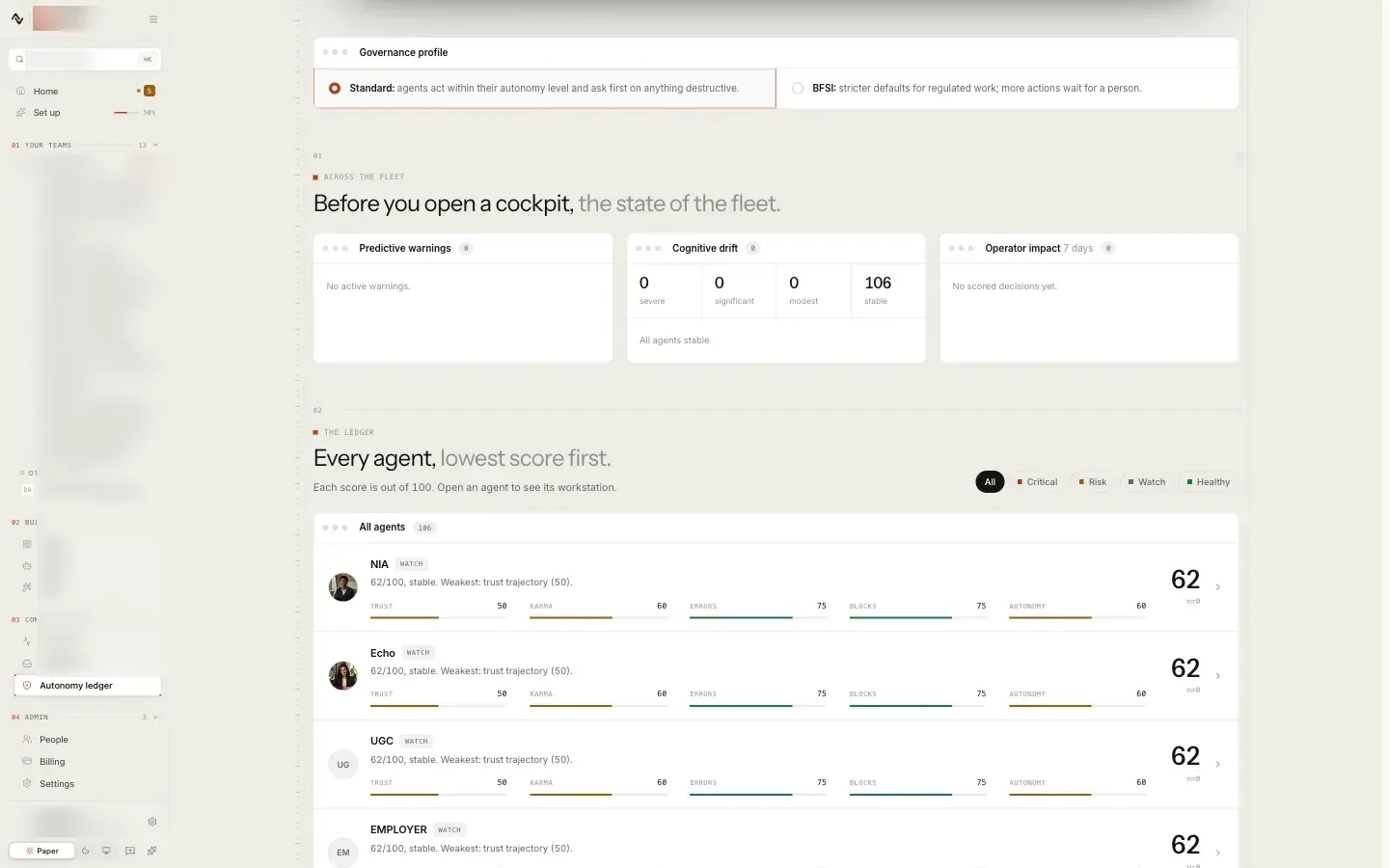
| One audit ledger per decision | Yes Decision ledger | Partial Shows an audit trail of everything Muse has done and plans to do; no per-decision rationale or approver. | Nagent |
| Human and agent collaboration | |||
| Multi-person live sessions | Yes Shared team rooms | Not published | Nagent |
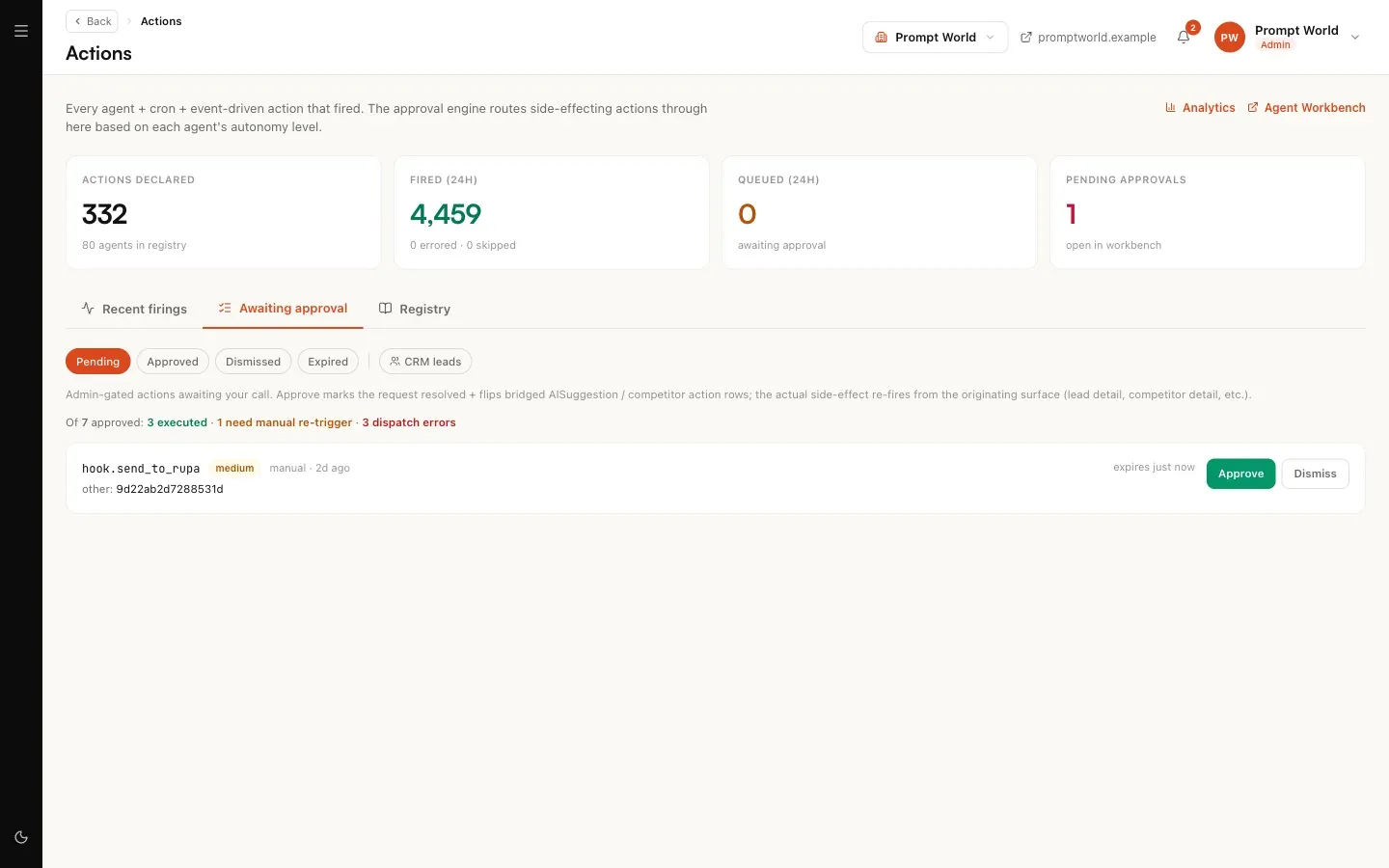
| Approval before irreversible actions | Yes Inbox approval | Yes Sentinel pauses actions needing approval and shows the exact action; purchases need approval every time. | Level |
| Inbox and hand-off | Yes Inbox | Partial Muse keeps working in background and returns to its one owner when something needs approval. | Nagent |
| Instruction capture | Yes Captured instructions | Partial Retains details mentioned once and acts on them later; users can tell it to forget things. | Nagent |
| Governance | |||
| Role-based access | Yes 6 workspace roles | Not published | Nagent |
| Per-agent budget caps | Yes Per-agent caps | Not published | Nagent |
| Kill switch | Yes Kill switch | Partial Users can take over the browser at any time, which pauses the agent; no stop control described. | Nagent |
| Tenant isolation | Yes Tenant isolation | Yes Each user gets a dedicated VM; architecture isolates each user's data from each other. | Level |
| Append-only audit | Yes Append-only trail | Partial In-app audit trail of actions taken and planned; no exportable or immutable audit log described. | Nagent |
| Data residency options | Yes Private VPC | Not published | Nagent |
| Bounded autonomy | |||
| Graded autonomy levels | Yes L1 Observe to L5 Lead | Partial Per-connector allow, deny or ask policies with one-time to perpetual grants; no per-agent autonomy ladder. | Nagent |
| Promotion on evidence | Yes On approved work | Not published | Nagent |
| Demotion and reform | Yes On its record | Not published | Nagent |
| Guardrail types | Yes Scope, budget, approval | Yes User connector policies plus input and output classifiers, prompt-injection detection and malicious-site blocking. | Level |
| Learning loop | |||
| Feedback without retraining | Yes Instructions, memory | Not published | Nagent |
| KPI-linked agent score | Yes Agent scorecards | Not published | Nagent |
| Evaluation before release | Yes Tested before release | Partial Vendor ran red teaming, dogfooding and offline prompt-injection evals; customers cannot test changes before release. | Nagent |
| Growth depth | |||
| Marketing, sales and CX agents out of the box | Yes MIRA, SERA, CREA | Not published | Nagent |
| Marketplace breadth | No Ready-made teammates | Not published | Muse (Meta) |
| Model choice | Yes Per agent | Not published | Nagent |
| Connected tools | Yes Composio, your API | Partial Consumer connectors: email, Instagram, WhatsApp, Link by Stripe payments; no CRM, ads or CMS tools. | Nagent |
| Forward deployed delivery | Yes Growth Pods | Not published | Nagent |
| Outcome proof | Yes Customer stories | Not published | Nagent |
Running Muse (Meta) and Nagent together
Muse is a personal agent for one person's errands and apps, so it does not overlap with Nagent's shared growth workspace. A founder might use Muse to book travel to a conference while MIRA plans the event campaign and MOXA posts approved updates. Nothing passes between Muse and Nagent except what a person chooses to share in a team room.
What Muse (Meta) is and does
Meta announced Muse as a personal AI agent on 8 September 2026. Its product page shows a dedicated virtual machine and browser, connected personal apps, task memory, approval prompts for email and purchases, and an activity trail. Muse is distinct from the Muse Spark model family and Muse Image. The public material does not describe a multi-person company workspace. [V1] [V2]
Muse (Meta) promotes:
- Arrange personal travel and appointments
- Send emails and handle shopping after approval
- Coordinate personal goals and tasks across connected apps
What Muse (Meta) claims: Early positioning suggests a more proactive personal-agent experience.
What its pages show: Current public reporting describes a general personal agent; growth workflows and enterprise governance are not yet publicly established.
Specific published product behaviour
Muse is a live personal agent, not an unresolved model name
Meta announced Muse on 8 September 2026 as a consumer personal agent available in the United States. Its official product page shows a persistent virtual machine and browser, connected personal apps, task execution, memory, sensitive-action approval prompts and an audit trail. Meta describes a separate Sentinel agent that screens external actions. These are published design claims; the illustration is not a product test.
Muse the personal agent is distinct from the Muse Spark models and Muse Image. The official pages reviewed do not establish shared organizational task ownership, a growth-team administrator console or a comparable enterprise price. It is best used as an adjacent agent design reference rather than a direct Dust or Nagent replacement.
Primary sources: Meta Muse product page ↗ · Meta launch announcement ↗
Governance
Pricing
Muse (Meta): Free core; paid plans. Meta describes free access and optional subscriptions, but the official pages reviewed did not state a reliable plan-by-plan price. This is a US consumer offer, not an enterprise growth quote. [V2] [N3]
| Monthly cost | A team of 5 | A growth team of 25 | A department of 100 |
|---|---|---|---|
| Nagent | $299 / month Team plan | $1,499 / month Business plan | By quote Enterprise |
| Muse (Meta) | Free to start Free core; paid plans not published | Free to start Free core; paid plans not published | Free to start Free core; paid plans not published |
List prices; Nagent checked 4 October 2026. Method and every vendor
Reviews and proof
A WIRED hands-on article raises privacy and permission-transparency concerns. This is one reviewer’s reported experience, not aggregate customer sentiment or a controlled benchmark. See the independent-review link below.
Running the evaluation
Ask Muse (Meta) in the demo: Can multiple authorized people govern the same agent task, and does Meta offer a separately documented enterprise deployment for growth work? Method: evaluation framework.
Verdict
For a growth team that wants the work done with people approving, Nagent is the stronger choice, ahead of Muse (Meta) on 22 of the features above.
Muse (Meta) is the better fit when you want Muse from Meta to handle personal travel, appointments, shopping and email for you, with approval prompts on its own virtual machine.
Muse is an adjacent consumer agent, now a verified product rather than an unresolved name. Its task planning and action controls are relevant to the category, but a personal agent is not a direct substitute for a governed growth team with shared organizational ownership.
Screenshots and source context
Frequently asked questions
Is Nagent an alternative to Muse (Meta)?
For some of the work. Muse is a personal agent for one person's errands and apps, so it does not overlap with Nagent's shared growth workspace. A founder might use Muse to book travel to a conference while MIRA plans the event campaign and MOXA posts approved updates. Nothing passes between Muse and Nagent except what a person chooses to share in a team room.
How does Nagent pricing compare with Muse (Meta)?
Muse (Meta): Free core; paid plans. Meta describes free access and optional subscriptions, but the official pages reviewed did not state a reliable plan-by-plan price. This is a US consumer offer, not an enterprise growth quote. Nagent: from $29.99 per month.
Does Muse (Meta) offer shared memory and human approvals like Nagent?
Muse remembers what matters to one person and acts on it; memory is per user, not shared. Sentinel pauses actions needing approval and shows the exact action; purchases need approval every time. Nagent has the Knowledge Hub and Inbox approval.
Which is better for Marketing, Sales, CX teams: Nagent or Muse (Meta)?
Nagent, for most growth teams. Muse (Meta) fits better when you want Muse from Meta to handle personal travel, appointments, shopping and email for you, with approval prompts on its own virtual machine.
How does Muse (Meta)'s security compare with Nagent's?
Muse (Meta): SOC 2: not published; ISO 27001: not published; SSO: not published. Nagent's are on nagent.ai/security.
Sources and research notes
- V1 · Official product / pricing source
Muse (Meta) · product ↗https://ai.meta.com/muse/ · Public material checked 21 to 29 September 2026 - V2 · Official product / pricing source
Muse (Meta) · commercial / feature reference ↗https://ai.meta.com/muse/ · Public material checked 21 to 29 September 2026 - V3 · Official source
Muse personal agent · official product page ↗https://ai.meta.com/muse/ · Public material checked 21 to 29 September 2026 - V4 · Official source
Muse launch, 8 September 2026 · official ↗https://about.fb.com/news/2026/09/introducing-muse-personal-ai-agent/ · Public material checked 21 to 29 September 2026 - V5 · Independent review surface
Independent hands-on review · WIRED ↗https://www.wired.com/story/metas-muse-is-better-at-surveilling-than-helping-me · Public material checked 21 to 29 September 2026 - N1 · Official source
Nagent · platform, workspace and security ↗https://nagent.ai/platform · Public material checked 21 to 29 September 2026 - N2 · Official source
Nagent · security and compliance ↗https://nagent.ai/platform/security · Public material checked 21 to 29 September 2026 - N3 · Official source
Nagent · published plans ↗https://nagent.ai/pricing · Public material checked 21 to 29 September 2026 - THESIS · Official source
The Nagent Thesis ↗https://nagent.ai/artefacts/nagent-thesis · Public material checked 21 to 29 September 2026 - GOVERNANCE-SOURCE · Official source
State of Agent Governance ↗https://nagent.ai/artefacts/state-of-agent-governance · Public material checked 21 to 29 September 2026