
The Commoditization of Cognition and the Rise of the Orchestration Moat
The Shift: From Model Obsession to Systems Architecture
If you study the historical arcs of massive platform shifts from the mainframe to the PC, from on-premise servers to the cloud, and from desktop to mobile, a universal pattern emerges: the underlying foundational technology eventually becomes invisible. In the early days of a technological revolution, the market is obsessed with the engine. In the early days of the generative AI boom, every enterprise buyer, venture capitalist, and tech commentator was hyper-focused on parameter counts, context windows, and benchmark scores. Companies mistakenly believed that having exclusive access to the smartest Large Language Model (LLM) was their ultimate competitive moat.
That era of model obsession is officially over. Today, we have a plurality of frontier models. OpenAI, Anthropic, DeepSeek, and Google are locked in a relentless, compounding price-and-performance war. Intelligence has become incredibly cheap, widely accessible, and highly commoditised. When any startup or legacy enterprise can rent world-class cognitive reasoning for pennies per million tokens, the raw intelligence itself ceases to be a differentiator.
So, where does the value accrue in the modern enterprise AI stack?
It accrues in the orchestration layer. An LLM in strict isolation is entirely stateless; it has no persistent memory, no secure connection to your proprietary databases, and no ability to take physical or digital action in the outside world. It is effectively a brilliant brain floating in a vacuum. To make that brain commercially useful, it requires an intricate, highly secure nervous system. It requires context. This is exactly why Context Orchestration AI Is the Real Moat in Agent Systems. This orchestration layer is the critical connective tissue that bridges the gap between raw, commoditised reasoning and practical, outcome-driven business execution.
Deconstructing the Orchestration Moat
To truly understand why Context Orchestration AI Is the Real Moat in Agent Systems, we must deeply deconstruct what "context orchestration" actually means in a production-grade enterprise environment. It is far more complex than simple prompt engineering, and it goes vastly beyond chaining two LLM API calls together in a Python script. True context orchestration involves the mastery and synchronisation of four critical pillars:
1. State and Memory Management: A standard interaction with a generative AI chatbot is episodic. You ask a question, it provides an answer, and the session dies. The AI has amnesia. But enterprise workflows are continuous, long-running, and non-linear. Imagine an AI agent handling a complex vendor procurement approval. That agent must remember what the vendor stated in an email three days ago, cross-reference it with a newly uploaded invoice today, and track the exact "state" of the approval process across multiple stakeholders. The orchestration layer provides this persistent memory, allowing the agent to function over long time horizons without losing the operational thread.
2. Dynamic Tool Utilization and Routing: Intelligence is fundamentally useless if it cannot act upon its environment. Context orchestration involves giving the AI agent hands. It must dynamically decide based on real-time reasoning when to pull data from Salesforce, when to query a secure SQL database, when to trigger a webhook in Jira, and when to send a localized Slack message. The moat is built by seamlessly integrating these enterprise tools, enabling the reasoning engine to manipulate the real world securely and reliably.
3. Grounding via RAG (Retrieval-Augmented Generation): General foundational models know how to write a standard employment contract; they do not know your specific company's remote work policy or compliance guidelines. Orchestrating context means securely injecting the exact right piece of unstructured enterprise data into the agent's working memory at the exact right millisecond. This ensures the output is not just generally accurate, but perfectly aligned with internal corporate truths.
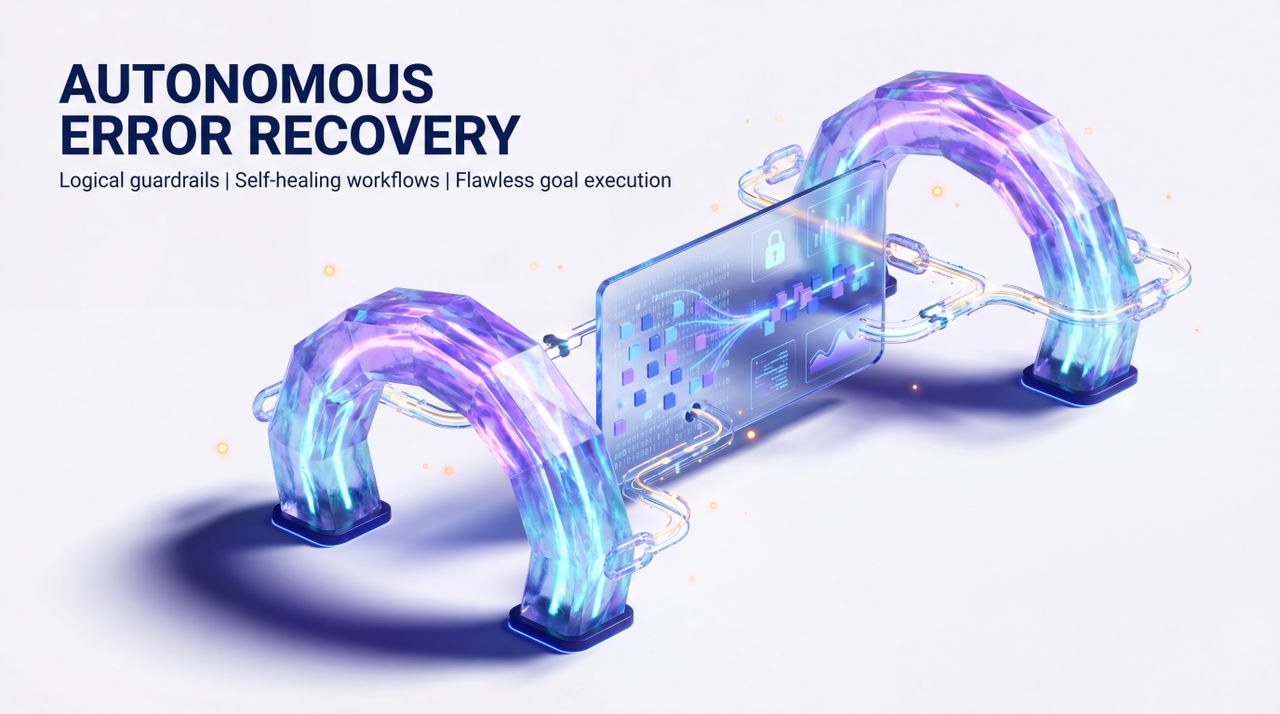
4. Logical Guardrails and Autonomous Error Recovery: In the real world of enterprise IT, APIs time out, databases return null values, and human inputs are flawed. A brittle, legacy workflow script will simply crash when it encounters an unexpected variable. An orchestrated agentic system, however, will recognize the failure, use its memory to understand the broader context, and autonomously attempt an alternative path to achieve the goal.
When you build this sophisticated layer, you build absolute defensibility. An enterprise will gladly swap out the underlying LLM if a cheaper, faster one is released tomorrow. But they will never rip out the orchestration layer that connects their CRM, their billing system, and their internal knowledge bases into a seamless, automated digital workforce. This is the definition of stickiness.
The Death of the "Thin Wrapper"
This economic reality is exactly why point solutions and thin "wrappers" are dying at an accelerated rate, and why comprehensive infrastructure platforms are thriving. A thin wrapper, a company that simply places a slick user interface over an OpenAI API call, has zero defensibility. The moment the underlying model provider updates their native UI, the wrapper’s entire business model evaporates.
Forward-thinking organizations and operators realize that tying their operational future to a single AI provider or a fragile point solution is a massive strategic error. By recognizing that Context Orchestration AI Is the Real Moat in Agent Systems, enterprises are fundamentally shifting their procurement strategies. They are looking for agnostic, horizontal infrastructure. They want the power to orchestrate their proprietary business context and the total freedom to plug-and-play the reasoning engines beneath it as the market evolves.
How Nagent Engineers the Ultimate Orchestration Moat
Transforming the highly complex computer science of context orchestration into an accessible, enterprise-ready platform is a monumental engineering challenge. This is exactly where Nagent is driving change and striving towards success in the enterprise AI landscape. Nagent was architected from day one on the thesis that orchestration is the ultimate value driver. Nagent does not build foundation models; Nagent builds the ultimate, highly secure environment for those models to do actual, verifiable work.
Nagent has abstracted the profound complexity of state management, RAG, and API routing into an elegant, visual experience. Through the Nagent Agent Builder Studio, the intricate work of context orchestration is fully democratized for the operator class.
When a Revenue Operations (RevOps) leader uses Nagent to build an autonomous lead-qualification agent, they aren't writing code to manage API latency or vector database chunking strategies. They are using a zero-code, visual node system. They simply drag a Memory Node onto the canvas to ensure the agent remembers the client’s previous interactions. They attach a Knowledge Node to ground the agent in the company's latest pricing tiers. They connect Tool Nodes to securely read and write data to HubSpot.
Because Context Orchestration AI Is the Real Moat in Agent Systems, Nagent has aggressively engineered its platform to remove all friction associated with building it:
Multimodal Click-to-Switch: Because the model itself is a commodity, Nagent ensures you are never locked into one provider. The platform is inherently multimodal. You can route your orchestrations through OpenAI for highly complex logical reasoning, and instantly switch to DeepSeek or Claude for cost-effective data processing all within the same visual workflow, with a single click.
1,000+ Integrations Out-of-the-Box: Context requires unparalleled connectivity. Nagent provides over 1,000 pre-built integrations to enterprise tools. Whether it is an ERP, a CRM, or a legacy database, Nagent ensures your agents can orchestrate actions across your entire tech stack without waiting for IT to build custom APIs. Furthermore, custom API integrations are readily available for bespoke internal systems.
No API Keys Required: To make orchestration truly frictionless for non-technical teams, Nagent operates as a fully managed platform. Users do not need to bring their own LLM API keys or manage complex, decentralised billing with various AI research labs. The platform abstracts the backend entirely, allowing teams to focus 100% on business logic and outcome design.
For teams that deeply understand the value of orchestration but lack the immediate bandwidth to design it from scratch, Nagent offers the Agent Store, a robust library of highly orchestrated, production-ready agents tailored for specific use cases (such as the Campaign Hub for marketing automation). And for massive global enterprises looking to build proprietary, deeply integrated orchestration layers across thousands of employees, Nagent provides an Agentic AI Lab as a Service, acting as an elite, specialized engineering arm to architect and deploy these complex systems on your behalf.
The Economic Leverage of Orchestrated Context
When a company successfully deploys deep context orchestration, the economic leverage achieved is staggering. You are no longer automating basic micro-tasks, like summarizing a meeting transcript or drafting an email. You are automating end to end operational workflows, such as entirely resolving a multi step customer payment dispute without human intervention.
A traditional SaaS software platform scales its value by adding more human users to the license. An orchestrated AI platform scales its value by adding more autonomous digital workers to the grid. As these Nagent-powered agents interact with your enterprise data, utilize your specific tools, and build historical memory over thousands of interactions, they become hyper-specialized to your unique business environment. The system gets smarter, faster, and more deeply entrenched in your operational success every single day.
Competitors might be able to purchase the exact same underlying LLM as you, but they can never replicate the orchestrated context you have built around it. Your highly specific combination of proprietary data, logical guardrails, and tool integrations becomes an unbreachable competitive advantage.
Conclusion: The Future Belongs to the Orchestrators
As we look toward the next horizon of enterprise software, the narrative is crystal clear. Do not build your business around a model. Build your business around your context.
The companies that will absolutely dominate their respective industries over the next decade will not be the ones that have the cleverest prompts or the most expensive LLM subscriptions. They will be the ones that build the most resilient, context-aware, and deeply integrated autonomous systems. By embracing the absolute reality that Context Orchestration AI is the Real Moat in Agent Systems, and by actively leveraging platforms like Nagent to execute that vision without technical friction, you transition your organisation from passive software consumers into active creators of an intelligent, unstoppable digital workforce.