
Multi-Agent Workflow Orchestration in Enterprise GTM
Multi-Agent Workflow Orchestration in Enterprise GTM
Multi-agent workflow orchestration is how enterprise GTM teams move a lead from first signal to closed deal without a human touching every step. A single agent can qualify a lead. It cannot negotiate a sequence, update a CRM, trigger a proposal, and alert a CSM, all without losing context. That requires orchestrated hand-offs between specialized agents, each passing enriched state forward. This post maps exactly how that works.

Why do single-agent demos fail in production GTM?

Single agents work in isolation. They break under real workload complexity.
A demo agent qualifies a lead against a static ICP. It looks clean. But in production, that same lead needs enrichment from three data sources, a routing decision based on deal size, a personalized sequence triggered in the right CRM lane, and a hand-off to an AE with full context intact. One agent cannot hold all of that state reliably across sessions, tools, and time.
The failure mode is predictable: the agent either tries to do everything and halts mid-workflow, or it completes its narrow task and drops the context on the floor. The next agent starts cold.
This is the amnesia tax, and it kills GTM velocity faster than any tool gap. [^3]
What is a multi-agent workflow in a GTM context?
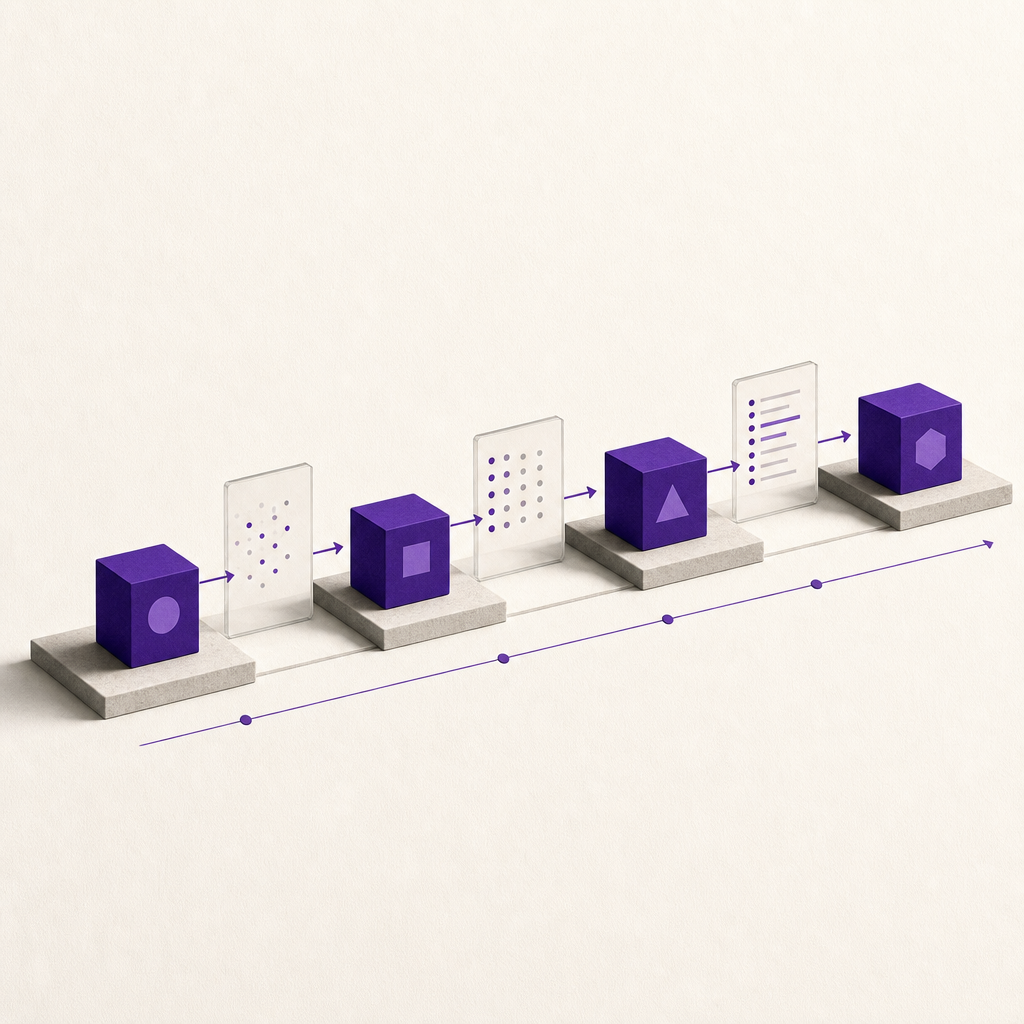
A multi-agent workflow is a coordinated system where specialized agents execute discrete GTM tasks in sequence, passing enriched state at each hand-off.
Think of it like a relay race, not a solo sprint. Each agent runs its leg at full speed. At the baton exchange, it passes everything, not just the lead record, but the reasoning, the signals, the prior decisions. The next agent picks up mid-stride.
In a B2B SaaS GTM motion, that relay looks like this:
Signal agent: monitors intent signals, website visits, and product usage data
Qualification agent: scores against ICP, enriches firmographic data
Routing agent: assigns to the right sequence, territory, and AE
Outreach agent: executes personalized multi-touch sequences
Pipeline agent: tracks engagement, flags stalls, triggers interventions
Proposal agent: generates tailored commercial documents at the right moment
Close agent: alerts the AE, surfaces objection-handling context, updates CRM
Each agent is purpose-built. None tries to do everything. The system does.
How do hand-offs actually work without losing state?
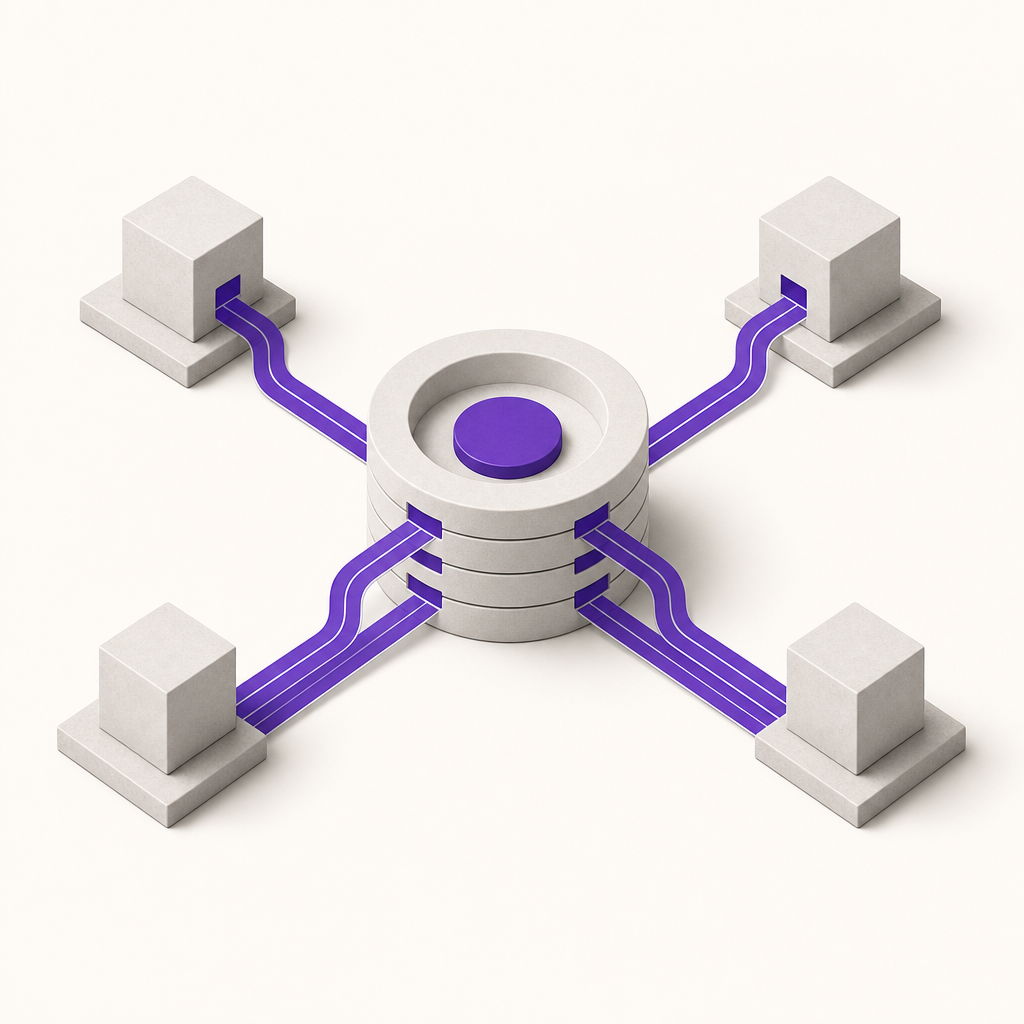
Hand-offs preserve state through a shared memory layer that every agent reads and writes to.
This is where most DIY multi-agent builds fail. Teams wire agents together with API calls but treat each hand-off as a clean slate. The receiving agent gets a lead ID. It does not get the reasoning that produced the qualification score, the prior outreach attempts, or the persona signals that shaped the messaging.
On Nagent, AI teammates and people share one context: the team room, the CRM record and the Knowledge Hub. After each action, every teammate in the workflow records:
What it observed
What decision it made and why
What the outcome was
What the next agent needs to know
The receiving teammate reads that record before acting. It inherits full context. No cold starts.
"The agents remember what worked for similar accounts six months ago. That's not a feature, that's institutional memory that actually scales.", [^1]
This pattern mirrors what high-performing human GTM teams do naturally: the SDR briefs the AE, the AE briefs the SE, the SE briefs the CSM. A shared record makes that brief happen at machine speed.
What routing logic governs which agent acts next?
Routing logic is a set of conditional rules, plus the signals in front of it, that determines which agent receives the hand-off and when.
Static routing is easy: deal size > $50K goes to enterprise lane. But production GTM is messier. A mid-market account that just opened three emails, visited the pricing page twice, and has a champion who was previously a customer, that account needs a different path than its firmographic profile suggests.
On Nagent, a chief of staff handles this. You brief SERA, the AI chief of staff for Sales, with the GTM goal in the Sales team room. She routes each piece of sales work to the teammate or person who owns it and reports where deals stand from the CRM, so a stalled deal or a new signal reaches its owner instead of sitting unnoticed.
Earned autonomy closes the loop. Every routing decision has an outcome: sequence replied to, meeting booked, deal advanced, deal lost. Those outcomes and every approval are recorded, AI teammates start supervised and are promoted level by level on their track record, and the team can see which paths convert and adjust them.
This is the difference between a workflow and an intelligent workflow.
What happens when an agent fails mid-workflow?
Failure recovery in multi-agent systems requires explicit fallback paths, not just error handling.
This is the part most GTM engineering leads underestimate. A single agent timing out in a five-agent chain can stall a deal for days if there's no recovery logic. Common failure modes:
Tool failure: CRM API returns a 429; the agent retries three times and halts
Data gap: enrichment agent cannot find firmographic data; downstream agents receive incomplete state
Decision ambiguity: routing conditions are met by two paths simultaneously; the agent loops
Good fallback design handles each of these explicitly:
Retry with backoff: tool failures trigger exponential retry before escalation
Graceful degradation: if enrichment fails, the agent flags the gap in the shared record and routes with available data, marking the record for human review
Conflict resolution: ambiguous routing triggers a priority rule; the higher-intent signal wins
The key design principle: every hand-off must be recoverable. If agent 3 fails, agent 4 should be able to reconstruct enough context from the shared record to act, or to pause and surface the gap to a person without losing the deal.
How do multi-agent workflows change GTM team structure?
Multi-agent workflows do not replace GTM teams. They remove the coordination tax that slows them down.
Revenue Operations leads typically spend 30-40% of their time on workflow coordination: routing leads, chasing CRM hygiene, briefing AEs, tracking sequence performance. That is not strategy. That is administration at scale.
When SERA, the AI chief of staff for Sales, coordinates the work in the Sales team room, the RevOps function shifts from coordination to design. The team defines the routing logic, the ICP criteria and the hand-off conditions. AI teammates do the work and propose each action, a person approves what goes live, and the audit trail shows what is working. The team refines.
The output is not fewer people. It is the same people spending their time on selling and strategy instead of coordination.
This also changes what GTM engineering looks like. The role shifts from building integrations to designing how work flows: writing the brief, deciding what needs a person's approval, reading what the record shows, and tuning the system.
What does a real lead-to-close multi-agent workflow look like?
A production lead-to-close workflow runs seven coordinated agents across a 14-to-21 day window.
Here is a concrete example for a B2B SaaS company with an enterprise motion:
Day 0, signal. The intent agent detects a target account visiting the pricing page three times in 48 hours. It writes the signal to the shared record with timestamp, firmographic context and intent score.
Day 0, qualification. The qualification agent reads the record, enriches it from connected data sources, scores it against ICP criteria and routes it to the enterprise lane. Deal size estimate: $80K ARR.
Day 1, outreach. The outreach agent, drawing on what the record shows about messaging for similar accounts, drafts a personalised first e-mail that references the champion's recent LinkedIn post. A person approves it before it is sent. It is not a generic template.
Day 3, engagement tracking. The pipeline agent watches replies and CRM activity. The champion replies. The agent updates the record and triggers the next hand-off.
Day 5, meeting booked. The AE is briefed with the intent signals, the qualification rationale, the messaging that worked, the champion's profile and three likely objections drawn from similar deals in the record.
Day 14: Proposal
The proposal agent generates a tailored commercial document. It pulls pricing tier logic, relevant case study references, and customizes the ROI framing based on the account's stated priorities.
Day 21, close signal. The engagement pattern marks the deal as high probability. The close agent alerts the AE with a recommended next action, and the CRM update is proposed for the owner to confirm.
No lead record dropped. No context lost. No AE briefed cold. [^2]
Related reading
Frequently Asked Questions
What is multi-agent workflow orchestration in enterprise GTM?
Multi-agent workflow orchestration is the coordination of multiple specialized AI agents, each handling a discrete GTM task, across a shared memory and routing layer. In enterprise GTM, this means agents for qualification, outreach, pipeline management, and deal support operate in sequence, passing enriched context at each hand-off rather than starting from scratch. The result is a lead-to-close motion that runs with minimal human coordination overhead.
How does state persist across agent hand-offs in Nagent?
On Nagent, people and AI teammates work from one shared context: the team room, the CRM record and the Knowledge Hub. Each teammate reads the prior context before acting and records its reasoning, decisions and outcomes after acting, so a receiving teammate never starts cold.
What happens if one agent in the workflow fails?
A well-designed workflow has explicit fallback logic at every hand-off point. Tool failures trigger retry with backoff. Data gaps are flagged in the shared record and routed with the information available, with the record marked for a person to review. Ambiguous routing resolves through priority rules based on intent signal strength. No single agent failure should stall the full workflow.
How is a multi-agent workflow different from a standard marketing automation workflow?
Standard marketing automation executes linear, rule-based sequences: if X, then Y. A multi-agent workflow adds reasoning and shared context at each step, so agents make contextual decisions, not just trigger-based actions. On Nagent, every action is proposed, approved, run and audited, and AI teammates earn more autonomy level by level as their track record builds.
When should a GTM team move from single-agent tools to multi-agent workflows?
The signal is workflow complexity: when your GTM motion needs more than three coordinated steps across different tools, personas or data sources, and context lost between those steps is costing pipeline, a multi-agent workflow is the right architecture.
What's next
If your GTM motion is losing deals to coordination gaps rather than capability gaps, a multi-agent workflow is the fix. Book a demo to see SERA and the Sales team room run a lead-to-close workflow, with a person approving every send.
Sources
Agentic AI for Consumer and Retail Brands _(pdf)_
AI ranking optimisation _(pdf)_
The Agentic FMCG Playbook _(pdf)_