
Technical SEO Audit Checklist for AI Answer Engines

Technical SEO Audit Checklist for AI Answer Engines
The classic technical SEO audit checklist was built for Googlebot. In 2025, that is not enough. AI answer engines — Perplexity, ChatGPT Search, Google AI Overviews, Bing Copilot — crawl your site with different priorities: structured content, token-efficient extraction, and freshness signals that prove your pages deserve to be cited. A modern audit must satisfy both. This checklist covers both.

Why does the classic technical SEO audit miss AI crawlers?

Traditional audits optimise for click-through traffic. AI answer engines optimise for citation probability.
Google's crawler follows links and ranks pages by authority signals. LLM-powered answer engines do something different: they extract passages, weigh them against probabilistic relevance models, and surface the most citable answer — whether or not the user ever visits your site. [^1]
This shifts the game. Brand visibility now depends on what Profound's analytics team calls Share of Voice in AI-generated answers — not your position on page one. [^1] Your audit checklist needs a new layer.
What should a technical SEO audit checklist cover in 2025?
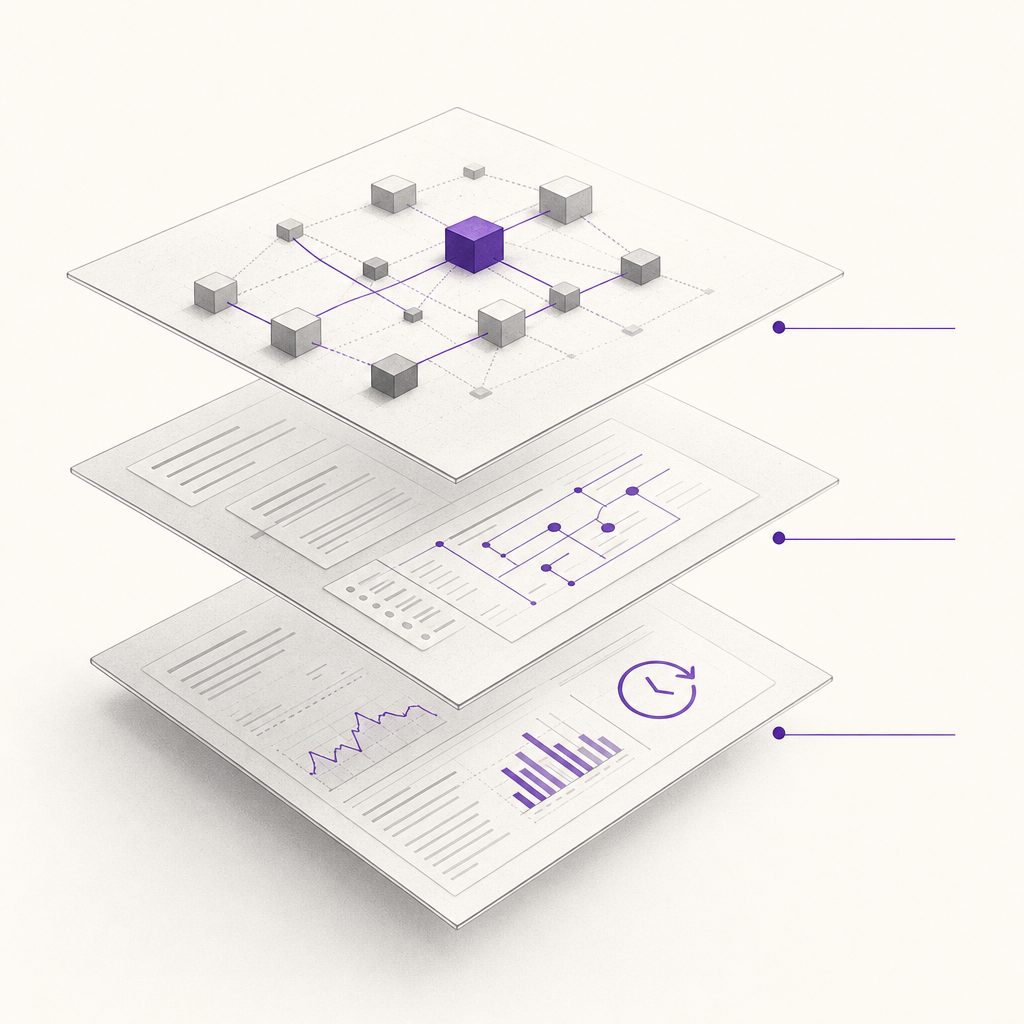
A complete audit now has three layers: classic crawl health, structured content for LLM extraction, and freshness signals that AI engines use to decide whether to cite you.
Think of it as three concentric circles. Classic technical SEO is the foundation. Without it, nothing else works. But the outer two circles are where most teams are leaving visibility on the table.
How do you audit crawlability for AI bots?

AI crawlers use different user-agent strings. Many sites block them by accident.
Start here. Before any content or schema work, confirm your site is actually accessible to the crawlers that feed AI answer engines.
Check these in your robots.txt and server logs:
GPTBot(OpenAI)PerplexityBotClaudeBot(Anthropic)Google-Extended(controls AI training and AI Overviews separately from standard Googlebot)Bingbot(feeds Copilot)
A surprising number of enterprise sites have a blanket Disallow: / rule that blocks every non-Googlebot crawler. Run a log analysis. If these bots never appear, they cannot index your content.
Action items:
- Audit
robots.txtfor unintended bot blocks. - Pull server logs for the last 90 days — filter by AI user-agent strings.
- Check Cloudflare or WAF rules for bot-score thresholds that may silently block LLM crawlers.
- Verify crawl budget: large sites with thin or duplicate content waste crawl allocation that should go to authoritative pages.
How do you structure content so LLMs can extract it efficiently?
LLMs extract token-efficient passages. Walls of prose fail this test. Short, self-contained answers pass it.
This is the biggest structural change your audit needs to flag. AI engines do not read a page the way a human does. They tokenise it, find the passage most likely to answer the query, and pull it verbatim or near-verbatim. [^1]
What token-efficient structure looks like:
- Question-shaped headings. Every H2 should be a question a real user asks. The first sentence under it answers the question directly. This is the format Perplexity and AI Overviews extract most reliably.
- Short paragraphs. One idea, 30-50 words. Longer paragraphs dilute the signal.
- Definition-first. When you introduce a concept, define it in the first sentence. Do not bury the definition three paragraphs down.
- Lists for steps and features. Bulleted and numbered lists are structurally clean for LLM parsing. They also improve Featured Snippet eligibility.
What to flag in your audit:
- Pages where the primary keyword appears in the title but the answer to the implied question does not appear in the first 100 words.
- Long-form content with no H2 or H3 subheadings for 400+ words.
- FAQ sections buried at the bottom — move them up or add a separate FAQ page with
FAQPageschema.
What schema markup does an AI-era audit require?
Schema is not optional anymore. It is the structured data layer that lets AI engines extract facts without guessing.
Classic audits checked for basic Article and BreadcrumbList schema. That is still necessary. But AI answer engines respond to a richer set:
| Schema Type | Why it matters for AI engines |
|---|---|
FAQPage | Direct Q&A extraction for AI Overviews and Perplexity |
HowTo | Step-by-step extraction for instructional queries |
Article + dateModified | Freshness signal — engines prefer recently updated content |
Organization + sameAs | Entity disambiguation — helps AI engines confirm who you are |
Product + Review | E-commerce citation in shopping-intent AI answers |
Speakable | Flags passages suitable for voice and AI-generated audio answers |
Audit checklist for schema:
- Validate all existing schema with Google's Rich Results Test and Schema.org validator.
- Check that
dateModifiedis accurate and updates when content changes — not just when the page is republished with cosmetic edits. - Add
FAQPageschema to every page that has a FAQ section. - Ensure
Organizationschema on your homepage includessameAslinks to your LinkedIn, Crunchbase, and Wikipedia pages if they exist. This is entity-building for AI knowledge graphs.
How do you audit for freshness signals that AI engines weight?
AI engines actively downweight stale content. dateModified accuracy and content update velocity are now ranking factors in AI-generated answers.
This is underappreciated in most quarterly audits. Google's AI Overviews and Perplexity both surface recency as a quality signal. A page last modified 18 months ago competes poorly against a page updated last week — even if the older page has stronger backlinks.
What to audit:
dateModifiedin schema vs. actual content change. Many CMS platforms update this field on every deploy, not on substantive content edits. Fix the CMS logic so the field reflects real updates.- Content decay report. Pull pages where organic impressions have dropped more than 20% quarter-over-quarter. These are decay candidates. Refreshing them — adding new data, updating examples, expanding FAQ sections — is faster than writing new content.
- Publication velocity. AI engines build a model of your site's topical authority partly from how frequently you publish on a topic. A site that publishes two pieces per week on agentic AI builds stronger topical authority than one that publishes two per quarter.
- Internal linking to fresh content. New pages with no internal links receive minimal crawl priority. Add contextual links from high-traffic evergreen pages to new content within 48 hours of publication.
How do you measure Share of Voice in AI answers, not just click-through traffic?
Traditional rank tracking does not capture AI answer visibility. You need a different measurement layer.
This is the hardest shift for SEO teams running quarterly audits. Your existing tooling — Search Console, Ahrefs, Semrush — measures impressions and clicks. It does not tell you how often your brand is cited in an AI-generated answer. [^1]
What to add to your measurement stack:
- AI answer monitoring tools. Tools like Profound, Brandwatch, and Semrush's AI Overviews tracking surface how often your brand appears in AI-generated results for tracked queries.
- Prompt testing protocol. Build a list of 20-30 queries where you want to be cited. Run them weekly in ChatGPT, Perplexity, and Google AI Overviews. Log whether your brand, your content, or your competitors are cited. This is manual but high-signal.
- Citation source analysis. When your content is cited, which pages are pulled? Identify the structural patterns of those pages and replicate them across your site.
Share of Voice in AI answers is the new page-one ranking. Treat it as a primary KPI, not a vanity metric. [^1]
What does the complete AI-era technical SEO audit checklist look like?
Here is the full checklist, organised by audit phase.
Phase 1: Crawl access
- [ ] Confirm AI bot user-agents are not blocked in robots.txt
- [ ] Audit WAF and CDN rules for unintended bot blocking
- [ ] Pull 90-day server logs filtered by AI crawler user-agents
- [ ] Fix crawl budget waste on thin, duplicate, or paginated content
Phase 2: Structured content
- [ ] Every H2 is a question; first sentence answers it directly
- [ ] No paragraph exceeds 50 words
- [ ] FAQ sections exist on all key landing pages and blog posts
- [ ] Definition-first structure on all concept pages
Phase 3: Schema markup
- [ ] FAQPage schema on all FAQ sections
- [ ] HowTo schema on all step-by-step content
- [ ] Article schema with accurate dateModified
- [ ] Organization schema with sameAs entity links
- [ ] All schema validated — no errors in Rich Results Test
Phase 4: Freshness
- [ ] dateModified reflects real content changes, not deploy timestamps
- [ ] Content decay report run — pages down 20%+ flagged for refresh
- [ ] Internal links from evergreen pages to new content added within 48 hours
Phase 5: AI visibility measurement
- [ ] AI answer monitoring tool in place (Profound, Semrush AI Overviews, or equivalent)
- [ ] Weekly prompt-testing protocol established for 20-30 target queries
- [ ] Share of Voice in AI answers tracked as a primary KPI
How can agentic AI tools automate parts of this audit?
Running this checklist manually every quarter is slow. Agentic AI tools can automate the monitoring layer continuously.
Nagent's ARIA — Agentic Research & Intelligence Agent handles competitive intelligence monitoring, including tracking how brands appear in AI-generated search results. For content teams running the structured content layer, CopyCrafter AI generates FAQ-structured, schema-ready content that passes the token-efficiency test out of the box.
For teams who want to automate the full content-to-publish pipeline — brief, draft, FAQ schema, internal linking — the AI Content Marketing & Visual Storytelling Suite orchestrates the AI Blog Writer and Carousel Maker into a single workflow.
The audit checklist above tells you what to fix. Agentic AI handles the fixing at scale.
Related reading
- How AI agents are changing content marketing for B2B teams
- KARMIC: how Nagent agents learn from every run
- Agent Smriti: cross-session memory for enterprise AI workflows
- Nagent Agentic AI Lab: outcomes without implementation work
Frequently Asked Questions
What is a technical SEO audit checklist?
A technical SEO audit checklist is a structured set of checks that verify a website's crawlability, indexability, structured data, and content quality. In 2025, a complete checklist also covers AI crawler access, schema markup for LLM extraction, and freshness signals that AI answer engines use to decide which content to cite.
How is a technical SEO audit different for AI answer engines?
Traditional audits focus on Googlebot crawlability and click-through ranking signals. AI answer engines like Perplexity and ChatGPT Search prioritise structured, token-efficient content and freshness signals over backlink authority alone. Your audit needs to verify that AI-specific bot user-agents are not blocked, that content is structured with question-shaped headings and short paragraphs, and that FAQPage and HowTo schema are implemented correctly.
How often should I run a technical SEO audit?
Most enterprise SEO teams run a full technical audit quarterly. In the AI era, the crawl access and freshness components should be monitored continuously, not just quarterly. Set up automated alerts for robots.txt changes and run a weekly prompt-testing protocol to track your brand's Share of Voice in AI-generated answers.
What schema types matter most for AI Overviews and Perplexity?
FAQPage and HowTo schema are the highest-priority types for AI answer engine extraction. Article schema with an accurate dateModified field signals freshness. Organization schema with sameAs entity links helps AI knowledge graphs confirm your brand's identity and authority.
How do I measure whether my content is being cited in AI-generated answers?
Standard rank-tracking tools do not capture AI answer citations. Add a dedicated AI answer monitoring tool such as Profound or Semrush's AI Overviews tracker. Supplement this with a weekly manual prompt-testing protocol: run your 20-30 target queries in ChatGPT, Perplexity, and Google AI Overviews, and log which brands and pages are cited. Track this as Share of Voice — it is the AI-era equivalent of page-one ranking.
What's next
Run this checklist against your site before your next quarterly review. If you want to see how agentic AI can automate the monitoring and content layers continuously, book a free 30-minute demo at nagent.ai and we will show you exactly where the gaps are.
Sources
- AI ranking optimisation _(knowledge)_