
Agentic Influencer Discovery & Outreach for Partner Pipelines
Agentic Influencer Discovery & Outreach for Partner Pipelines
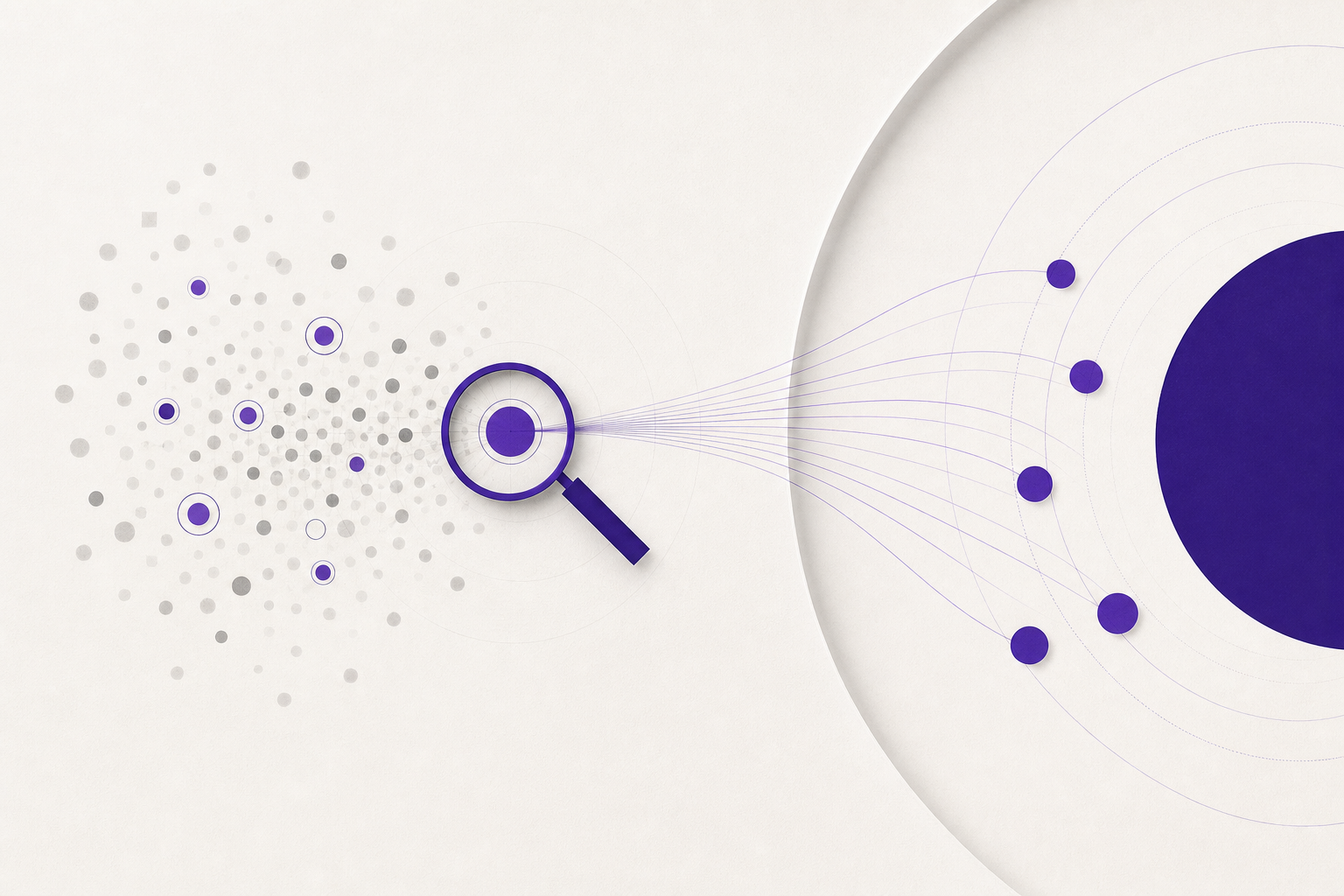
Agentic influencer discovery and outreach collapses a weeks-long manual prospecting cycle into a self-running pipeline. Autonomous agents continuously scan creator networks, score every profile against your ICP criteria, and fire personalized outreach sequences — without an SDR touching a spreadsheet. Sales teams using this approach report building qualified partner pipelines in days, not months.
Why Is Manual Influencer Prospecting Killing Your Partner Pipeline?
Manual prospecting is the wrong tool for influencer-led revenue programs.
The average SDR spends 6–10 hours per week pulling creator profiles, cross-referencing audience demographics, and drafting first-touch messages. That's 25–40 hours a month on research that degrades the moment the data lands — follower counts shift, engagement rates drop, new creators emerge. By the time a rep sends a pitch, the window has often closed.
The operational gap is structural, not motivational. Your reps aren't slow. The process is broken.
Traditional influencer discovery was designed for brand awareness campaigns — quarterly cadences, a handful of macro-creators, a PR coordinator managing the relationship. Influencer-led revenue programs run differently. They need:
- Continuous discovery, not quarterly audits
- Fit scoring against specific ICP signals (audience firmographics, content category, engagement quality)
- Personalized outreach at volume without sacrificing relevance
- Pipeline visibility, not just a contact list
Manual processes can't deliver all four simultaneously. Agentic AI can.
What Does Agentic Influencer Discovery Actually Look Like?
Agentic influencer discovery means autonomous agents — not analysts — run the prospecting workflow end-to-end.
Here's what that looks like in practice with Nagent's platform:
Step 1 — Continuous scanning. A discovery agent monitors creator networks across your defined channels (LinkedIn, YouTube, Instagram, niche newsletters, podcasts). It doesn't run once. It runs on a schedule — daily, hourly, or triggered by intent signals like a creator publishing content in your category.
Step 2 — ICP fit scoring. The agent pulls structured data: audience size, engagement rate, content category overlap, audience geography, and — critically — audience firmographic signals where available (e.g., a B2B creator whose audience skews toward CFOs in mid-market SaaS). It scores each creator against your ICP rubric and ranks them.
Step 3 — Enrichment and deduplication. The agent cross-checks against your CRM (Salesforce, HubSpot, Zoho — all natively integrated) to remove existing contacts and flag warm relationships. No rep wastes time pitching someone already in a deal.
Step 4 — Personalized outreach sequences. Scored, enriched profiles flow into an outbound sequence agent. It drafts first-touch messages that reference specific content the creator published — not generic "we'd love to partner" copy. Each message is unique. Each sends on an optimized schedule.
The entire workflow runs without human intervention until a creator replies.

How Do Agents Score Creator Fit Without Human Judgment?
Fit scoring is where most teams assume you still need a human eye. You don't — not for the first cut.
Nagent's KARMIC learning loop solves this. Every time a creator responds, converts to a partner, or churns, KARMIC closes the feedback loop. The scoring model adjusts automatically. Agents weight the signals that actually predict partnership revenue — not the signals that look good on a media kit.
Early deployments typically weight these signals:
| Signal | Why It Matters |
|---|---|
| Engagement rate (not reach) | Predicts real audience attention |
| Content-to-audience fit | Measures category alignment |
| Audience firmographics (B2B) | Directly maps to ICP |
| Posting cadence | Indicates operational reliability |
| Prior brand deal history | Flags saturation risk |
Over time, KARMIC surfaces non-obvious patterns. A creator with 12,000 followers in a niche operations community might outperform a 500,000-follower generalist on revenue-per-partner metrics. Human reviewers miss this. The learning loop catches it.
How Does Agent Smriti Prevent the Outreach Amnesia Problem?
Agent Smriti gives your outreach agents cross-session memory — and it eliminates one of the most expensive mistakes in partnership sales.
Without memory, every outreach agent starts from zero. It doesn't know that a creator was pitched three months ago and said "not now." It doesn't know that your team already has a relationship with their manager. It re-pitches, re-enriches, re-wastes time.
With Agent Smriti, the agent recalls:
- Prior outreach history with this creator
- What messaging angle generated a response last time
- Which creators from similar audience profiles converted to partners
- What objections came up in earlier conversations
This context travels across sessions, across reps, and across agent types. A discovery agent flags a creator; an outreach agent already knows their history. That continuity is what makes the pipeline self-improving, not just self-running.
How Does Helix Orchestrate a Multi-Agent Partner Pipeline?
Helix, Nagent's multi-agent orchestrator, is how you connect the workflow above into a single, coherent system — without engineering resources.
You describe the goal in plain English: "Build a continuous partner pipeline — discover B2B creator fits in the SaaS operations space, score them against our ICP, check against the CRM, and launch personalized outreach sequences for any creator scoring above 75."
Helix designs the multi-agent system. It selects the right agents from the Agent Marketplace, sequences them, and handles routing at runtime. You review the design. You deploy.
Most teams complete the full setup — from initial configuration through first outreach — in a single working session. The pipeline runs from that point forward without manual restarts.
What Does Agentic Outreach Look Like at Scale?
This is where the operational math becomes hard to ignore.
A manual SDR workflow might produce 20–30 personalized creator pitches per week at high quality. An agentic outreach workflow produces personalized sequences at scale — the agent drafts, schedules, follows up, and routes replies to a human only when a response arrives.
At roughly 90 seconds of processing time per creator variant (enrichment, draft, personalization check), a 200-creator shortlist typically moves through the full outreach prep in under five hours of compute time — work that would occupy an SDR for the better part of two weeks.
The rep's job shifts. Instead of building lists and writing first drafts, they handle replies, negotiate terms, and close deals. That's the job that actually requires a human.
Nagent's outbound sequence writer agent handles the draft layer. The account researcher agent handles enrichment. Helix coordinates both. The rep closes.
When Should You Not Use Agentic Influencer Discovery?
Agentic discovery works best when you have clear ICP criteria and a defined outreach playbook.
If you don't know what a good creator partner looks like — what audience size, what category, what conversion expectation — the agents will optimize toward the wrong signals. Garbage criteria in, garbage pipeline out.
The other constraint: highly relationship-dependent categories. If your partnership model depends on long-term, exclusive co-creation with a handful of top-tier creators, the manual relationship-building phase still matters. Agents handle the discovery and first-touch. Humans own the negotiation.
Use agentic discovery and outreach for:
- High-volume, mid-tier creator programs (50–500 active partners)
- Ongoing pipeline expansion where manual prospecting creates bottlenecks
- Multi-market programs where audience geography adds research complexity
Related Reading
- How Nagent's KARMIC Learning Loop Makes Sales Agents Smarter Over Time
- Helix: Build a Multi-Agent Sales System in Plain English
- Agent Marketplace: 35+ Sales Agents Ready to Deploy
- How Agentic AI Delivers 3.2× Pipeline With the Same Sales Headcount
Frequently Asked Questions
What is agentic influencer discovery and outreach?
Agentic influencer discovery and outreach is the use of autonomous AI agents to continuously scan creator networks, score profiles against ICP criteria, enrich contact data, and execute personalized outreach sequences — without manual intervention. The workflow replaces a multi-step research and prospecting process that typically requires several weeks of SDR time. Agents run continuously, improving their scoring models through feedback on every outreach outcome.
How is this different from existing influencer marketing platforms?
Most influencer platforms are databases with search filters — they require a human to pull lists, evaluate fit, and write outreach. Agentic influencer discovery and outreach executes the workflow, not just surfaces the data. Nagent agents take action: they score, enrich, draft, send, follow up, and learn from results. The platform doesn't hand you a list — it hands you a pipeline.
How does the scoring model know what a good partner looks like?
Nagent's KARMIC learning loop closes the feedback loop on every outreach outcome. When a creator converts to a partner, KARMIC weights the signals that predicted that conversion more heavily in future scoring runs. Over time, the model reflects your actual revenue data — not industry averages or proxy metrics like follower count. Teams typically see scoring accuracy improve measurably within the first 60 days of deployment.
How long does it take to set up a partner pipeline with Nagent?
Many teams complete the full workflow — from brief intake through a reviewed and deployed multi-agent system — in under 4 hours using Helix. Pre-built agents from the marketplace handle discovery, enrichment, and outreach. Configuration involves defining your ICP criteria, connecting your CRM, and setting outreach parameters. No engineering resources required.
Is this approach compliant with platform terms of service and data privacy regulations?
Nagent is SOC 2 Type II certified, GDPR and DPDP ready, and supports on-premise deployment for regulated industries via the Sovereign AI option. The platform processes only publicly available creator profile data and first-party CRM data you provide. For enterprise programs with specific compliance requirements, the Agentic AI Lab team can design a data-handling architecture that matches your legal constraints.
Ready to stop prospecting manually? Book a free 30-minute demo at nagent.ai/demo and see an agentic partner pipeline built live.