
Agentic AI Platforms for Ad Sales and Media Revenue Ops
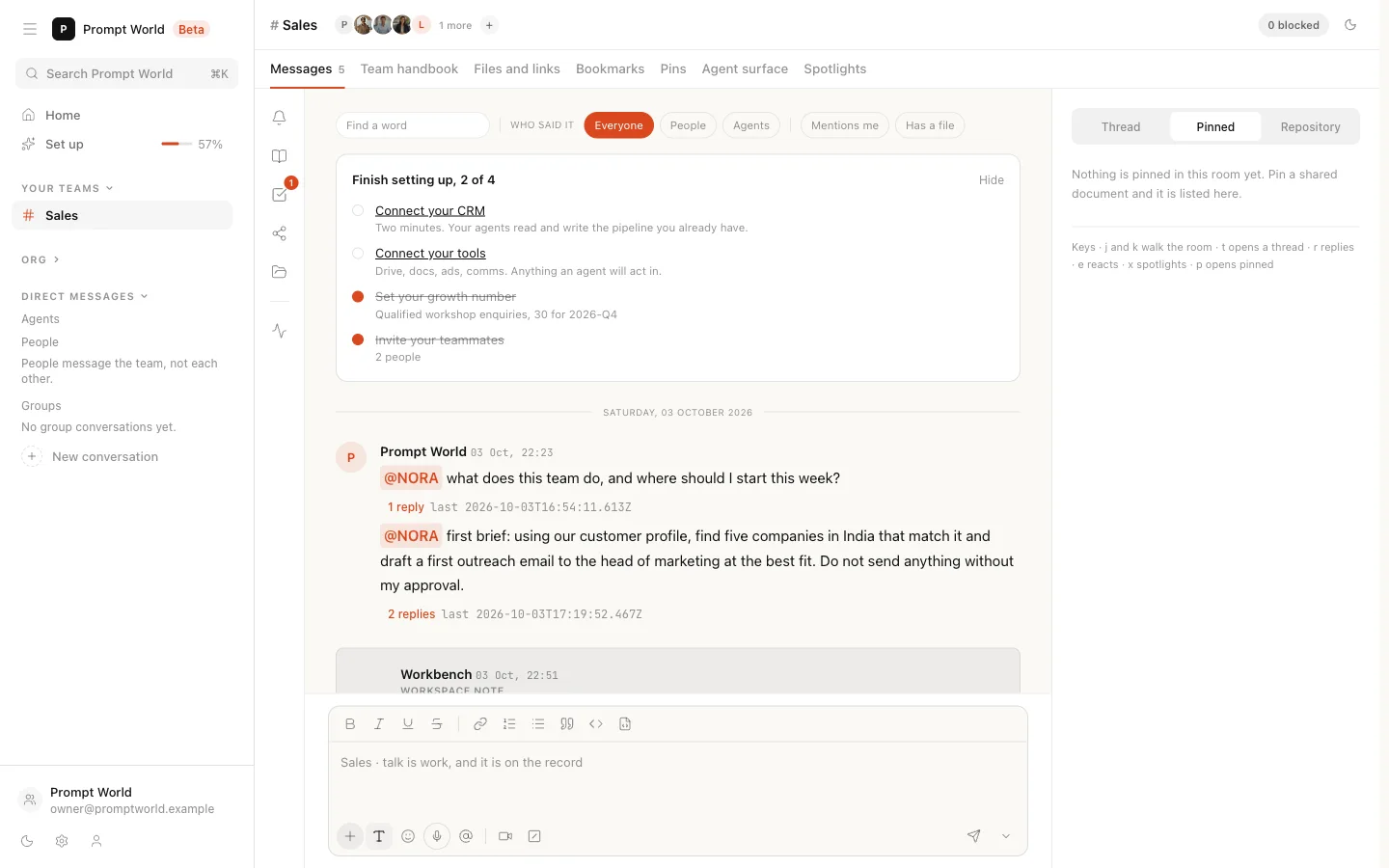
Agentic AI platforms for ad sales and media revenue operations fall into two groups. Media-specific platforms sit on your ad stack and work with inventory, orders, trafficking and delivery data. General growth platforms work the sales motion around it: finding advertisers, researching accounts, drafting outreach and follow-ups, and keeping the pipeline honest. Most publishers need both, with people approving anything that reaches an advertiser. Here's how to map the work, and how Nagent works for media companies.
What do agentic AI platforms do for ad sales teams?
"Agentic" means the AI does more than answer questions: it takes steps toward a goal, such as researching an account, drafting a proposal or flagging a stalled deal, and hands the result to a person. For a publisher or media company, the ad sales and revenue operations work breaks into six jobs:
Prospecting. Finding advertisers and agencies that fit your audience and categories, and researching who to talk to.
Proposals and RFP responses. Turning audience data, rate cards and past campaigns into a response a buyer can approve.
Inventory and yield signals. Knowing what you can sell, at what price, and where demand outstrips supply.
Campaign reporting to advertisers. Delivery, performance and recaps that keep the advertiser confident.
Renewals and upsell. Following up before a campaign ends, with a reason to come back.
CRM hygiene. Deals with the right stage, value, owner and next step, so the forecast means something.
The first, fifth and sixth jobs are sales work that looks much like any B2B sales team's. The second, third and fourth depend on data that lives in your ad server, order management system and reporting tools.
Which tools cover which parts of media revenue operations?
Job: Prospecting, Usually handled by: Sales and growth platforms, What to check: Does it research from sources it can show, and wait for approval before sending?
Job: Proposals and RFPs, Usually handled by: Media order management platforms, document tools, What to check: Does it draw from your own rate cards and audience data?
Job: Inventory and yield, Usually handled by: Ad servers and media platforms, What to check: Does it read live inventory, or a stale export?
Job: Advertiser reporting, Usually handled by: Ad server, order management and reporting tools, What to check: Who checks a report before an advertiser sees it?
Job: Renewals, Usually handled by: CRM and sales platforms, What to check: Is every outbound email approved by a person?
Job: CRM hygiene, Usually handled by: CRM and revenue operations tools, What to check: Can the tool that measures the pipeline also edit it?
Some media-specific platforms, each described from its own site:
Google Ad Manager describes itself as a complete platform to grow ad revenue and protect your brand, for businesses that sell ads.
Boostr describes an ad management platform for media companies that combines a CRM, an order management system and an Agent Series, which includes Media Planning, Contact, Delivery Reporting and Trafficking agents, plus Proposal IQ for proposal generation.
Operative describes a unified platform for advertising and broadcast management for media companies, which it positions as a connected, agentic ecosystem, with an AI offering called Adeline.
Check each vendor's current features directly; agentic capabilities in this market change quickly.
What should you ask before you buy an agentic AI platform for ad sales?
What data does it read? Ad server, order management, CRM, or only what someone uploads? Live, or a nightly export?
What can it do without a person? Drafting and research can run on their own. Sending to an advertiser, changing a price, booking inventory or editing a deal should wait for approval until the agent has earned more trust.
Does it invent numbers? An AI that fills a gap in a delivery report or a pipeline with a plausible figure is worse than one that says the data is missing.
Who sees what? Advertiser names, rates and deal values are sensitive. Check role-based access and whether a person without access to deals can still see summaries.
Is every action recorded? You want a log of what each agent did, why and who approved it.
What is the security posture? Certifications held versus in progress, data residency and a private deployment option.
Where does Nagent fit for ad sales and media revenue operations?
Nagent is multiplayer AI for growth: people and AI agents in one shared context, delivering the number. It is a general growth platform, not ad tech. It covers the sales motion around your ad stack, not the ad stack itself.
What Nagent does for media sales teams:
Prospecting advertisers. SERA, the AI Sales Chief of Staff, leads the Sales team. NORA, her outbound research lead, finds accounts that match your saved customer profile, researches each into a sourced dossier and drafts first-touch email, which VANI (Beta) writes from the dossier and your own knowledge only. Contact details are revealed only for accounts that score 70 or more out of 100 against your profile, and NORA sends only a draft a person approved.
Meetings handed to a person. When a prospect qualifies, NORA books the meeting and hands a dossier to a named person. A handoff nobody acknowledges within 36 hours is escalated.
Renewals and follow-ups. LIPI (Beta), the CRM email writer, drafts the email a known contact sees: post-demo recaps, nudges on a stalled deal and nurture sequence steps, grounded in your Knowledge Hub, your offerings and the contact's record. It never invents metrics, customer names or deal sizes. By default, sequence drafts wait for a person to approve them.
Pipeline from the record. SERA answers pipeline questions from the CRM digest in the team record: stage, count, value and age. She never invents a deal, a contact, a value or a close date, and where the CRM is silent, she says what is missing. A member without access to leads gets the stage roll-up, never a named deal.
Long-form sales documents. FOLIO turns your own source documents into an illustrated PDF and DOCX, such as a research report or a pitch narrative, in your brand voice.
Your audience side. DRIS asks ChatGPT, Claude, Gemini, Perplexity and Grok what your readers ask, and proposes fixes to your pages so answer engines cite them. Publishing a fix to a live page needs a person.
What Nagent does not do:
It is not an ad server, an order management system or a programmatic platform.
It does not read inventory, manage yield, set prices, book or traffic campaigns.
It does not pull delivery data from an ad server or build advertiser reports from it.
It has no RFP response module. A presentation maker is coming soon.
DEXA (deal execution) and RIVA (revenue operations, including pipeline hygiene) are coming soon.
If you need a missing piece, you can build an agent for it. In Agent Workbench, you describe the job in one sentence and the agent builder drafts the agent, its tools and guardrails for you to review before you press Provision agent. Nagent connects hundreds of tools via Composio, plus your own API, so an agent can work with data your systems expose. See creating an agent. The Enterprise plan also includes custom agents, workflows and integrations.
Every agent arrives at L2 Assist: it drafts on its own, and anything that changes records others rely on waits for a person. Agents earn more autonomy one level at a time, and a person decides each step.
How should a media company roll out agentic AI for ad sales?
Start with prospecting or renewals. They need the least integration and show results in pipeline quickly.
Load your knowledge first: audience data you are allowed to share, rate card principles, case studies and your customer profile.
Keep every send approved by a person until the drafts are consistently right.
Measure qualified meetings and renewal rate, not emails sent.
Connect the ad stack last, once you know which reports and signals your sellers actually use.
Frequently Asked Questions
What is agentic AI in ad sales?
It is AI that takes steps toward a sales goal on its own, such as researching an advertiser, drafting outreach or a proposal, or flagging a stalled deal, then hands the result to a person to approve. It differs from a chatbot, which only answers questions.
Can AI agents write media proposals and RFP responses?
They can draft them from your own rate cards, audience data and past campaigns, if the tool reads those sources. A person should check every number before it goes to a buyer. Nagent has no RFP module; FOLIO writes long-form documents from your sources.
Does Nagent connect to ad servers or manage yield?
No. Nagent is not ad tech and does not read inventory, set prices or traffic campaigns. It works the sales motion around your ad stack: prospecting, outreach, follow-ups and pipeline answers from the CRM record.
How do AI agents help with CRM hygiene for media sales?
They read the pipeline, flag deals with missing fields or no movement, and report what is missing rather than guessing. On Nagent, SERA answers from the CRM record today, and RIVA, the revenue operations teammate, is coming soon.
Put agents on the sales motion around your ad stack
Agentic AI pays off in media sales when each tool does the job it can see: ad tech on inventory and delivery, a growth platform on prospecting, follow-ups and pipeline truth, and people approving what reaches advertisers. See how Nagent works for media and publishing teams.
Book a demo to see SERA's team on your advertiser pipeline.