
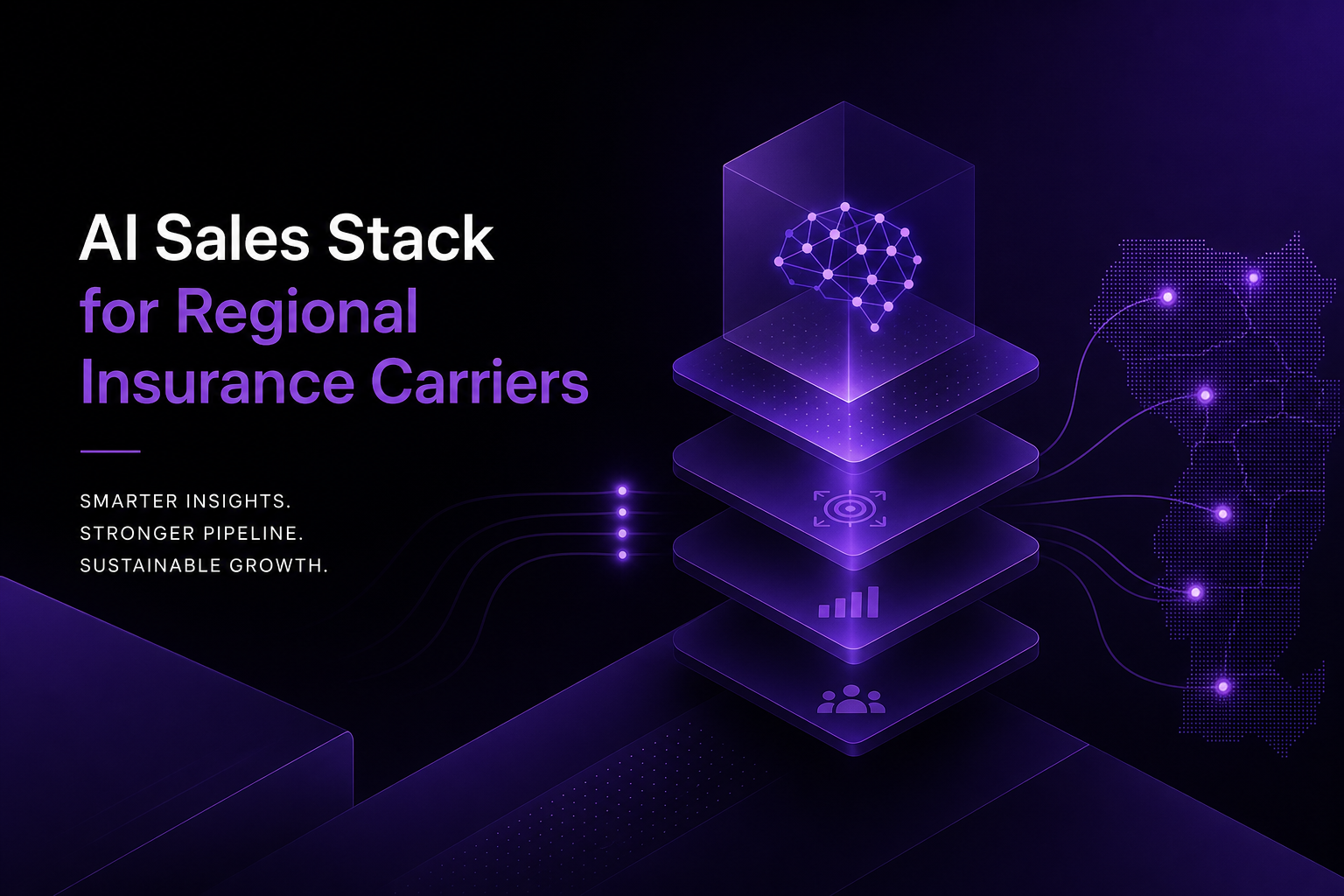
AI Sales Stack for Regional Insurance Carriers
AI Sales Stack for Regional Insurance Carriers
Regional insurance carriers don't lose to national brands on product quality — they lose on scale. A national carrier fields hundreds of SDRs, renewals specialists, and research analysts. A regional carrier fields dozens. An ai sales stack for insurance carriers closes that gap directly: deploy a coordinated set of AI sales agents across prospecting, account research, outreach, and renewal management, and your lean team operates with the throughput of a team three times its size. The math works. The technology exists today.
---
Why Do Regional Carriers Struggle to Compete on Sales Volume?

The core problem isn't talent — it's bandwidth.
Your producers know their markets. They understand the nuances of coastal property risk, mid-market commercial liability, or specialty agriculture lines. But they spend a disproportionate share of their day on tasks that don't require that expertise: researching accounts, drafting follow-up emails, chasing renewal dates, updating CRM records.
That's the gap national carriers exploit. More headcount means more prospecting touches, faster renewal cycles, and tighter pipeline visibility.
The answer isn't to hire your way to parity. At current talent costs, that's not viable for most regional carriers. The answer is to deploy agents that handle the execution-heavy work so your producers focus on the conversations that actually close.
---
What Does an AI Sales Stack for Insurance Carriers Actually Look Like?
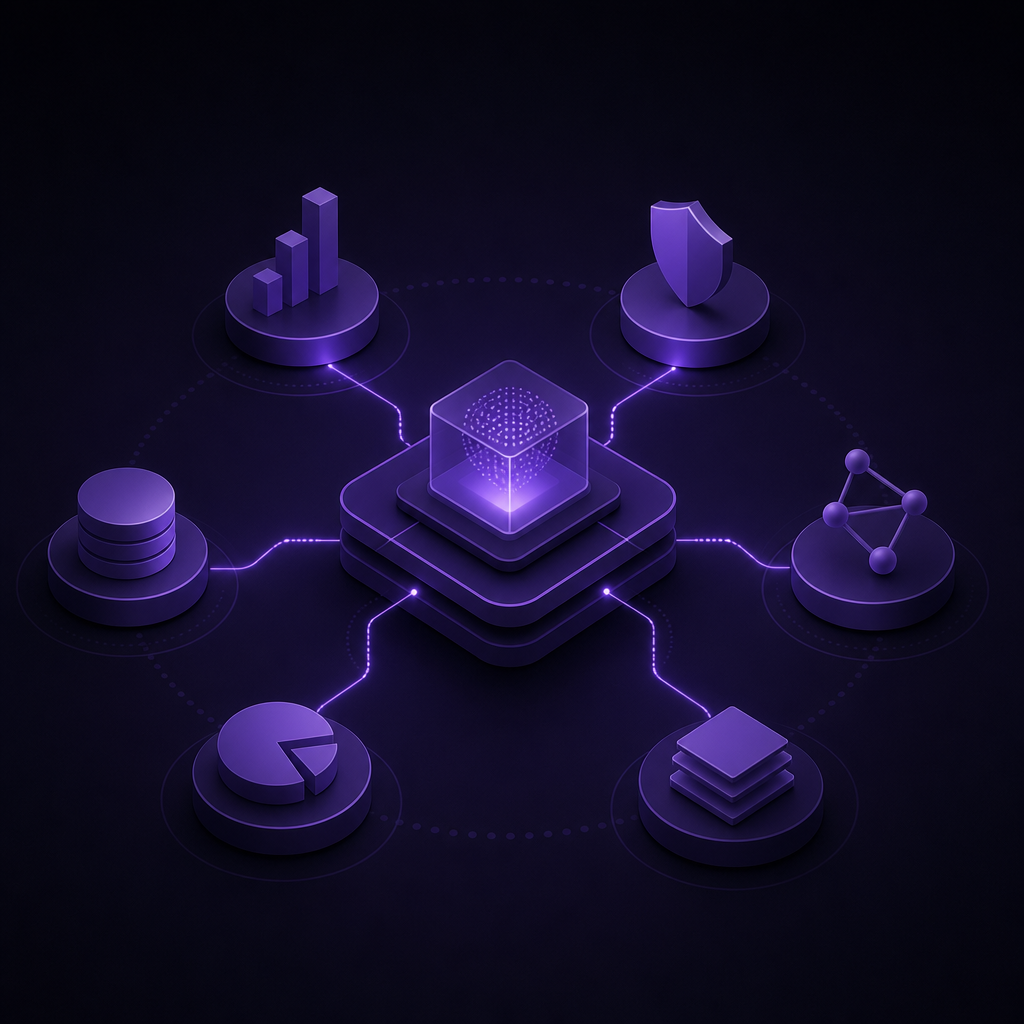
A well-designed ai sales stack for insurance carriers is a coordinated system of specialized agents — not a single chatbot answering questions.
Think of it in four functional layers:
- Prospecting — identifying and qualifying new accounts
- Research — building account context before the first call
- Outreach — sequencing and personalizing communications
- Renewal management — monitoring book health and triggering timely action
Each layer has a distinct job. Each agent hands off to the next. The whole system runs inside your existing sales motion — connected to your CRM, your email, your quoting workflow.
Here's the blueprint.
---
How Do You Build the Prospecting Layer?

Your Lead Qualifier agent filters raw lead lists by commercial viability before a producer touches them.
Out of the box, it reads firmographic data — industry class, revenue band, employee count, geographic footprint — and scores each account against your underwriting appetite. Accounts that don't fit your book get flagged automatically. Accounts that do move forward.
Pair it with an Intent-Signal Monitor agent that watches for trigger events: a business filing a new LLC, a commercial property changing ownership, a company crossing a revenue threshold that shifts their risk profile. These signals surface accounts that are actively in-market — not just hypothetically qualified.
The result: your producers work a pipeline that's already filtered for fit and timed for receptivity. They stop prospecting cold and start prospecting smart.
> "We were spending 40% of prospecting time on accounts that would never fit our book. The qualifier cut that waste in the first week." — A pattern we see repeatedly in early-stage insurance deployments.
---
How Do You Give Producers Real Account Intelligence Before the First Call?
The Account Researcher agent does the pre-call work in minutes, not hours.
Before a producer dials, the agent has already pulled:
- Current coverage signals (where available via public filings)
- Recent business changes that affect risk profile
- Key contacts and their roles
- Prior engagement history from your CRM
- Relevant competitive context
This is where Agent Smriti — Nagent's cross-session memory layer — becomes critical for insurance use cases. Smriti retains context across every interaction: what messaging resonated with a similar account class last quarter, which coverage angles the producer discussed on a prior call, what objections surfaced in the last renewal conversation.
Your producers don't start from scratch on every call. They start informed.
For a regional carrier competing against a national brand whose reps have institutional memory baked into years of CRM notes, this is a genuine equalizer.
---
How Do You Scale Outreach Without Losing the Personal Touch?
Spray-and-pray email sequences destroy trust in commercial insurance. Buyers notice generic outreach immediately — and they associate it with the carrier's brand.
The Outbound Sequence Writer agent solves this by building personalized sequences at scale. Each email references the account's specific business context, the coverage gap or trigger event that makes this conversation timely, and the producer's name and territory knowledge.
Sequences adapt based on engagement signals. An account that opens twice but doesn't reply gets a different follow-up than one that clicks through to a resource page. KARMIC — Nagent's continuous learning loop — closes this feedback cycle automatically. Every reply, every booked meeting, every ignored email produces a labeled outcome. Sequences get sharper over time without a manual retraining project.
The Meeting Note Summariser agent handles the post-call work. After every producer conversation, it generates a structured summary: key coverage needs discussed, next steps, objections raised, follow-up timing. That summary writes back to your CRM automatically.
Producers stop spending 15 minutes per call on admin. They move to the next conversation.
---
How Do You Prevent Renewal Leakage at Scale?
Renewal management is where regional carriers bleed premium.
A producer managing 200 accounts cannot manually monitor every renewal date, flag at-risk accounts before the 90-day window closes, and craft a personalized retention play for each one. Something gets missed. A competitor gets in early. You lose a client you've held for six years.
A coordinated renewal stack changes this:
- Health-Score Monitor agent tracks account signals — claim frequency, payment patterns, service ticket volume — and flags accounts showing deterioration
- Churn-Risk Identifier agent surfaces accounts where competitive quoting activity is likely based on firmographic and behavioral signals
- AR Follow-Up agent handles premium payment follow-up automatically, escalating only when needed
When an at-risk account is flagged, the Outbound Sequence Writer generates a retention sequence tailored to that account's history and coverage profile. The producer gets a task with context, not just a renewal date on a spreadsheet.
This is the ai sales stack for insurance carriers working as a system — not a collection of disconnected tools.
---
How Does Helix Orchestrate the Whole System?
You don't have to design the agent connections manually.
Helix — Nagent's multi-agent orchestration engine — takes a plain-English goal ("automate our commercial lines renewal process from 90-day flag to producer handoff") and designs the multi-agent workflow. It selects the right agents from the Nagent Agent Marketplace, maps the handoffs, and deploys the system to production.
For a regional carrier's IT and RevOps teams, this matters. You're not building a custom integration project. You're describing a workflow in plain English and deploying pre-built agents — most regional carriers get their first agent running in under two hours.
Helix also handles runtime routing. If an account triggers both a churn-risk flag and an upsell opportunity, Helix routes to the right agent for each signal — not just the first one that matches.
---
What Does Compliance Look Like for an Insurance Sales Agent Stack?
Compliance is non-negotiable in insurance — and it's the most common reason carriers pause on AI adoption.
Nagent's Sovereign AI deployment option means your data never leaves your VPC. You bring your own LLMs — OpenAI, Anthropic, AWS Bedrock, Azure OpenAI, or custom on-premise models — and the entire agent stack runs in your environment.
The platform is SOC 2 Type II audited, GDPR and DPDP ready, and ISO 27001 aligned. SSO via Okta or Azure AD is native. For carriers with state-specific data residency requirements, the multi-region cloud and on-premise deployment options cover the standard compliance frameworks.
The Compliance Monitor agent — part of the Operations catalog — can be layered in to flag outreach content that references coverage terms or pricing in ways that may conflict with your state filing obligations.
---
What Results Should You Expect?
Carriers that deploy a coordinated ai sales stack for insurance carriers typically see results across three dimensions:
| Metric | Typical Outcome |
|---|---|
| Pipeline volume | 3.2× more pipeline with same headcount |
| Manual hours eliminated | 73% reduction in admin tasks per producer |
| Payback period | Under 30 days for most mid-market deployments |
| First agent deployed | Under 2 hours |
These are patterns observed across Nagent deployments — not projections. Your exact results depend on book size, current CRM hygiene, and how tightly your agents are configured to your underwriting appetite.
Use the Nagent ROI Calculator to run your specific numbers before committing to a deployment scope.
---
Related Reading
- How KARMIC Continuous Learning Makes AI Sales Agents Smarter Over Time
- Agentic AI in Financial Services: Compliance-First Deployment Patterns
- Agent Smriti: Why Cross-Session Memory Changes the ROI of AI Sales Tools
- Build vs. Buy: When to Use Pre-Built Agents and When to Customize
---
Frequently Asked Questions
What is an AI sales stack for insurance carriers?
An AI sales stack for insurance carriers is a coordinated system of specialized AI agents that automate the execution-heavy tasks across prospecting, account research, outreach, and renewal management. Each agent handles a specific function — qualifying leads, building account briefs, writing personalized sequences, or flagging at-risk renewals — and hands off to the next agent in the workflow. The goal is to give a lean regional sales team the throughput of a team several times its size.
How long does it take to deploy an AI agent stack for insurance sales?
Most regional carriers deploy their first Nagent agent in under two hours using pre-built agents from the Agent Marketplace. A full multi-agent stack covering prospecting through renewal management typically takes one to two weeks to configure and connect to existing CRM and email systems, depending on integration complexity and data quality.
Does an AI sales agent stack work with existing CRM systems like Salesforce or HubSpot?
Yes. Nagent connects natively to Salesforce, HubSpot, Zoho CRM, and Pipedrive, among others. Agents read from and write back to your CRM automatically — meeting summaries, lead scores, renewal flags, and outreach history all sync without manual entry. A REST API and webhook layer handles custom integrations where needed.
How does Nagent handle data privacy and compliance for insurance carriers?
Nagent's Sovereign AI option keeps all data inside your own VPC — nothing leaves your environment. The platform is SOC 2 Type II audited, GDPR and DPDP ready, and ISO 27001 aligned. For carriers with state-specific data residency requirements, on-premise deployment with air-gap capability is available on the Enterprise tier.
What's the difference between Nagent and a standard CRM AI assistant?
Standard CRM AI assistants suggest next actions — they don't take them. Nagent agents execute end-to-end: they research an account, write and send a follow-up sequence, update the CRM record, and flag the next trigger — without a human approving each step. KARMIC's continuous learning loop means agents improve their decision-making automatically based on actual outcomes like meetings booked and renewals retained.
---
What's Next
See exactly how a multi-agent renewal and prospecting stack would work inside your carrier's current sales motion — with your CRM, your lines of business, and your compliance requirements. Book a free 30-minute demo at nagent.ai and we'll map the blueprint to your specific book.