
Find ICP-Fit Accounts and Research Them with AI

AI finds ICP-fit accounts by starting from the profile your won deals already define, scoring new prospects against that profile, and researching each match into a sourced dossier before anyone writes a word of outreach. That is the full loop: profile, discover, research, then write. Skipping the research step is why most outbound reads like spam. The steps below walk it with NORA, Nagent's outbound research and activation agent.
Why does most outbound fail before the first email is sent?

The email is not the problem. The list is.
Most teams build their outbound list by gut feel or by pulling a filter in a database: industry, headcount, geography. Those filters produce companies that look right on paper. They don't produce companies that actually buy.
The structural flaw is that the list gets built before any research happens. A rep picks 200 accounts, writes a sequence, and blasts. Two things go wrong. First, half the accounts don't fit the real ICP. Second, the emails that do reach a fit account say nothing specific about that company, so the reader deletes them.
The fix isn't a better email template. It's a different order of operations: profile first, then discover, then research, then write.
What does "ICP-fit" actually mean in practice?

An ICP-fit account matches the firmographic and behavioral signals your closed-won deals share, not just the industry your sales deck targets.
The difference matters. A sales deck might say "mid-market SaaS." Your closed-won data might show "mid-market SaaS companies that recently hired a VP of Revenue and have between 50 and 200 employees." Those are not the same list.
NORA builds her search from the workspace's customer profile. According to Nagent's product documentation, she can synthesize a lookalike profile from operator-defined ICP data and re-score accounts against it as the profile evolves [knowledge block, source 1]. That means the list tightens over time as more deals close, rather than staying frozen at whatever a sales leader typed into a spreadsheet two years ago.
The practical output: a shortlist of accounts that match on the signals that actually predict a sale, not just the signals that are easy to filter.
How does NORA find and score accounts?
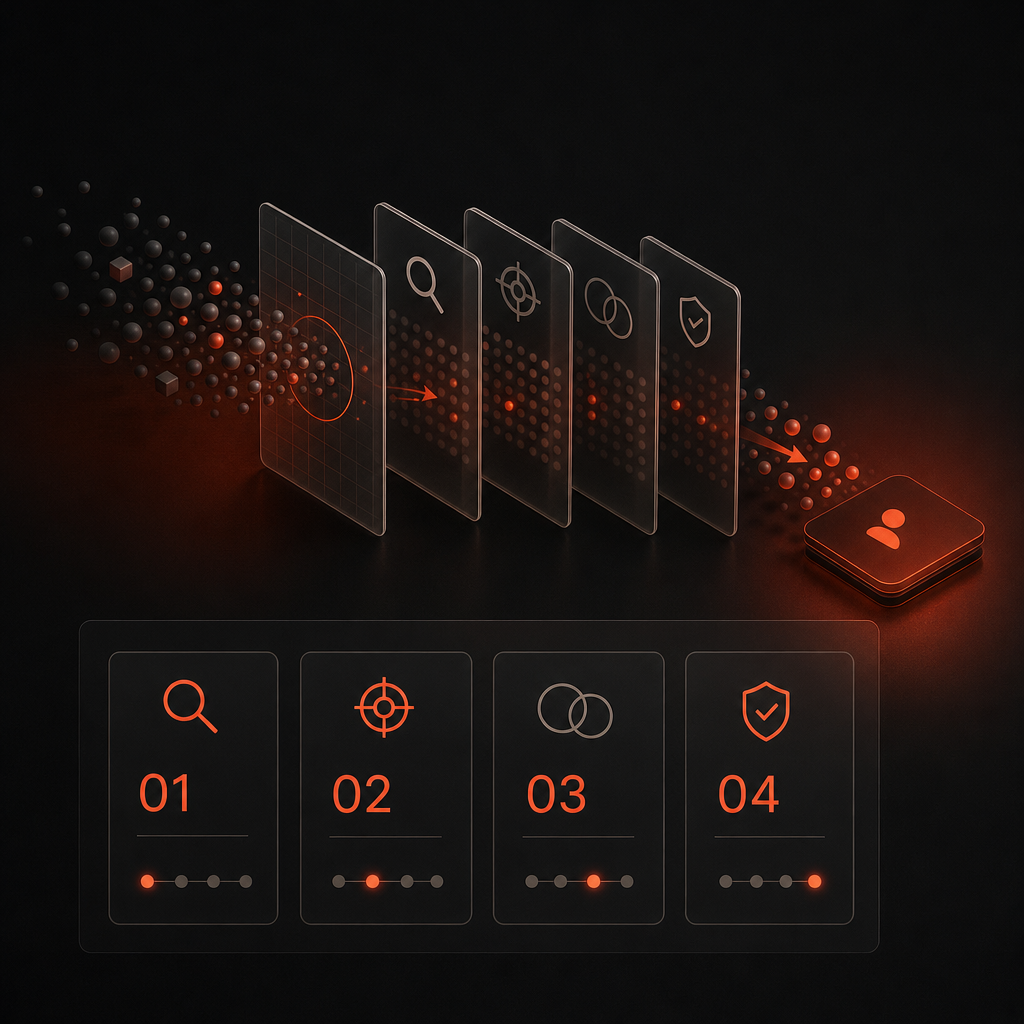
NORA runs a one-time search or a saved campaign that executes daily or weekly, with scoring, customer deduplication, and suppression built in [nagent.ai/nora].
Here is what that looks like step by step:
Define the customer profile. Set it in a conversation with NORA or on her surfaces. She accepts firmographic filters: industry, geography, company size, seniority, and buying roles.
Run discovery. NORA searches against that profile and returns a scored list. Existing customers and suppressed contacts are removed automatically.
Review the shortlist. The scored accounts sit on her Targets surface. A sales lead can accept, reject, or adjust before research begins.
The campaign cadence matters. A saved campaign that runs weekly means new accounts that enter your ICP segment get picked up without a rep manually refreshing a database. The list stays live.
What goes into a research dossier?
Each shortlisted account becomes a sourced dossier with the buying committee mapped before a single email is drafted.
This is the step most teams skip entirely, and it's the step that separates a reply from a delete. NORA reads enough about each company to say something true. The dossier includes the buying committee, sourced signals about the business, and the context VANI (Nagent's outreach writer) uses to draft the first-touch email [nagent.ai/nora].
The sourcing requirement is non-negotiable by design. VANI writes from the dossier and the workspace's knowledge only. If a claim isn't in the dossier, it doesn't go in the email. That constraint is what keeps outreach specific rather than generic.
For email discovery and verification, tools like Icypeas can surface professional email addresses using name and company domain, giving the dossier a verified contact before outreach starts (1).
How do you keep every claim in the email honest?
Write only what the dossier cites. VANI's constraint is structural: she cannot invent context that isn't sourced.
This matters more than it sounds. Generic outbound fails because it makes claims the prospect knows are false ("I noticed your company is growing fast"). Sourced outreach makes claims the prospect recognizes as true ("I saw you hired three logistics ops roles in Q3"). One gets deleted. The other gets a reply.
The dossier-first approach enforces this. The research happens before the email. The email reflects the research. There is no step where a rep improvises a personalization hook from a LinkedIn headline they skimmed for 10 seconds.
What happens after a reply comes in?
Replies are classified by NORA, and a qualified reply becomes a meeting and a handoff card a person acknowledges [nagent.ai/nora].
An unacknowledged handoff escalates after 36 hours. That escalation rule exists because a warm reply that waits until tomorrow is effectively a cold reply. The handoff is the moment the agent's work ends and the human's work begins. NORA's job stops at that boundary.
The meeting a rep picks up is already contextualized. The handoff card carries the dossier, the reply thread, and the qualification signal. The rep doesn't start from scratch.
How do you run this without a research team?
NORA is built for founders and heads of sales who run outbound without a research desk [nagent.ai/nora].
The economics of outbound research are brutal at small scale. A proper account dossier takes an hour of human research time. At 50 accounts a week, that's a full-time role before a single email goes out. Most 10-to-100-person B2B SaaS teams don't have that role, so they skip the research and send generic sequences.
NORA shifts the constraint. Research runs in parallel across accounts. The bottleneck moves from "how many accounts can we research?" to "how many qualified meetings can our reps handle?" That is a better problem to have.
The review step stays human. Drafts wait on NORA's Messages surface to be read, edited, approved, or rejected. Broadcast releases approved drafts inside the workspace's defined sending hours [nagent.ai/nora]. The agent earns autonomy; she doesn't assume it.
Related reading
Frequently Asked Questions
How does AI find ICP-fit accounts without manual list building?
AI agents like NORA start from a defined customer profile and run scored discovery against it, removing existing customers and suppressed contacts automatically. The result is a shortlist of accounts that match the signals your closed-won deals share, not just broad industry filters. Saved campaigns refresh the list daily or weekly as new accounts enter your ICP segment.
What is in an account research dossier?
A dossier contains sourced signals about the company, a mapped buying committee, and verified contact information. NORA builds each dossier before any outreach is drafted, so the email writer (VANI) works from cited facts rather than assumptions. Nothing in the outreach email can claim more than the dossier supports.
How does NORA handle replies and qualified leads?
NORA classifies every reply and converts a qualified one into a meeting and a handoff card for a human rep. If the rep doesn't acknowledge the handoff within 36 hours, it escalates automatically. The handoff card carries the full dossier and reply thread so the rep has context before the first conversation.
Do I need a research team to use NORA?
No. NORA is designed specifically for founders and sales leaders who run outbound without a dedicated research function. She handles sourcing, dossier building, outreach drafting, and reply classification. The human role is to approve what goes out and pick up the qualified meetings she delivers.
What controls exist over what NORA sends?
Every draft waits on NORA's Messages surface for human review before it goes anywhere. A rep can read, edit, approve, or reject each draft. Approved messages release through Broadcast within the workspace's defined sending hours. The agent operates at a level of autonomy that is earned through that review loop, not assumed from the start.
What should you do next?
If your outbound list is built on filters rather than research, the emails will keep reading like spam. Start from the customer profile, let NORA find the accounts, and send only what the dossier supports. See how NORA works or book a demo with the Nagent team to run your first sourced campaign.