
What Is Multiplayer AI?
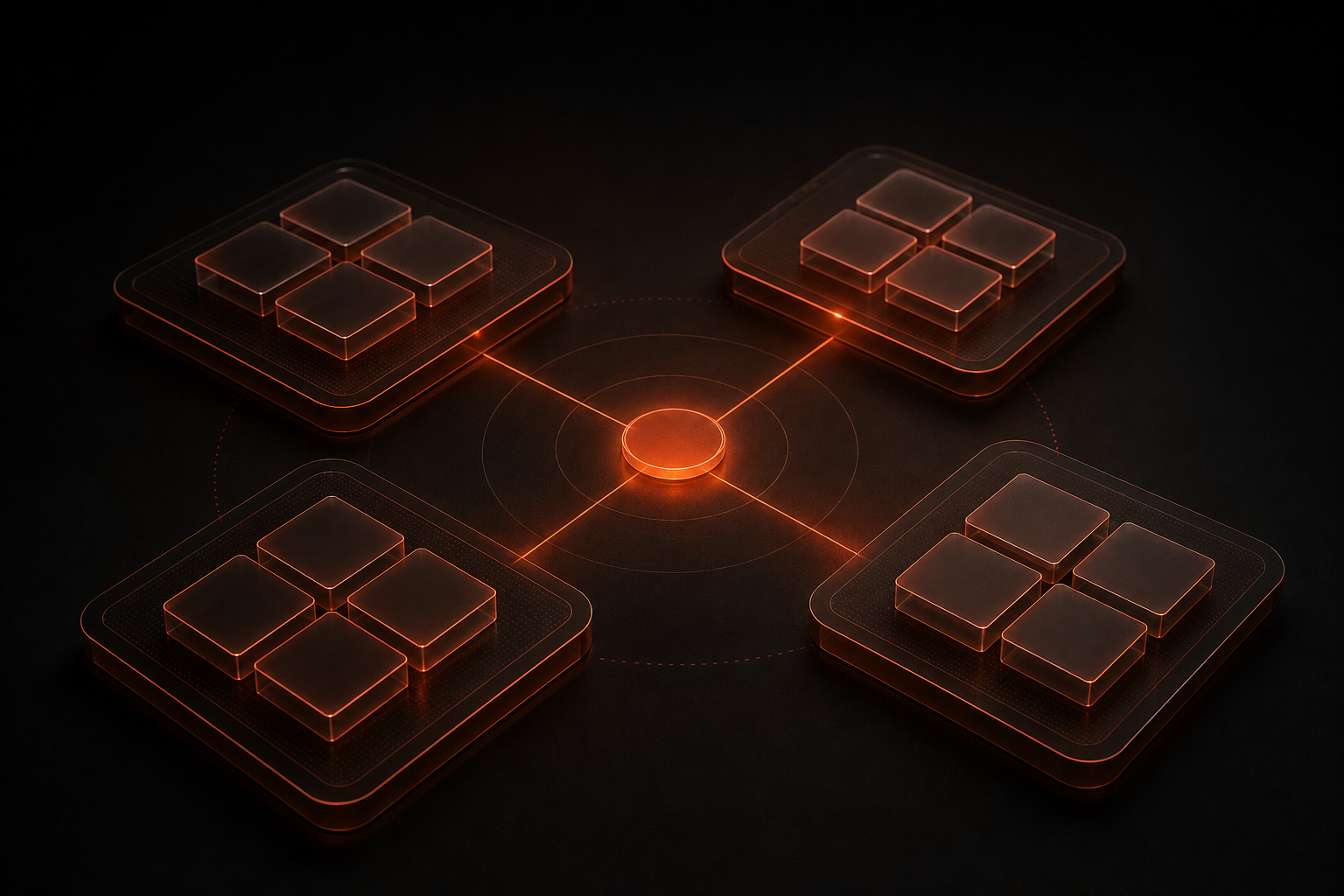
Multiplayer AI is many AI agents and your own people working in one shared context, on one record, instead of each person running a separate AI tool in isolation. Every agent holds a named role, reads the same brief, and logs every action where the whole team can see it. The result is a coordinated system that learns and compounds, not a collection of disconnected prompts. (2) Nagent is multiplayer AI for growth: people and AI agents in one shared context, delivering the number.
What does "multiplayer" actually mean in this context?
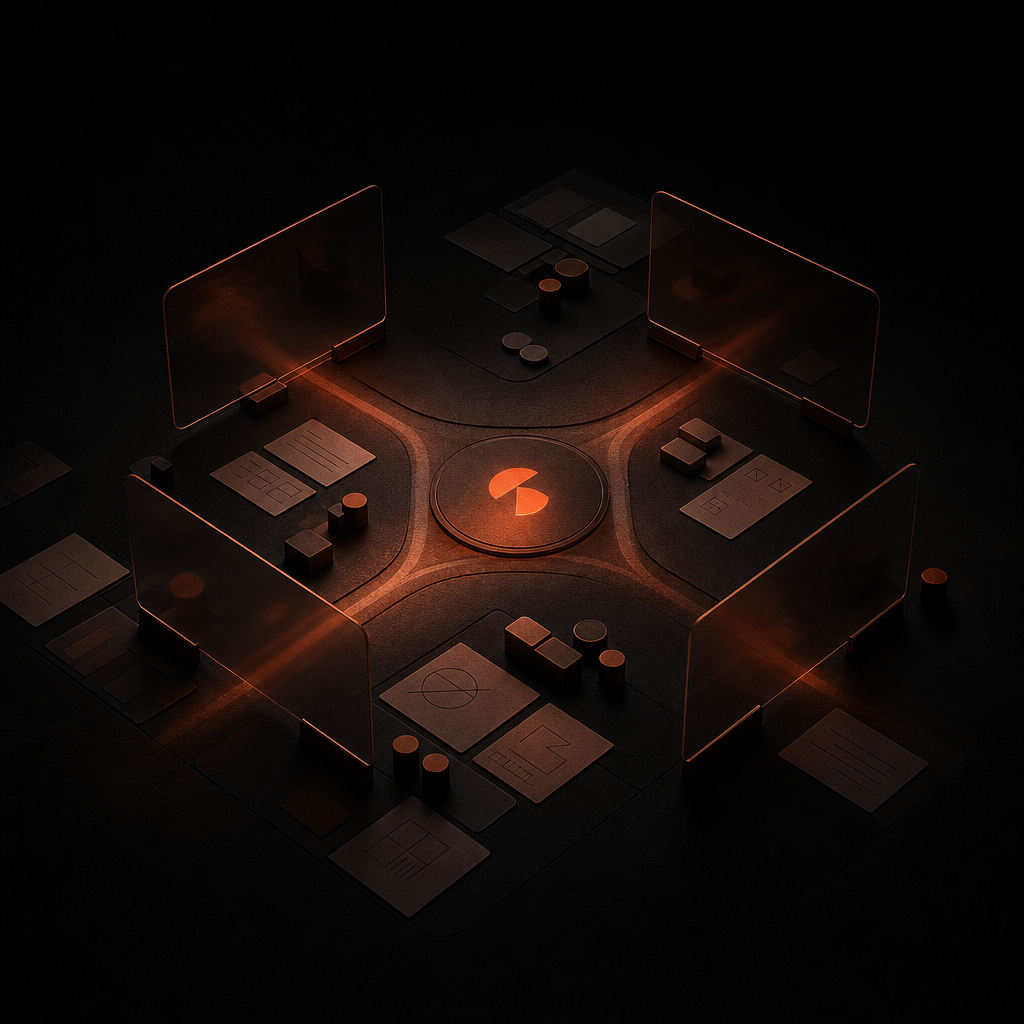
Multiplayer AI means the team and its AI agents share one workspace, one memory, and one goal, the way players share a game map rather than each playing a single-player mode.
Most companies today are running single-player AI. One person opens ChatGPT, another uses a different tool, a third runs a custom GPT. Everyone gets a private output. Nobody's context carries over. The work doesn't compound.
Multiplayer flips that. In Nagent's model, people and agents work in team rooms: a shared workspace where every agent reads the same organisational context before it acts, and every action lands on one record that the whole team can audit. (2) The second agent knows what the first one learned. The marketing agent and the sales agent are not strangers.
That shared context is the primitive that makes everything else possible.
How is multiplayer AI different from a single AI assistant?
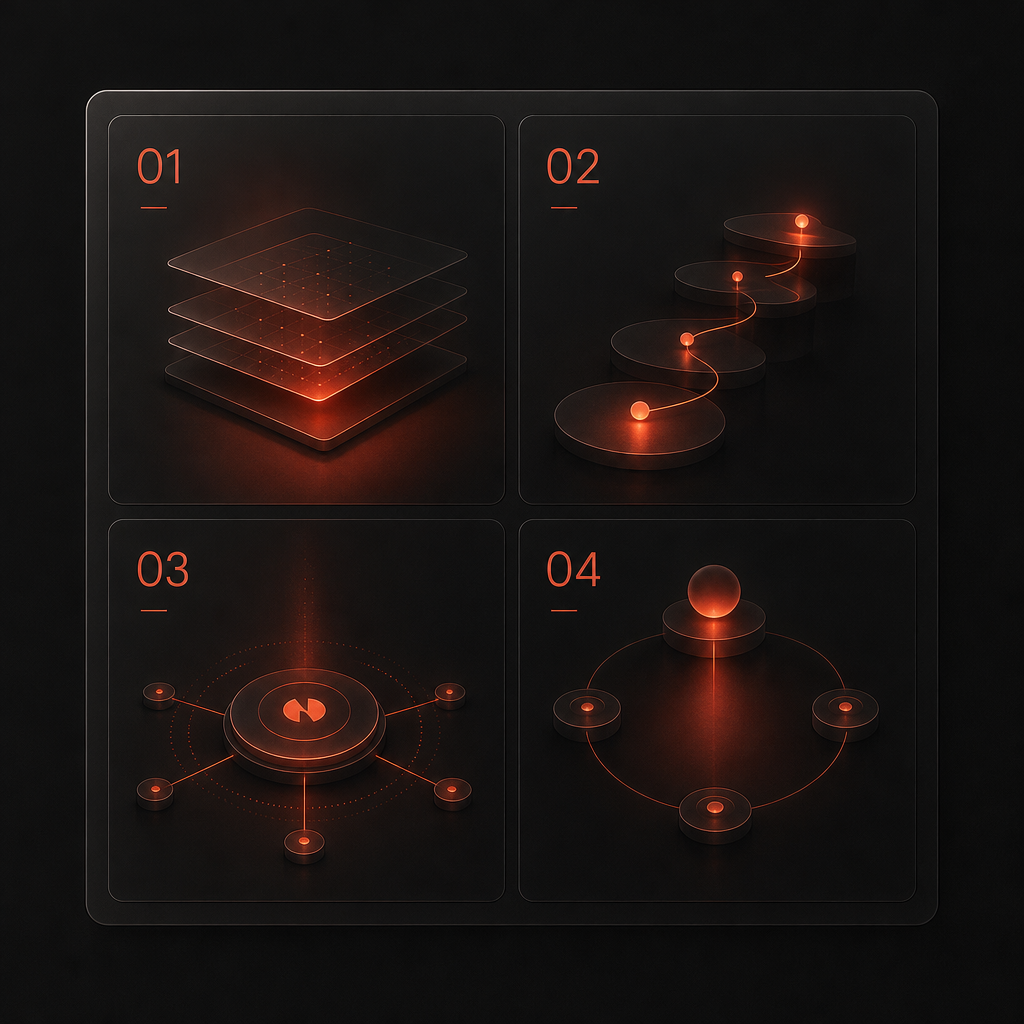
Four structural differences separate a multiplayer system from a single assistant: shared context, earned autonomy, a control plane, and a human on the loop.
Here's what each one means in practice.
1. Shared context, not isolated prompts
A single assistant starts fresh every session. A multiplayer system has a Knowledge Hub, one memory every agent reads before it works. (2) Brief a campaign once. Every agent on the team, the content agent, the outreach agent, the analytics agent, picks it up without being told again.
2. Earned autonomy, not a fixed permission level
Agents in a multiplayer system don't start with full access and don't stay limited forever. They earn more room through approved work, the way people earn promotions. (3) An agent with a long record of approved outreach and almost nothing dismissed is nominated for the next level, and a person decides whether it may run the next batch without a human checkpoint. One that makes a mistake gets a tighter leash. Autonomy is a track record, not a setting.
3. A control plane over the whole system
A single assistant has no governor. A multiplayer system has a control plane: budget stops, approval gates, audit logs, and role-based permissions that sit above every agent. (2) No agent spends, publishes, or contacts a prospect without clearing the rules set by the operator. This is what makes it safe to scale.
4. Human on the loop, not out of the loop
The phrase "human in the loop" usually means a human approves every step. That's slow. "Human out of the loop" means agents act freely. That's risky. Multiplayer AI uses a third position: human on the loop. (3) Agents handle routine execution autonomously. A person sees the record, can intervene at any point, and is required to approve anything irreversible. The human stays informed without becoming a bottleneck.
What does a team room look like in practice?

A team room is a shared workspace where named agents and people work the same brief, with every action visible to everyone on the team.
Take a product launch. In a single-player setup, the content lead prompts one tool for copy, the demand gen manager prompts another for ads, and the sales team gets a Slack message about messaging. Three tools, three contexts, no shared record.
In a multiplayer team room, MIRA (the marketing chief of staff) holds the brief. (2) She assigns the campaign brief to CREA for content and to DRIS for AI search visibility. SERA, the sales chief of staff, reads the same brief and briefs the outbound agents accordingly. (2) Every output lands on the shared record. When the content agent publishes a post, the outreach agent already knows the angle. Nobody re-explains the positioning.
The team room doesn't just coordinate work. It creates a single source of truth that every agent and every person reads from, so the system gets smarter with every cycle rather than resetting.
Why does shared context matter more than individual AI capability?
A smarter model with no shared context produces smarter isolated outputs. Shared context produces compounding intelligence.
This is the part most AI buyers miss. They evaluate tools by the quality of a single output: "Does this write better copy than that?" That's the wrong question. The right question is: "Does this system get better the longer we use it?"
Multiplayer AI compounds because every action feeds the shared record. (3) A campaign that underperforms teaches the system something. The next campaign starts from that learning, not from zero. Over time, the gap between a team running multiplayer AI and a team running individual tools widens, not because the models are different, but because the context is cumulative.
A single assistant, however capable, resets. A multiplayer system remembers.
Who should be running multiplayer AI right now?
Any growth team that has already deployed individual AI tools and is still managing coordination manually is the right candidate.
If your marketing lead, your content team, and your sales team are each running their own AI tools but still syncing on Slack, still re-briefing each other, and still wondering why outputs don't feel consistent, you're running single-player AI at scale. The coordination cost eats the productivity gain.
Multiplayer AI is built specifically for heads of growth, marketing, and revenue at B2B companies, and for agencies that run campaigns across multiple clients. (2) The team size that benefits most is 20 to 500 people: large enough that coordination is a real cost, small enough that adding headcount isn't the answer.
The question isn't whether your team is ready for AI. It's whether your AI setup is ready to work as a team.
Related reading
Frequently Asked Questions
What is multiplayer AI in plain terms?
Multiplayer AI is a system where your people and your AI agents work in one shared workspace, reading the same brief and logging every action on one record, instead of each person using a separate AI tool independently. Think of it as the difference between a team in one room and a team scattered across different offices with no shared notes.
How is multiplayer AI different from a multi-agent system?
A multi-agent system is a technical architecture where several agents run in parallel. Multiplayer AI adds the human layer: people and agents work together in the same context, with a control plane that governs what each agent can do and a human on the loop who can intervene at any point. (2) The distinction matters because coordination without governance tends to break down at scale.
Do agents in a multiplayer system act on their own?
Agents act autonomously on tasks they have earned the right to handle, and they ask a person before anything irreversible. (3) Autonomy is not a fixed setting. It expands as an agent builds a track record of approved work and contracts if something goes wrong. The control plane enforces budget limits and approval gates above every agent regardless of autonomy level.
What named agents does Nagent use in a multiplayer setup?
Nagent's multiplayer system includes chiefs of staff and specialist agents across marketing, sales, and content. MIRA leads marketing, SERA leads sales, and CREA leads content. (2) Each chief holds a number and directs specialist agents, such as NORA for outbound research and DRIS for AI search visibility, against that goal. Every agent reads from the same shared context before it acts.
How do I get started with multiplayer AI for my growth team?
The fastest path is to pick the departments you need at onboarding; their teams activate in your workspace the moment you first sign in. Where the plan includes it, a Nagent marketer joins the room with the agents and runs it to an agreed outcome.
What should you do next?
See a multiplayer team room built around your growth workflow: book a Nagent demo and we'll show you how MIRA, SERA, and CREA work in one shared context from day one.