
What is AI reputation management?

AI reputation management uses AI to read reviews and public mentions, sort them into cases with an assigned owner, draft replies for a person to approve, and check what answer engines say about a company against facts that company has approved. It is not a single score or a set-and-forget tool. The AI does the listening, the sorting and the drafting. A person decides every public reply.
Why does the old definition of reputation management no longer hold?

The old model tracked star ratings and flagged negative reviews. That model misses half the problem now.
Buyers no longer start research on Google's blue links. They ask ChatGPT, Perplexity, Claude or Gemini a direct question and accept the answer. Those answer engines form a view of your brand from sources you did not write and cannot directly edit. A four-star average on Google Business Profile tells you nothing about what Perplexity says when someone asks which vendor in your category is most reliable.
This is the gap ai reputation management is designed to close: not just what customers say about you, but what AI systems say about you, and whether those claims match facts your team has approved. (1)
What does AI reputation management actually do?
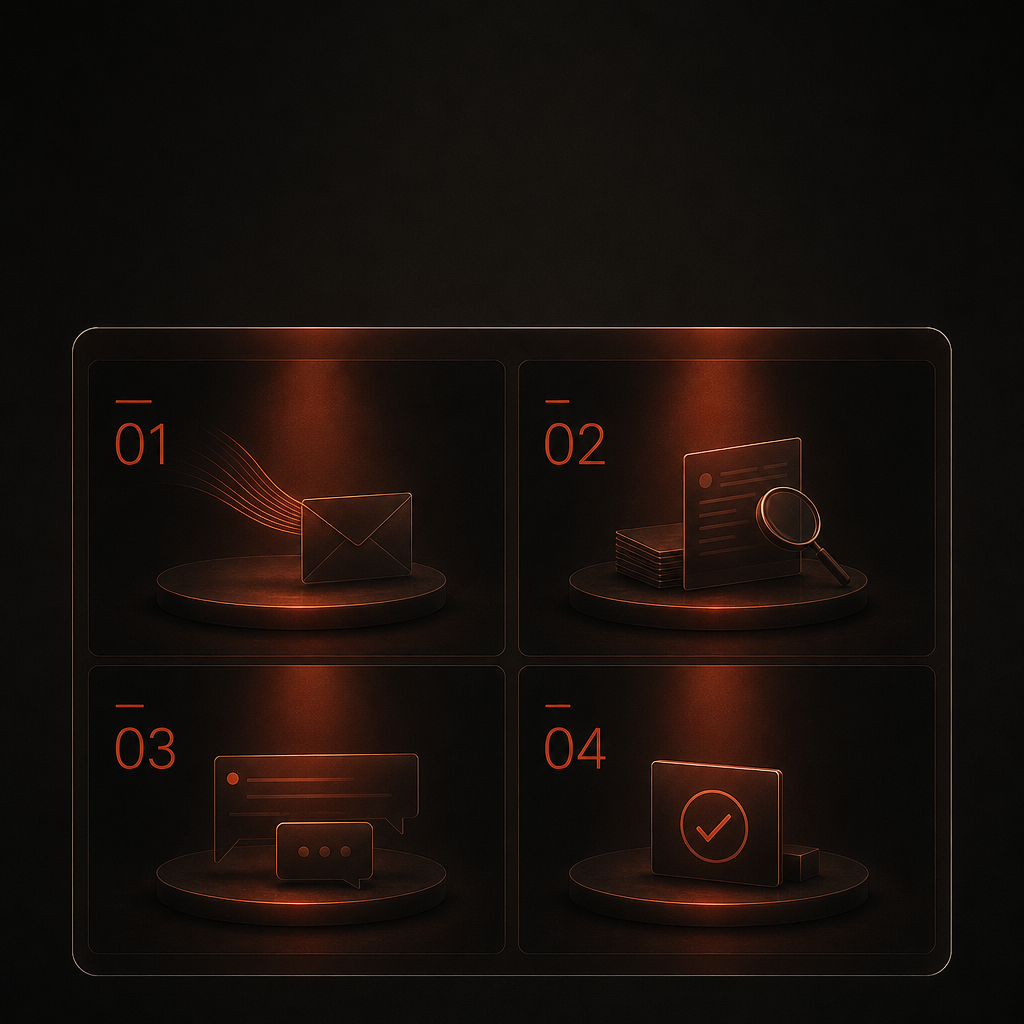
It handles four jobs that used to require a human watching every inbox.
Listening. It reads reviews and public mentions continuously, across the platforms where your customers leave feedback.
Case creation. When something needs a response, it opens a case, assigns an owner and sets a due time. Reviews stop being a feed someone scrolls through and start being work items with accountability.
Reply drafting. It writes a draft reply grounded in your brand voice. That draft goes to a person for approval before anything is published. No reply goes out automatically. (1)
Answer checking. It queries answer engines with the questions your buyers ask, records what those engines say about your brand, and checks each claim against facts a person in your workspace has approved. If an engine says something that does not match an approved fact, that becomes a case too.
What separates presence from accuracy, and why does it matter?

These are two different measures, and conflating them leads to bad decisions.
Presence is whether answer engines mention your brand at all when buyers ask about your category. A brand with zero presence is invisible to buyers who never reach your website because they got their answer from an AI.
Accuracy is whether what those engines say about you is correct. A brand with high presence but low accuracy has a different problem: it is being cited, but the citations are wrong, outdated or misleading.
Standard rank-tracking tools do not capture either of these. Measuring them requires asking the engines the questions buyers ask and recording who gets cited and what is said. (2) Treating presence and accuracy as one blended score hides which problem you actually have and which fix applies.
Who is Echo, and how does it work?
Echo is Nagent's AI reputation coworker, currently in Beta. (3) It owns reputation on the Marketing team and reports to MIRA, Nagent's AI chief of staff for marketing.
Echo works through six listening seats, one per platform group. Each seat watches a defined surface, reads what comes in and decides whether a case needs to be opened.
The critical design choice: Echo never decides on its own what is true about a company. A claim is accurate only if it matches a fact a person in that workspace has approved. The record of truth stays with the business, not with the AI. (3)
That matters more than it sounds. If Echo checked AI answers against its own training data, it would be using one AI to audit another. Instead, it checks against a set of facts your team has explicitly signed off on. The human judgment is baked into the process, not bolted on afterward.
What does Echo do with a case?
A case is not a notification. It is a work item.
When Echo opens a case, it assigns an owner, records the source, drafts a reply and sets a due time. The owner reviews the draft, edits it if needed and approves it. Only then does a reply go out.
Echo also checks what answer engines say about your brand against your approved facts. When it finds a mismatch, that finding becomes a case. Depending on the nature of the mismatch, the fix might route to DRIS (Nagent's AI visibility lead, who handles site content and structured data) or to MOXA (Nagent's social and content agent), so the right teammate owns the correction. (3)
This is the multiplayer model: people and AI agents in one shared context, each doing the work they are best suited for.
What is Echo not doing yet?
Being clear about this matters.
Echo is in Beta. As of now, it listens on Google Business Profile. Listening sources beyond that are not yet built. Approving and sending replies is not active: drafts are prepared but no reply is sent today. Talking to Echo directly in the app, asking it for a plan, and search are also not yet available. (3)
The roadmap is real, but the current version is narrower. If your review volume is concentrated on Google Business Profile, Echo is usable now. If you need multi-platform coverage at scale, that is coming.
How should a marketing lead think about starting?
Start with two questions, not a tool evaluation.
First: do you know what answer engines say about your brand right now? Run your ten most important buyer queries in ChatGPT, Perplexity and Google AI Overviews. Record who gets cited and what is said. That is your presence and accuracy baseline.
Second: do you have a defined set of approved facts about your company? Not a brand guide. A specific list of claims that are accurate and current, signed off by someone with authority. Without that list, no AI reputation tool can check accuracy, because there is nothing to check against.
Once you have those two things, you have the inputs Echo needs to do its job. The AI handles the listening, the sorting and the drafting. Your team handles the approvals and the source of truth.
That division is not a limitation. It is the right design. Public replies and factual records are decisions with consequences. They belong with people.
Related reading
Frequently Asked Questions
What is AI reputation management?
AI reputation management uses AI to read reviews and public mentions, sort them into cases with an owner, draft replies for a person to approve, and check what answer engines say about a company against approved facts. (1) The AI handles the listening and drafting. People decide every public reply.
How is AI reputation management different from traditional review monitoring?
Traditional review monitoring tracks star ratings and flags negative comments on review platforms. AI reputation management adds a second layer: checking what AI answer engines say about your brand when buyers ask questions, and measuring both whether your brand is mentioned (presence) and whether those mentions are accurate (accuracy). (2)
What is Echo and what does it do?
Echo is Nagent's AI reputation coworker, currently in Beta. (3) It listens across six platform seats, opens cases when something needs a response, drafts replies for human approval, and checks AI answer engine claims against facts a person in the workspace has approved. No reply is sent without a person approving it first.
Why are presence and accuracy treated as separate measures?
A brand can be mentioned frequently by answer engines but described incorrectly, or it can be described accurately but almost never cited. These are different problems with different fixes, and a single blended score hides which one you have. (2) Keeping them separate tells you whether to work on visibility, on correcting the record, or on both.
Can Echo fix what AI answer engines say about my company?
Echo identifies mismatches between what answer engines say and the facts your team has approved, then opens a case so the right person or agent can act. (3) It does not directly change what any answer engine outputs. The correction happens by updating your owned content and structured data, work that routes to agents like DRIS or MOXA depending on the fix required.
What should you do next?
Run your ten most important buyer queries in ChatGPT, Perplexity and Google AI Overviews today, record what is said about your brand, and then book a demo with Nagent to see how Echo turns those findings into cases your team can act on.