
Can AI Plan, Launch and Optimise Google and Meta Ads?
On Nagent, AI agents plan, launch and optimise paid campaigns on Google Ads end to end, with a person approving each step before anything touches live spend. Meta works differently. There, NIA works in Beta at campaign level only, pausing, resuming and re-budgeting campaigns once a person approves, while HOOK (Beta) plans the creative strategy and learns from results. Ads, audiences and creative uploads on Meta stay with your team. The split is intentional, not a gap in the product.
What does the end-to-end paid campaign flow actually look like?
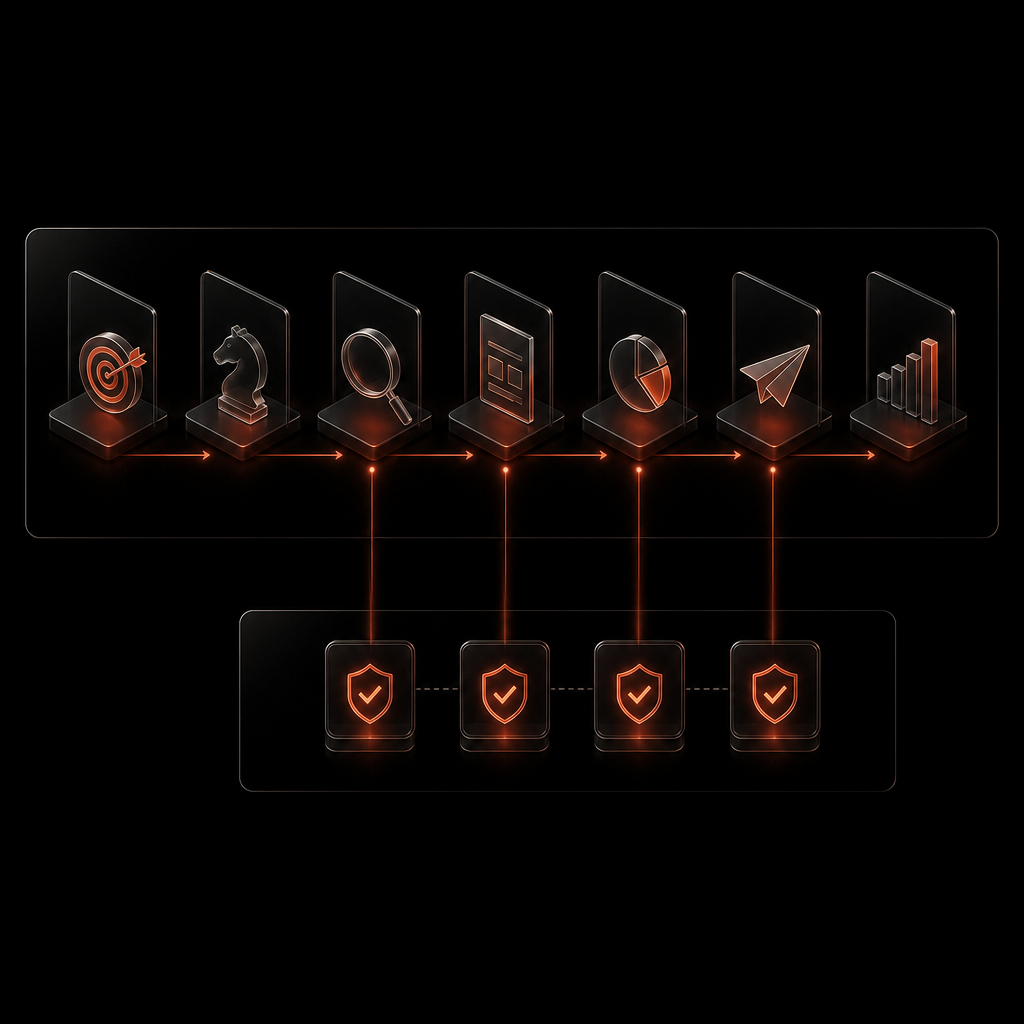
Every stage maps to a named AI teammate, and every stage that touches live spend has a human approval gate.
Here is the full flow for a D2C launch running Google and Meta in parallel:
Brief MIRA, the AI Marketing Chief of Staff, with your campaign goal, audience and budget ceiling. She routes each piece to the teammate who owns it.
Creative strategy: HOOK reads your brief, writes angles, hooks and CTAs, and produces distinct concepts for testing.
Static creative: RUPA takes HOOK's scripts and produces static ad creatives.
Video creative: Alpha plans platform-ready video ads from the brief, quoted before anything renders and approved at the storyboard.
Google Ads build: NIA checks budget ceiling and pace, structure, copy safety, conversion tracking and duplicates, then queues a paused campaign for approval.
Launch: a person approves the campaign on the Actions screen. The campaign goes live only after that approval. Nothing reaches the account before it.
Optimise: NIA monitors performance, proposes changes with her reasoning, and queues each one. A person approves.
Learn: HOOK reads the ad results you upload, including what won and what did not, into the next brief.
Meta creative sits in steps 2, 3, 4 and 8. Google sits in steps 5, 6 and 7, and NIA's campaign-level changes on Meta go through the same approval as step 7. The brief and the learning loop cover both.
Does NIA run Meta ads too?

Yes, in Beta, and only at campaign level.
Once an admin connects a Facebook and Instagram ad account and sets a hard daily and monthly spend cap, NIA can read the account and its results, pause a campaign, lower or raise its daily budget, resume a paused campaign, and create a new campaign that starts paused and empty. Nothing reaches Meta until a person approves it. Resuming, raising a budget and creating a campaign need a named approver's click every time, and are checked against the hard cap when filed and again when applied.
She does not touch Meta bids, ad sets, audiences, ads or creative. Those stay in Ads Manager with your team. That boundary is a control decision. Meta's auction, creative formats and policy enforcement work differently from Google's paid search environment, so automated spend decisions on each platform need their own approval layer.
How does HOOK plan and learn from Meta creative?
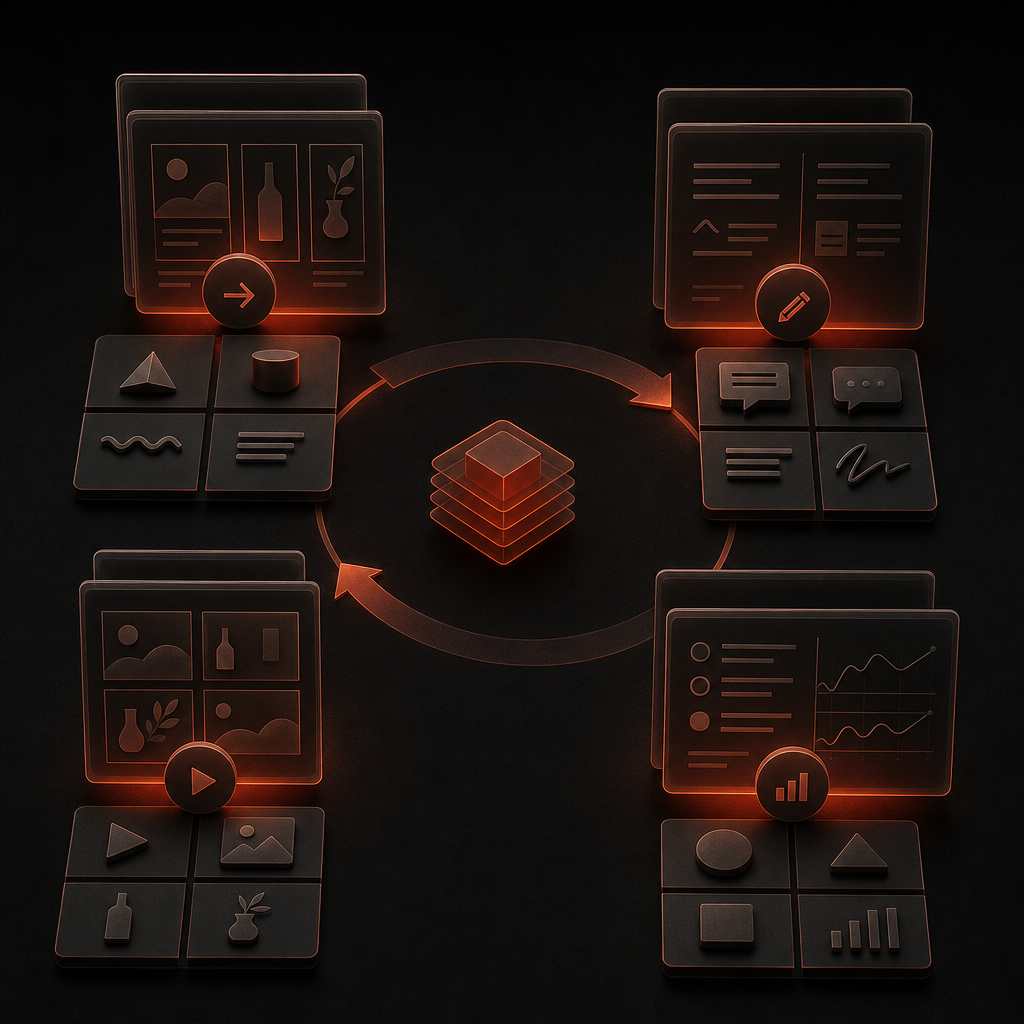
HOOK turns what wins into angles and scripts, then reads the results of each round back into the next brief.
When you upload your Meta ad results to Nagent, HOOK reads the performance data and uses it to brief the next creative round. The winning angles get sharpened. The losing ones get dropped or reframed. Your team still controls the upload and the spend on Meta, but the creative strategy is no longer a guess. It is a high-frequency, data-driven loop.
This is the structural fix for the D2C team that is always behind on creative. The bottleneck is not individual speed. It is the handoffs between brief, script, production and format adaptation. HOOK and RUPA collapse those stages into one automated workflow, with approval at the output, not at every handoff.
Why does every Google Ads change queue for approval?
Because a person approving a change is not a friction point. It is the control mechanism that makes AI on live spend safe.
NIA proposes every change with its reasoning, the data that triggered it and the confidence level at the time. A person approves it. The outcome, booked, dropped or converted, is recorded. AI teammates earn more autonomy level by level as that record shows they are right.
The autonomy ladder runs L1 Observe, L2 Assist, L3 Operate, L4 Represent and L5 Lead. Up to L4 Represent, every public post and reply waits for a named person. NIA starts below the level her live actions need, so every live change she proposes queues for approval. She does not raise her own level; a person decides every promotion.
For a three-person marketing team launching a D2C brand, this matters. You are not handing the ad account to a system and hoping. You are reviewing a proposal, approving it and watching the outcome get logged. That is a different relationship with AI than most founders expect.
What guardrails stop an AI agent from overspending?
Budget caps, approval gates and a kill switch are all present on the platform.
Specifically:
Budget caps: set a ceiling and NIA works within it.
Approval before action: every live change queues before it executes.
Kill switch: stop any agent immediately if something looks wrong.
Append-only audit log: every action is recorded and cannot be edited after the fact.
RBAC: role-based access controls decide who on your team can approve what.
These are not optional settings. They are part of how the platform is built.
How do AI agents plan launch optimise paid campaigns without a big team?
They replace the sequential handoffs, not the people making decisions.
A three-person marketing team cannot run a high-frequency creative testing loop manually. There are not enough hours. The brief goes to one person, the script to another, the creative to a designer, the upload to whoever has platform access that week. Each handoff adds waiting time. The campaign window closes before the test produces a signal.
On Nagent, MIRA takes the campaign brief and hands each piece to the teammate who owns it. HOOK writes the scripts. RUPA produces the statics. Alpha plans the video. NIA builds and monitors the Google campaign. Your team approves the work and focuses on strategy, audience positioning and what to test next.
The creative director role does not disappear. It becomes where your team spends its creative time: deciding what to test and approving what runs.
Is the platform secure enough for ad account access?
Nagent is ISO/IEC 27001:2022 certified, with a SOC 2 Type II programme underway, and tenant isolation, RBAC, append-only audit and private VPC available today.
Your ad account credentials, campaign data and creative assets sit in an isolated tenant. The audit log is append-only, meaning no one can edit or delete what was recorded. For teams on the Enterprise plan, private VPC deployment with your own model and key is available.
Related reading
Frequently Asked Questions
Can an AI agent plan, launch and optimise paid campaigns on both Google and Meta?
On Nagent, AI agents plan, launch and optimise Google Ads end to end, with a person approving each step before anything touches live spend. For Meta, HOOK plans the creative strategy and learns from results, and NIA makes approved campaign-level changes in Beta. Ads and creative uploads on Meta stay with your team.
Does NIA manage Meta ads?
Yes, in Beta, at campaign level: she pauses and resumes campaigns, changes campaign daily budgets and creates empty paused campaigns. Every change waits for approval, and anything that adds spend is checked against a hard spend cap. Bids, ad sets and creative stay in Ads Manager.
What happens if NIA proposes a change I disagree with?
Nothing changes in a live account without a person approving it. Every proposal is logged with its reasoning and the data that triggered it, and your team can set hard guardrails such as a maximum budget shift per action or a minimum spend floor per variant.
How does HOOK improve Meta creative over time?
HOOK reads the ad results you upload, including what won and what did not, into the next brief. Winning angles get sharpened and losing ones get dropped, so each creative round starts from a stronger position than the last.
Is Nagent secure enough to connect to my ad accounts?
Nagent is ISO/IEC 27001:2022 certified, with tenant isolation, RBAC, append-only audit and private VPC available today, and a SOC 2 Type II programme underway. Your campaign data sits in an isolated tenant and every action is recorded in an audit log that cannot be edited after the fact.
What should you do next?
If you're planning a launch on Google and Meta with a small team, the fastest way to see how the workflow maps to your campaign is a live demo. Book a session with Nagent and we'll walk through the brief-to-launch flow with your specific goals.