
HOOK vs AdCreative.ai: Generator or Creative Strategist?

AdCreative.ai is an ad creative generator: give it a product image and brand colors, and it returns formatted ad visuals. HOOK is a creative strategy lead. It turns a brief into angles, hooks and scripts, checks every claim against what your brand can prove, then hands stills to RUPA and video to Alpha for production. The two tools sit at different points in your workflow, and choosing the wrong one costs you more than time.
What does AdCreative.ai actually produce?
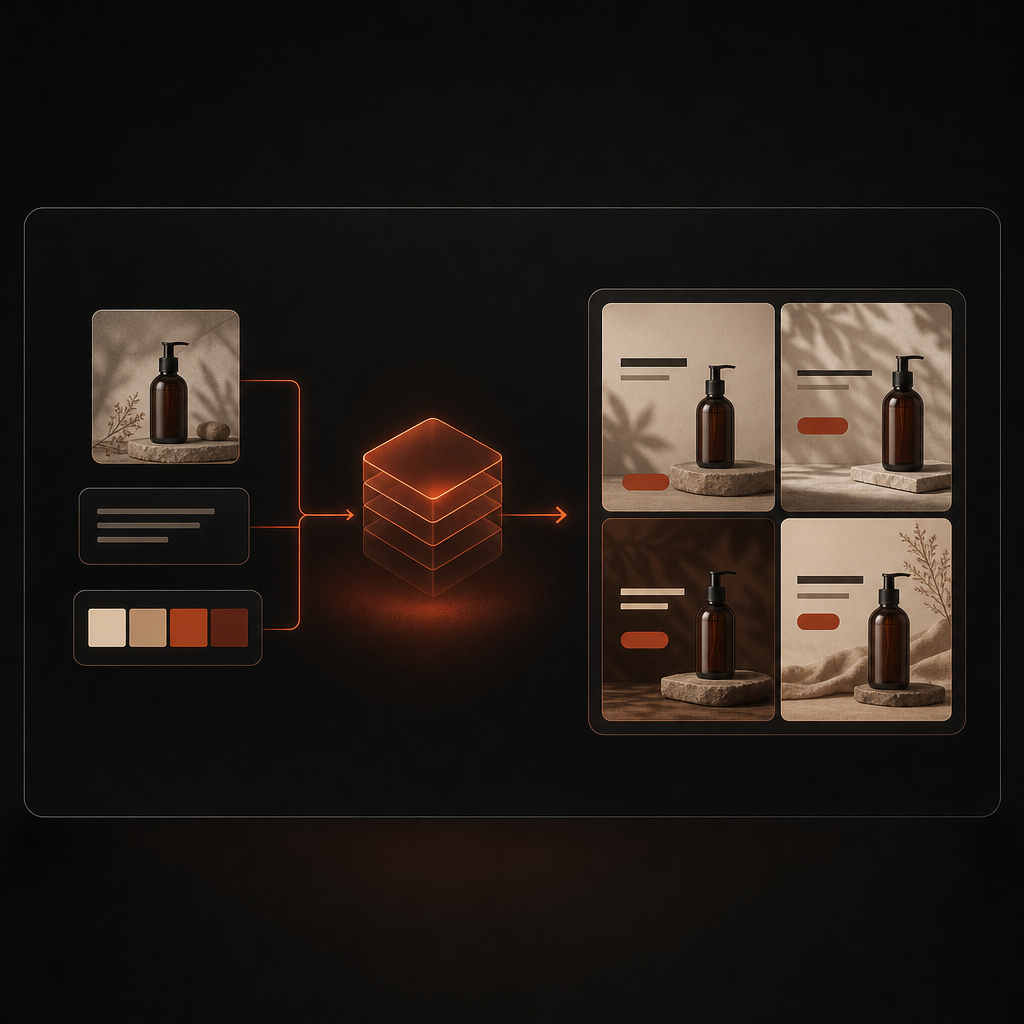
AdCreative.ai produces formatted ad visuals from inputs like a product image, a headline and brand colors.
Based on its own product pages, AdCreative.ai describes itself as an AI platform that generates ad creatives and banners. You give it visual inputs and it returns sized assets for various placements. The output is a finished-looking image ad, ready to upload. That is the product's stated purpose: generation speed, at scale, from a template-driven process.
There is nothing wrong with that if generation is the gap in your workflow. The question is whether generation is actually your problem.
What does HOOK produce?
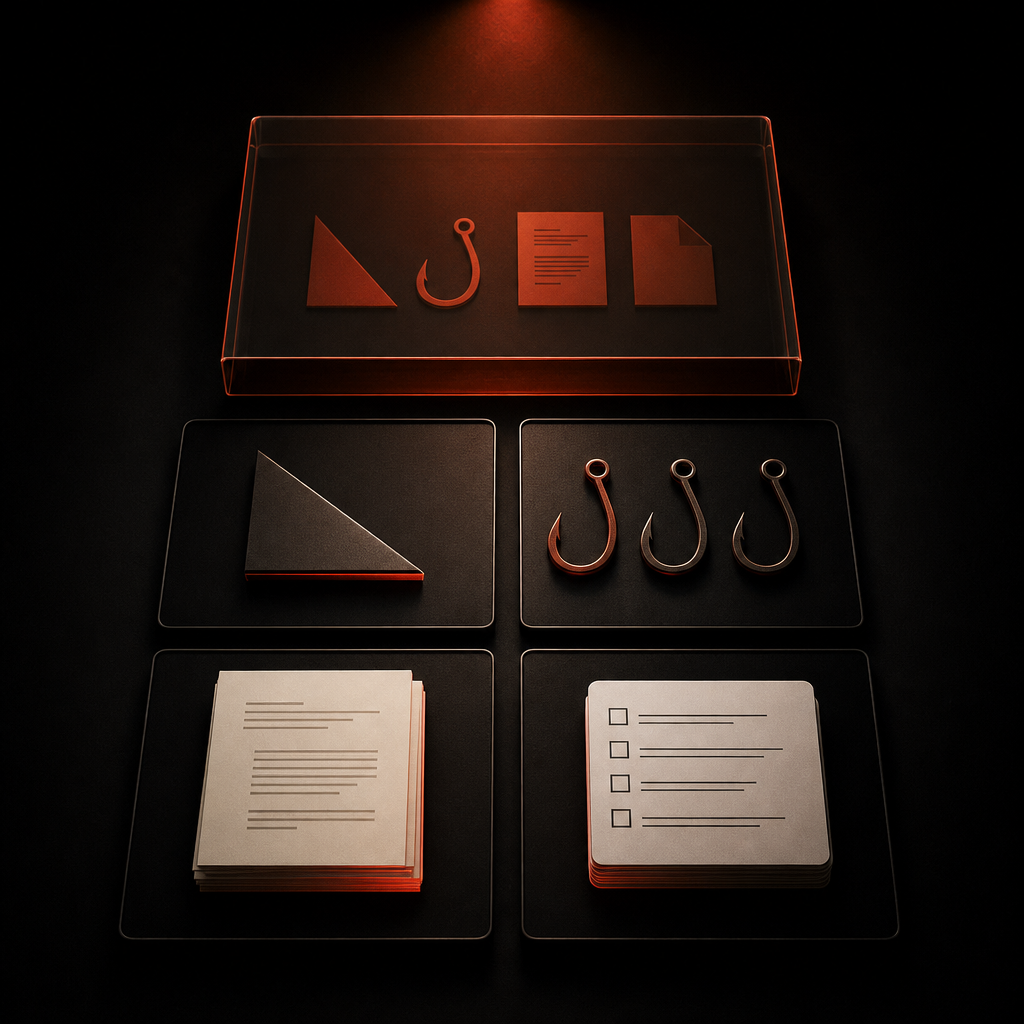
HOOK produces a creative pack: the angle, the hooks, the script and the rules the ad must keep, before a single pixel is rendered. (1)
This is a fundamentally different starting point. HOOK is Nagent's AI creative strategy lead for paid social. It runs a bench of eight specialist seats. One seat, SCOUT, builds a swipe library of ads worth studying. Another, MINE, tears a competitor video down into its beats. GATE checks every claim against the proof your brand has supplied. Nothing goes to production until GATE has signed off. (1)
The output is a brief, not a banner. That brief then feeds RUPA for stills and Alpha for video, keeping strategy and visuals connected because they started from the same document. (1)
Does brand control work differently across the two tools?
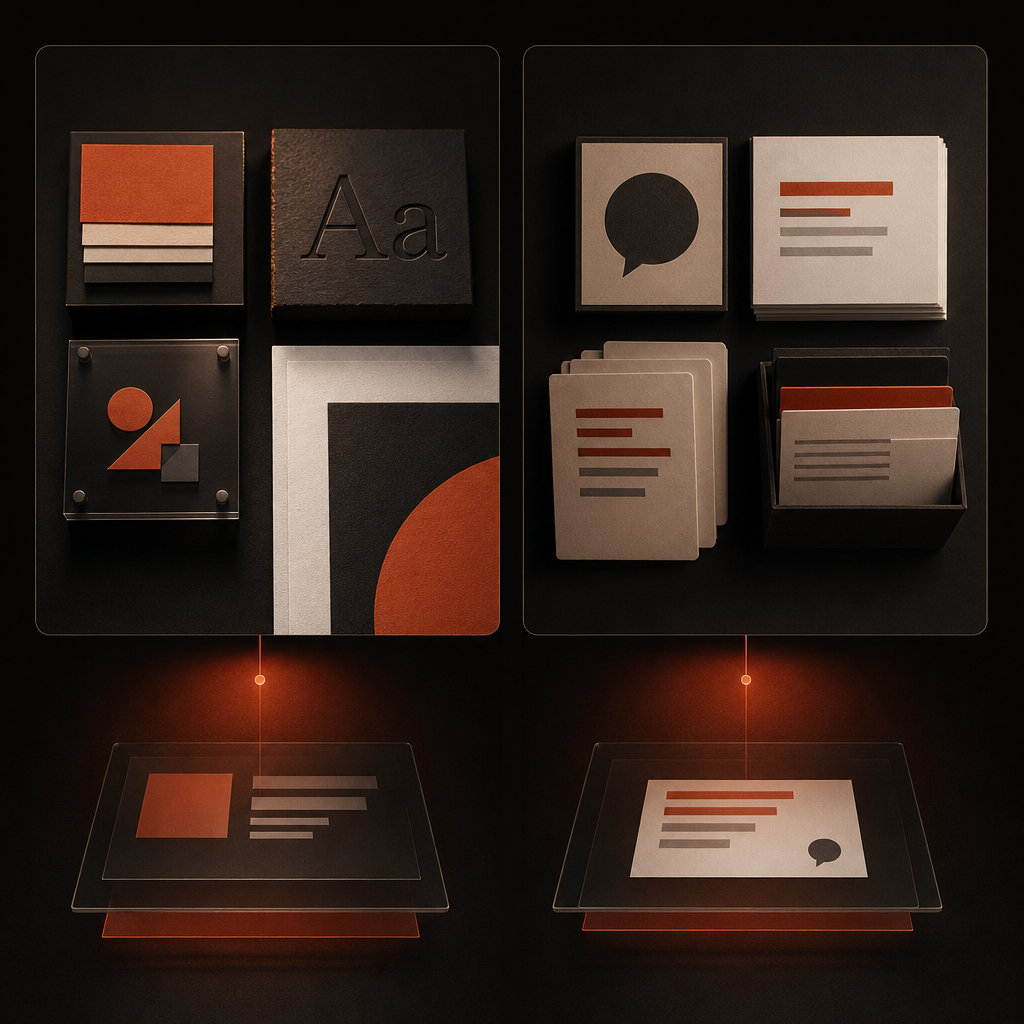
Brand control in AdCreative.ai is primarily visual: colors, fonts, logos. Brand control in HOOK starts with what the brand is allowed to say.
HOOK's first requirement is a brand pack: voice, buyer profile, the claims the brand can make with their proof, and banned language. (1) An ad that claims something the brand cannot prove costs more than a weak ad. That is why GATE is the last thing that runs before PACK builds the upload-ready asset.
Visual brand consistency matters. But claim consistency is a compliance and trust issue. If your category is regulated, or if your performance team has ever shipped an ad that overstated a result, the claims layer is the gap AdCreative.ai does not fill.
How does each tool handle learning from results?
AdCreative.ai reports on creative performance scores. HOOK reads your ad data and tells you which concepts won, so the next brief is smarter.
This is where the generator-versus-strategist distinction becomes concrete. A generator can score outputs. A strategist changes what it generates next based on what performed. HOOK reads performance data you upload and feeds that signal back into the angle-selection process. What worked last quarter does not stay in one person's head. (1)
Agentic tools like HOOK target two to three revision rounds. Template-based tools typically run six to eight. (2) The difference is not speed of generation. It is the quality of the brief that starts the process.
What does the approval workflow look like for each?
AdCreative.ai returns finished assets for a person to approve or reject. HOOK surfaces angles and scripts for approval before anything is rendered.
This is an important distinction for paid social managers. When you approve a finished visual, you are approving execution. When you approve a HOOK angle and script, you are approving strategy. Changes at the strategy stage cost nothing. Changes after render cost time and budget.
HOOK never touches a live ad. No seat on its bench can launch, pause, or change a budget or a bid. A person uploads, pauses and spends in the ad platform. PACK builds a package to upload by hand, or hands a Google pack to NIA, who builds it paused. (1)
That read-only constraint is a deliberate design choice. The agent raises the floor of creative output. The human sets the ceiling and controls what actually runs.
Who should pick AdCreative.ai?
AdCreative.ai fits teams whose primary gap is formatted asset production at volume, and whose strategy and claims process already runs elsewhere.
If your creative strategist writes the brief, your compliance team reviews the claims, and your only bottleneck is turning approved copy into sized banner assets across placements, AdCreative.ai addresses that bottleneck. It is a production tool for teams that have the upstream work handled.
Who should pick HOOK as an AdCreative.ai alternative?
HOOK fits paid social teams whose bottleneck is upstream: not enough angles, no systematic claim review, and no institutional memory of what worked.
If your team runs six-plus revision cycles on scripts, if last quarter's winning creative concept lives in one person's Notion doc, or if your ads have ever shipped a claim that nobody formally approved, HOOK addresses those gaps. (2) It is an adcreative.ai alternative for teams that need a strategist, not a generator.
The workflow on Nagent runs like this:
HOOK receives a brief with the brand pack, claims list and channel targets.
SCOUT and MINE research what is working in your category.
ANGLE writes the bets and hooks. GATE checks every claim.
PACK builds the upload-ready asset package.
RUPA renders stills. Alpha plans video variations from the approved script.
A person reviews, approves and uploads.
Strategy and production stay connected because they share one context. That is the gap a standalone generator cannot close. (1)
What about teams that need both?
Some teams need generation speed and strategic rigor. Those are not mutually exclusive, but they are different tools solving different problems.
If you are running a high-volume D2C paid social program, you likely need both a claims-checked creative strategy process and fast asset production. On Nagent, HOOK handles the strategy layer and RUPA handles the production layer. The brief that HOOK produces becomes the input RUPA works from, so the two do not run in parallel without talking to each other.
An adcreative.ai alternative that only replicates the generation step leaves the strategy gap open. The question to ask is: where does your creative quality actually break down? If it breaks down at the brief, a generator makes more low-quality assets faster.
Related reading
Frequently Asked Questions
Does HOOK replace AdCreative.ai entirely?
Not necessarily. HOOK operates upstream of asset production, turning a brief into angles, hooks and scripts before anything is rendered. If your team already has a strong strategy and claims process and only needs formatted asset output, AdCreative.ai addresses that specific step. For teams whose bottleneck is the strategy layer, HOOK is the right starting point.
Can HOOK produce finished ad visuals?
HOOK does not render visuals. It produces the creative pack, then hands stills to RUPA and video to Alpha for production. The three work from the same brief, so strategy and execution stay connected rather than running as separate workstreams.
What is the GATE check in HOOK?
GATE is the seat on HOOK's bench that reviews every claim in the script against the proof your brand has supplied. It runs before PACK builds the upload-ready asset, so no ad ships with a claim the brand cannot support. This is the layer that AdCreative.ai, as a generator, does not include by design.
How many revision rounds does HOOK target?
Agentic tools like HOOK target two to three revision rounds, compared to six to eight for template-based tools. (2) The reduction comes from approving strategy before production starts, not from generating faster.
Is HOOK safe to use on a live ad account?
HOOK is read-only on the ad account. No seat on its bench can launch, pause, or change a budget or a bid. A person controls what runs. PACK builds the upload package and a human uploads it manually, or NIA builds a Google pack in paused status for review.
What should you do next?
If your creative bottleneck is upstream of the banner, start with the strategy layer. Book a demo with Nagent and see how HOOK turns a brief into a claims-checked creative pack your team can actually ship.