What Is an AI Ad Script Writer?
What Is an AI Ad Script Writer?
An AI ad script writer is not a fill-in-the-blank copy tool. It is an agent that takes a brief, reads platform context, applies audience signals, and produces structured scripts ready for paid production — then iterates until the output earns approval. The distinction matters because most marketers are buying the wrong category of tool and wondering why their ad performance hasn't moved.

What separates a real AI ad script writer from a copywriting template tool?

A true AI ad script writer reasons over your brief, audience, and platform format — a template tool just fills slots you define.
Template tools ask you to pick a framework (AIDA, PAS, BAB), drop in your product name, and hit generate. The output is yours to edit, restructure, and then edit again. The tool did not think. It arranged.
An agentic script writer behaves differently. Feed it a brief — product, audience, channel, objective — and it:
- Identifies the right hook structure for that platform
- Adapts tone to audience intent (awareness vs. retargeting vs. conversion)
- Structures the call to action for the format's attention window
- Flags creative angles your brief didn't explicitly request
That last point is the hard line. Template tools reflect your thinking back at you. Agents extend it.
Why do most marketers conflate the two categories?

Because both produce words on a screen — and most vendors don't want you to notice the difference.
The marketing for template-based tools has borrowed agentic vocabulary. "AI-powered." "Intelligent generation." "Automated copy." None of these phrases mean the tool reasons. They mean the tool runs an LLM over a prompt you partially wrote.
The operational tell is revision count. If you are running six to eight rounds of creative feedback before a script is approved, your tool is not acting as an agent. It is producing raw material. You are doing the cognitive work. The "AI" is a fast typist.
Nagent's Ad Script Writer was built to collapse that cycle. Script iteration targets two to three rounds before approval — compared to the six to eight rounds teams typically run with template-based generation. The difference is not the model. It is the reasoning layer on top of it.
What does an agentic AI ad script writer actually do step by step?
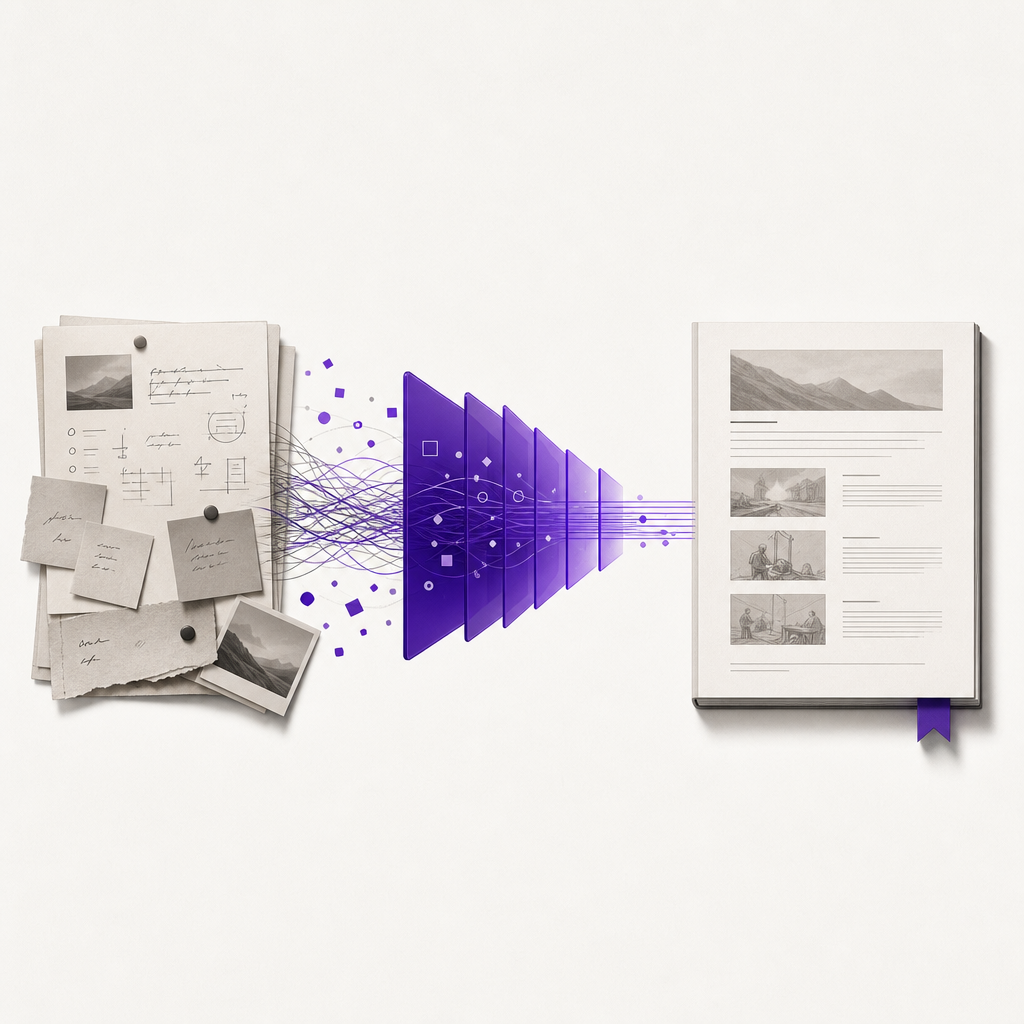
It converts a brief into a campaign-ready script through structured reasoning, not template substitution.
Here is what that looks like in a real GTM workflow:
- Brief ingestion — The agent reads product details, target audience, platform, and objective. It does not ask you to pick a framework.
- Hook selection — Based on the platform and audience intent, the agent chooses an opening structure. A retargeting ad on Instagram gets a different hook than a cold awareness pre-roll on YouTube.
- Body construction — The agent sequences benefit statements, proof points, and objection handling based on the sales stage the ad is targeting.
- CTA calibration — The call to action is matched to the platform's conversion behaviour. "Shop now" works on a product catalogue ad. It fails on a B2B demo request.
- Variation output — The agent produces multiple distinct creative angles in a single pass, ready for A/B testing.
Step five is where agentic tools create real leverage. Nagent's Offer Variation Agent generates dozens of distinct creative angles for one offer — specifically to accelerate A/B testing.[^3] That is not a feature you can replicate by prompting a template tool twenty times. The agent maintains offer coherence across angles while varying the creative frame. That coherence is the hard part.
How does platform format change what an AI ad script writer produces?
Platform format is not a cosmetic variable — it changes the entire script architecture.
A 15-second pre-roll on YouTube has a hard skip threshold at five seconds. A 30-second Facebook video ad can build context before the hook lands. A TikTok script lives or dies on the first frame of text.
Template tools treat format as a length constraint. You tell them "write a 15-second script" and they trim to a word count.
Agentic script writers treat format as a structural input. The hook, pacing, visual beat timing, and CTA placement all shift based on where the ad will run.
Nagent's Ad-Genie extends this logic from scripting into full video production. It handles scripting, scene composition, and format adaptation across social channels in a single workflow — cutting production from weeks to days.[^2] One brief produces nine creative variations, each platform-adapted. That is a fundamentally different production model than writing a script and handing it to a video team.
What GTM use cases actually benefit from an agentic AI ad script writer?
Three workflows see the clearest return: performance creative teams running multi-SKU campaigns, brand teams reducing agency dependency, and growth teams needing rapid A/B iteration.
Performance creative at scale. E-commerce and DTC brands running weekly ad variations for paid social cannot sustain a human-in-the-loop for every creative. An agentic script writer produces campaign-ready scripts within minutes, not days. Ad-Genie's documented outcome: creative output volume moves from four to six ads per month to over one hundred ads per month per brand.[^2]
Reducing external production cycles. Agencies run six to eight creative rounds on average before a script earns approval. Agentic tools cut that to two to three internal review rounds — because the agent front-loads the reasoning the agency meeting used to do.[^2]
A/B test velocity. You cannot statistically validate a creative angle with two variants. You need eight to twelve. The Offer Variation Agent generates those dozens of angles from a single offer brief.[^3] Growth teams running paid acquisition can now run meaningful creative experiments without a copywriting backlog.
What does an AI ad script writer not do?
It does not replace creative strategy, brand judgment, or knowledge of your customer.
This is the part the vendors skip. An agentic script writer is fast and structurally sound. It is not emotionally calibrated to your specific customer. It does not know that your highest-converting segment responds to scarcity frames but your brand guidelines prohibit urgency language. That knowledge lives with your team.
The agent executes on the brief you give it. The quality of your brief determines the ceiling of the output.
A useful workflow pairing: use Talklytics to capture customer language from real support and sales conversations[^1] — then feed that language into your script briefs. Customers tell you exactly how they describe their problems. The script writer turns that language into hooks. That is an agentic loop worth building.
How do you evaluate whether your current tool is actually agentic?
Run this three-question test against any tool you are evaluating.
- Does the tool change its output structure based on platform — without you specifying a framework? If yes, it is reasoning. If no, it is filling.
- Does it produce multiple creative angles from one brief without multiple re-prompts? If yes, it has an iteration layer. If no, you are the iteration layer.
- Does it reduce your approval cycles — or just reduce your typing? Agentic tools show up in your revision count, not just your draft speed.
Nagent's Ad Script Writer is built against all three criteria. It writes scripts for multiple ad formats, tailors tone to target audience, optimises hooks for viewer retention, structures calls to action clearly, and adapts copy across industries and channels — in a single pass.
Related reading
- What Is Agentic AI and How Does It Differ from Standard AI Automation?
- How Ad-Genie Cuts Video Ad Production from Weeks to Days
- Offer Variation Agent: Run A/B Tests at Scale
- AI for Performance Marketing Teams
Frequently Asked Questions
What is an AI ad script writer?
An AI ad script writer is an agent that converts a creative brief into a structured, platform-ready advertising script. Unlike template tools that fill predefined slots, an agentic script writer reasons over your audience, platform format, and campaign objective to produce hooks, body copy, and calls to action calibrated to where the ad runs.
How is an AI ad script writer different from a general AI copywriting tool?
The core difference is reasoning versus substitution. General copywriting tools generate text from prompts you structure. An agentic AI ad script writer ingests your brief and independently determines the script's hook structure, tone, pacing, and CTA — then produces multiple creative variations without additional prompting. The operational signal is revision count: agentic tools target two to three rounds versus six to eight for template-based tools.
Can an AI ad script writer produce scripts for multiple platforms at once?
Yes — if the tool is genuinely agentic. Platform format changes script architecture, not just length. A capable AI ad script writer adapts hook placement, body pacing, and CTA framing based on whether the ad runs on YouTube pre-roll, paid social, or TikTok. Nagent's Ad Script Writer adapts copy across channels in a single workflow.
How many ad variations can an agentic script writer produce from one brief?
Nagent's Offer Variation Agent generates dozens of distinct creative angles from a single marketing offer brief — designed specifically to feed A/B testing pipelines. Ad-Genie produces nine creative variations per brief across platform formats. The volume that used to require a copywriting team running for weeks now runs in minutes.
What do I still need a human for if I use an AI ad script writer?
Creative strategy, brand judgment, and customer insight. An agentic script writer executes on the brief you provide. It does not know your brand's voice constraints, your highest-converting audience segment's emotional triggers, or your compliance requirements. The agent raises the floor of your creative output — your team sets the ceiling by writing precise briefs and making final calls on what runs.
What's next
If your team is still running six-plus revision cycles on ad scripts, the tool is working against you — not for you. Book a free 30-minute demo at nagent.ai and see how Nagent's Ad Script Writer collapses that cycle to two rounds.
Sources
- Talklytics _(product doc)_
- Ad-Genie : The AI Agent for Video Advertising Creation _(product doc)_
- Offer Variation Agent _(product doc)_