
Multiplayer AI vs Copilot: What's the Real Difference?

Multiplayer AI puts your whole team, and several AI teammates, inside one shared context where work gets routed, approved and recorded. A copilot helps one person move faster inside one tool. That distinction sounds subtle. For a growth team running coordinated marketing and sales motions across five or more systems, it is the difference between a faster individual and a faster organization.
Why isn't a copilot enough for a growth team?

A copilot is personal productivity software. It answers your question, drafts your email, summarizes your meeting. Then it stops.
The output lives in your chat window. No one else sees it. No system records it. No approval happens. If you close the tab, the work is gone.
That is fine for writing a first draft. It is not fine for running a coordinated outbound motion where a research agent, a messaging agent and a CRM-update agent all need to hand work to each other, and a manager needs to approve what goes out. (2)
The missing pieces are structural, not cosmetic:
No shared record of what the AI produced
No named owner for each action
No approval line before the action reaches a customer
No audit trail if something goes wrong
A single person moving faster is not the same as a team moving faster together.
What is the architectural difference between a copilot, an agent and a workflow builder?
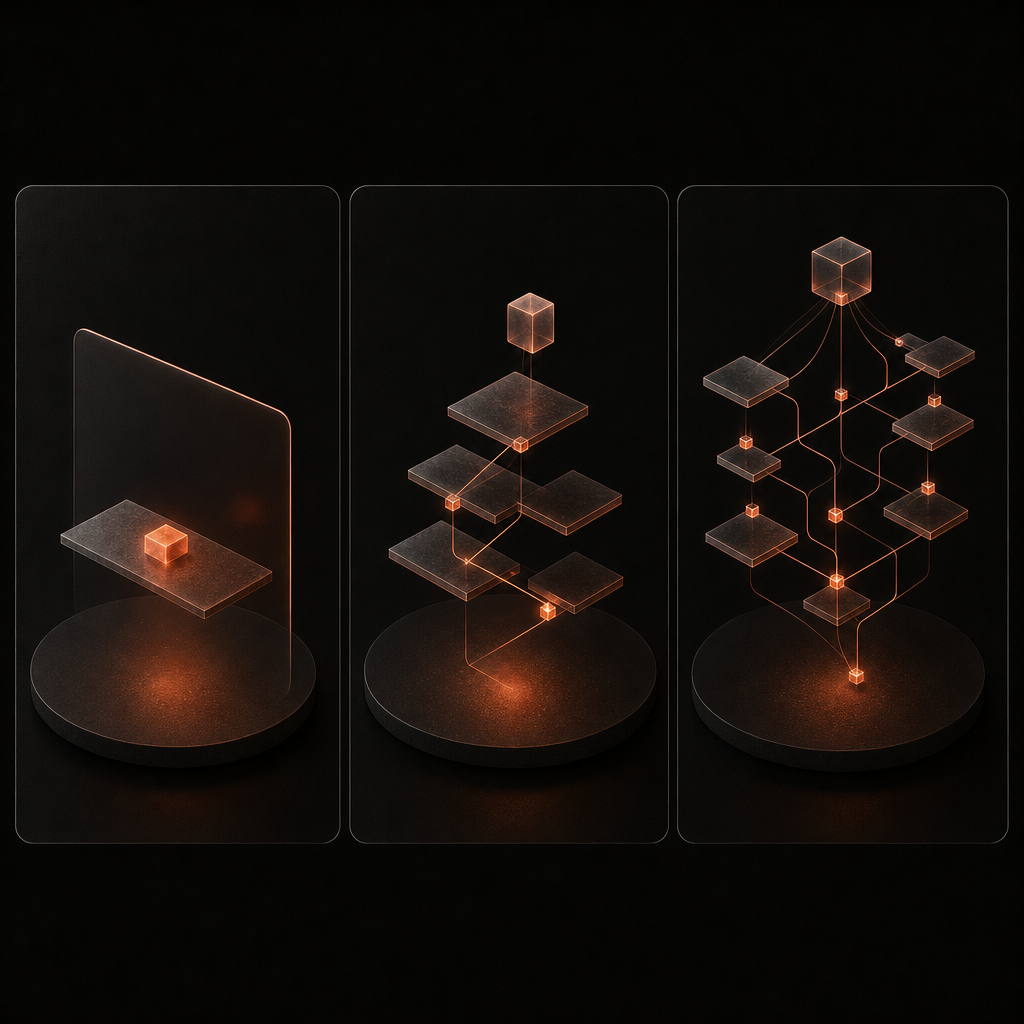
The gap between these three categories is not a feature gap. It is an architectural gap. (2)
Here is how they compare on the capabilities that matter for a growth team:
Copilot
Responds to prompts from one user
No memory across sessions
No action on external systems
No multi-step reasoning
No shared context, no approval layer
AI agent
Plans multi-step workflows without a prompt for every step
Pulls live data from CRMs, web sources and internal databases
Acts on external systems and logs the outcome
Learns from each run
Runs inside a shared context where the team sees what happened (2)
Workflow builder
Executes a fixed sequence of steps
Triggered by a rule, not by reasoning
No judgment on ambiguous inputs
No memory, no learning loop
Useful for repetitive, predictable tasks; brittle when conditions change
The relevant question for your team is not "which one is smarter?" It is "which one can route work to an owner, get it approved and record what happened?" Only an agent platform answers yes to all three.
What does "shared context" actually mean in practice?
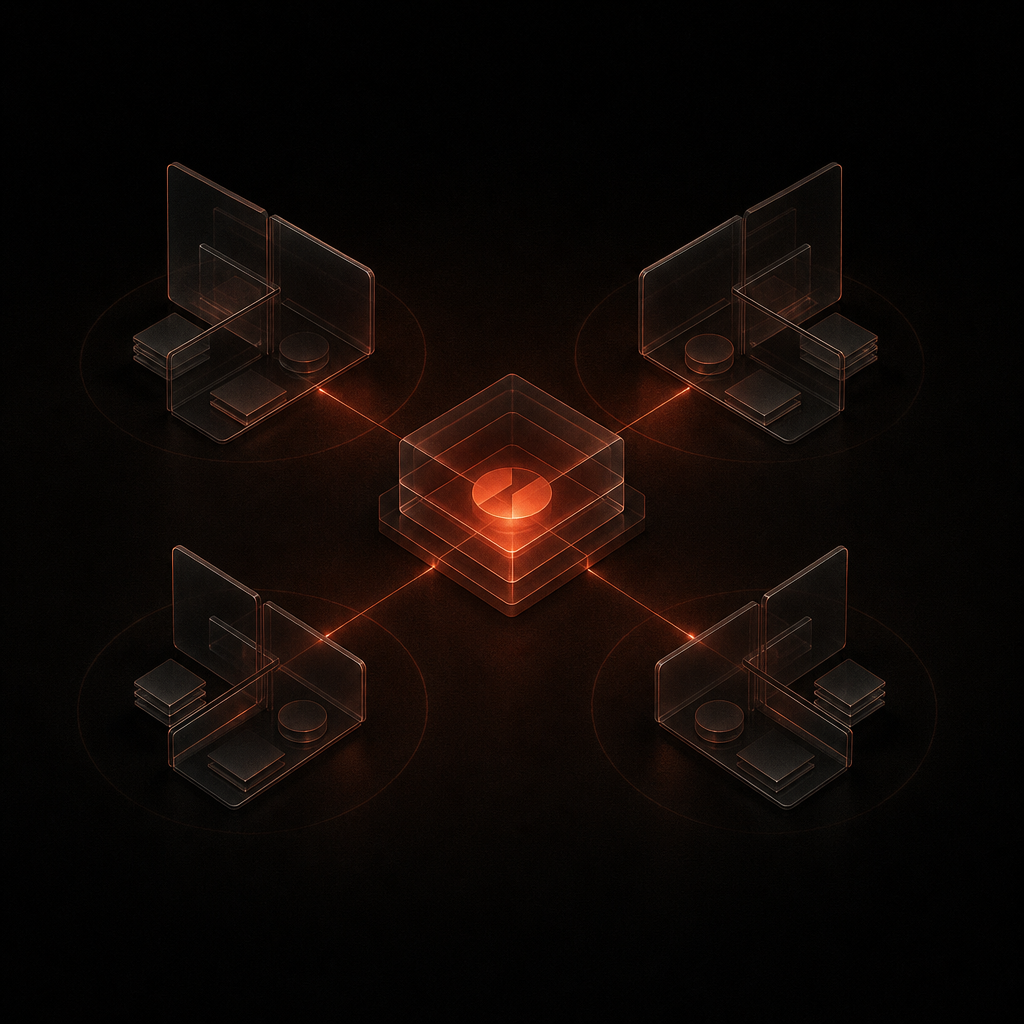
Shared context means every agent and every human on the team sees the same live information, in the same place, at the same time.
Think about a standard outbound sales motion. It requires:
An intent-signal agent to identify target accounts
A research agent to build account dossiers
A messaging agent to personalize outreach
A human to approve the message before it sends
A CRM agent to log the interaction after it goes out
A follow-up agent to act on response behavior (2)
In a copilot model, each of those steps lives in a different person's chat window. The research your SDR ran on Monday is invisible to the AE on Wednesday. The message the AI drafted was never reviewed before it sent. The CRM update happened manually, or it didn't happen.
In a multiplayer AI model, all six steps run inside one shared context. The team sees every agent's output. Approvals happen before actions reach customers. The record is automatic.
That is not a feature upgrade. It is a different operating model.
Why does the multiplayer AI vs copilot distinction matter right now?
Growth teams at 50 to 300 person companies are hitting the ceiling of personal AI productivity.
You've given everyone a copilot. Everyone writes faster, researches faster, summarizes faster. And the team still misses its number because the bottleneck was never individual speed. It was coordination: who owns this account, who approved this message, what did we learn from last week's outbound run.
Copilots make individuals faster. Multiplayer AI makes the team faster. The compounding effect is not additive. When a research agent's output feeds directly into a messaging agent's input, and both are visible to the manager before anything goes out, the team runs a coordinated motion that no collection of individual copilots can replicate.
Microsoft Copilot Studio, for example, is built around Copilot Credits consumed by actions. The unit of value is an individual action, not a coordinated outcome. (1) That architecture reflects the copilot model's core assumption: one user, one tool, one task.
An agent platform's core assumption is different. The unit of value is a delivered outcome, with a named owner, a recorded approval and a full audit trail.
How does Nagent's multiplayer AI model work?
Nagent is multiplayer AI for growth: people and AI agents in one shared context, delivering the number. It is built for growth teams that need to deliver a number, not just generate content.
The platform ships named agents for specific GTM functions. MIRA leads marketing as its chief of staff. SERA leads sales. NORA researches outbound accounts. DRIS tracks how AI answer engines describe your brand. NIA runs paid ads. Each agent has a defined input, a defined action and a defined output.
They don't work in isolation. They work in the same shared context as your team. A manager can see what SERA drafted, approve or edit it, and watch it log to the CRM, all in one place.
That is what multiplayer means. Not many AI tools running in parallel. One shared context where agents and humans work the same motion together.
The approval layer is not an afterthought. Which actions need a person's sign-off is a setting the team controls, not something the agent decides for itself. (2) That distinction matters for any team that has compliance, brand or legal requirements on what goes out under their name.
What should a Head of Growth do if they're already using a copilot?
Don't throw out the copilot. Use it for what it does well: individual drafting, summarizing, quick research inside a single tool.
Then ask a different question: where is the team losing time to coordination failures, not individual speed failures? Where does work sit in someone's inbox waiting for approval? Where does the CRM miss an update because the SDR forgot? Where does the AE not know what the marketing team already learned about an account?
Those are coordination problems. A copilot cannot solve them. An agent platform built for shared context can.
The practical next step is to map one workflow, the one where coordination failure costs the most, and run it through an agent model. Not a pilot for the sake of a pilot. A real motion, with real accounts, real approvals and a real owner for the outcome.
If the workflow runs cleaner, faster and with a full record, you have your answer on whether multiplayer AI vs copilot is a real distinction for your team. It is.
Related reading
Frequently Asked Questions
What is the difference between multiplayer AI and a copilot?
A copilot responds to one user's prompt inside one tool and stops. Multiplayer AI puts multiple AI agents and the whole team in one shared context, where work is routed to named owners, approved before it acts on external systems and recorded for audit. The architectural gap means a copilot scales individual speed while multiplayer AI scales team coordination.
Can a copilot run a multi-step sales or marketing workflow?
No. A copilot produces output in a chat window and has no memory across sessions, no ability to act on external systems and no approval layer before actions reach customers. (2) A multi-step GTM workflow requires an agent that can hand work between steps, log outcomes and surface the record to the team.
Is multiplayer AI just a workflow builder with a better name?
No. A workflow builder executes a fixed sequence triggered by a rule. It has no judgment on ambiguous inputs and no learning loop. Multiplayer AI uses agents that reason over context, adapt to changing inputs and improve from each run, all inside a shared team environment where humans decide what goes live. (2)
Do I need to replace my existing copilot to use Nagent?
No. Copilots handle individual tasks well. Nagent's multiplayer AI model sits at the team coordination layer, where agents like MIRA, SERA and DRIS run shared motions with approval and audit built in. The two can coexist; they solve different problems.
How do I know if my team needs multiplayer AI?
If your team's bottleneck is coordination, missed CRM updates, unapproved messages going out, account research that doesn't transfer between reps, you need an agent platform, not a faster copilot. Map one workflow where coordination failure costs the most and run it through an agent model to test the difference.
What should you do next?
If you want to see one coordinated growth motion running with agents, approvals and a shared record, book a demo with Nagent and we'll walk through it with your team's actual workflow.