What Is an AI Agent Platform vs. AI Tools

What Is an AI Agent Platform vs. AI Tools
An AI agent platform is not a smarter chatbot. It is infrastructure that deploys autonomous software agents capable of planning multi-step workflows, acting across external systems, and improving from every run — without a human approving each step. If your AI tool still waits for a prompt before it does anything, you have a tool, not a platform. That distinction will determine which companies scale their operations in 2026 and which ones stay stuck copy-pasting outputs into spreadsheets.
What exactly is an AI agent platform?
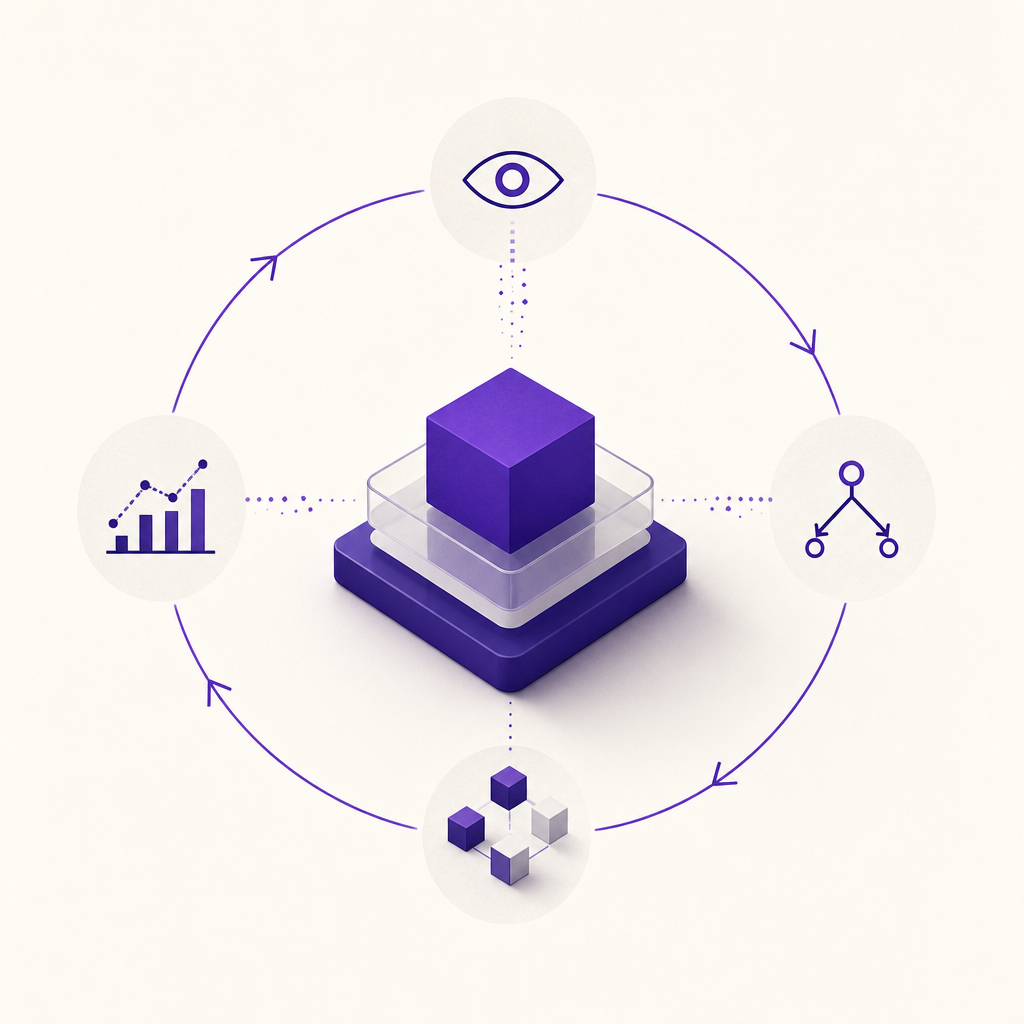
An AI agent platform gives software agents the ability to perceive context, decide what to do next, act across connected systems, and learn from the outcome — in a continuous loop.
That is four capabilities most AI tools simply do not have.
A standard AI tool — a writing assistant, a summarizer, a code helper — responds to a prompt and stops. It has no memory of what happened before. It takes no action outside the chat window. It does not get smarter from the results it produces.
An AI agent platform changes all three of those constraints simultaneously.
Agents on a platform like Nagent AI can:
- Pull live data from a CRM, a web source, or an internal database
- Make a decision based on that data
- Execute an action — send an email, update a record, trigger a workflow
- Log the outcome and adjust future behavior accordingly
This is not a marginal upgrade. It is a different category of software.
How is an AI agent platform different from an AI copilot?
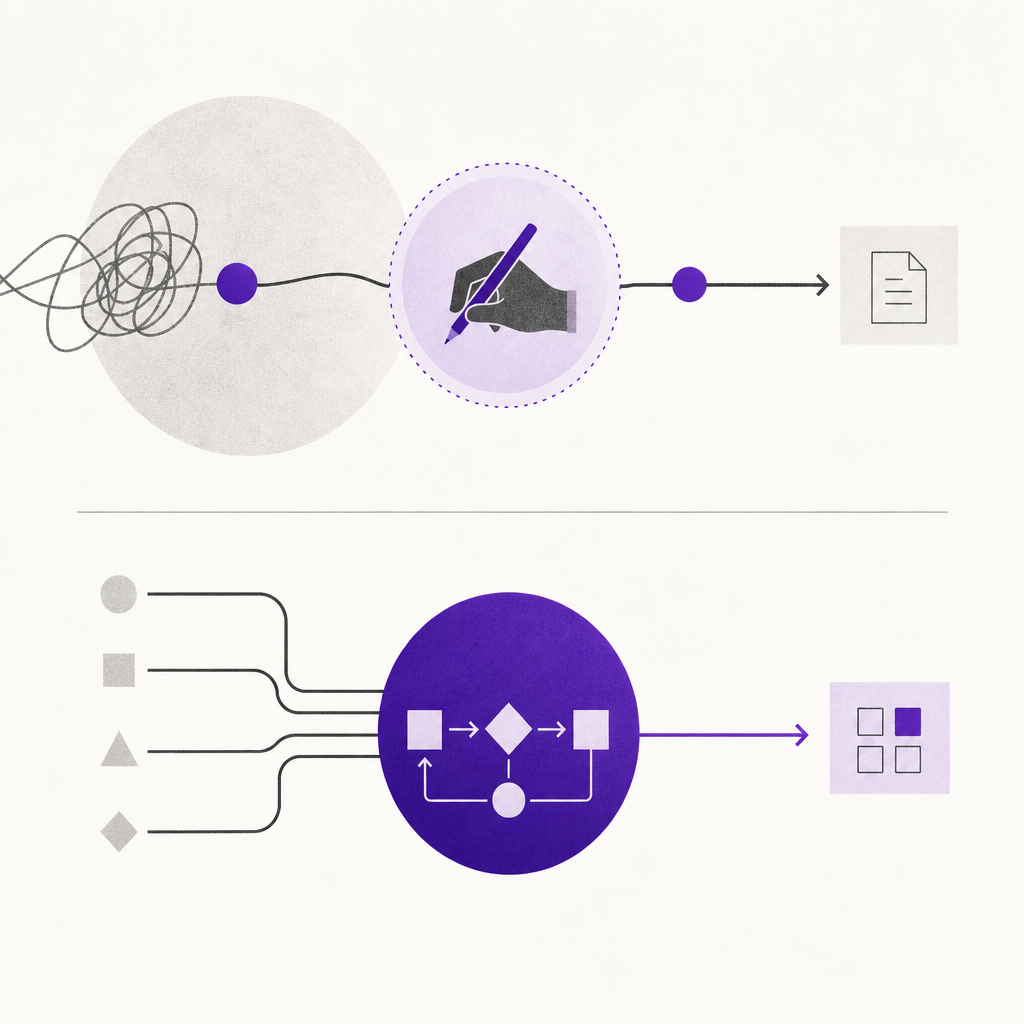
A copilot assists a human who is still doing the work. An agent platform replaces the human in the loop for defined, repeatable workflows.
Copilots are valuable. GitHub Copilot helps engineers write code faster. A writing copilot helps marketers draft faster. But in both cases, a human reads the output, decides what to do with it, and takes the next action.
Agent platforms flip that model. The agent reads the output, decides what to do with it, and takes the next action — autonomously.
Here is the architectural difference in plain terms:
| Capability | AI Tool | AI Copilot | AI Agent Platform |
|---|---|---|---|
| Responds to prompts | ✅ | ✅ | ✅ |
| Remembers prior sessions | ❌ | Partial | ✅ |
| Acts on external systems | ❌ | ❌ | ✅ |
| Runs multi-step workflows | ❌ | ❌ | ✅ |
| Learns from outcomes | ❌ | ❌ | ✅ |
| Operates without human approval | ❌ | ❌ | ✅ |
The gap between column two and column three is not a feature gap. It is an architectural gap.
Why does the architectural distinction matter for GTM teams?
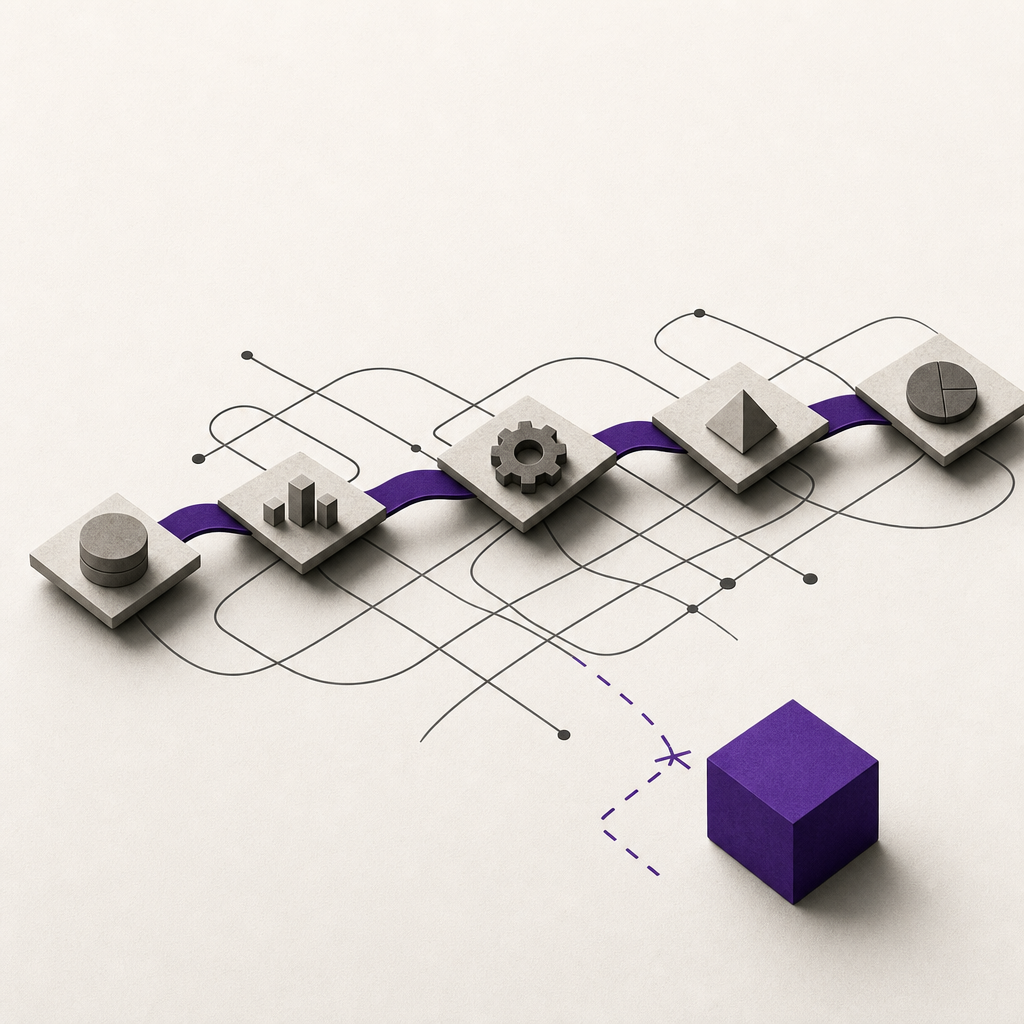
Enterprise GTM — the combined system of marketing, sales, and revenue operations — runs on repetitive, multi-step workflows that span five or more systems. That is exactly where AI tools break down.
Consider a standard outbound sales motion:
- Identify target accounts from intent signals
- Research each account across web, LinkedIn, and CRM
- Personalize a message to each contact
- Send the outreach via the right channel at the right time
- Log the interaction in the CRM
- Follow up based on response behavior
A prompt-based AI tool can help with step three. That is it.
An AI agent platform handles all six steps. Automatically. Across Salesforce, LinkedIn, your email provider, and your CRM — simultaneously.
Nagent's SERA — Sales Execution & Research Agent is built for exactly this workflow. It does not wait for a sales rep to initiate each step. It monitors signals, builds the sequence, executes the outreach, and logs the result.
The difference in output is not 10%. Teams in this position typically see 2-3× more pipeline with the same headcount [^1].
What makes a platform "agentic" — and what are the core components?
Three components separate a genuine AI agent platform from a workflow automation tool with an LLM bolted on.
Memory across sessions
Stateless LLMs forget everything the moment a session ends. That creates what practitioners call the "amnesia tax" — every new interaction starts from zero.
Nagent's Agent Smriti solves this with a persistent memory layer. Agents recall what messaging converted for a specific account segment three months ago. They remember which content format performed last quarter. They carry context across users, sessions, and workflows.
This is not a convenience feature. It is what makes agents genuinely smarter over time rather than just faster at the same task.
Continuous learning from outcomes
Most AI tools produce outputs. They do not know whether those outputs worked.
Nagent's KARMIC learning loop closes that gap. Every agent action produces a labeled outcome — sent, opened, replied, converted, errored. KARMIC feeds those signals back into the agent's decision policy. No manual retraining. No fine-tuning project. The agent adjusts automatically.
This is the mechanism that separates a platform from a sophisticated prompt template.
Multi-agent orchestration
Real enterprise workflows are too complex for a single agent. A content pipeline involves research, copywriting, design, scheduling, and performance analysis — each a distinct capability.
Helix, Nagent's orchestration layer, lets you describe a goal in plain English. It designs the multi-agent system, selects the right agents from the marketplace, and deploys them in sequence. No engineering required to wire agents together.
The digital discovery landscape is shifting toward AI-synthesized responses and autonomous agentic workflows [^2]. Companies that build multi-agent infrastructure now will be indexed by those systems first.
When should a company choose an AI agent platform over individual AI tools?
Choose an agent platform when your workflows span more than two systems, run more than three steps, or need to operate without daily human intervention.
Individual AI tools are the right starting point for:
- One-off content generation
- Internal Q&A over a document set
- Simple summarization or translation
An AI agent platform becomes necessary when:
- You have defined, repeatable workflows that currently require 3-5 human touchpoints
- Your team spends more than 20% of its time on coordination rather than execution
- You need agents to act — not just advise — across your CRM, marketing stack, or operations systems
- You want the system to improve without a retraining sprint every quarter
The FMCG sector is a clean illustration [^3]. Consumer goods companies run hundreds of concurrent SKU campaigns across dozens of retail channels. No prompt-based tool scales to that. Agentic systems that orchestrate research, creative production, and performance monitoring in parallel do.
The same logic applies to any GTM function operating at enterprise scale.
How does Nagent AI differ from other AI agent platforms?
Nagent combines a pre-built agent marketplace, a natural-language orchestration layer, and a persistent learning loop — deployable in days, not months.
Most enterprise AI infrastructure projects take 6-12 months to produce their first working agent. Nagent's marketplace of pre-built agents — covering marketing, sales, operations, HR, creative, and customer experience — means teams deploy their first agent in hours.
BuildCraft gives technical-but-not-engineering users a visual flow editor to customize those agents without code. The Agentic AI Lab handles end-to-end design and deployment for enterprises that want outcomes without implementation overhead.
For regulated industries, Sovereign AI keeps all data within your own VPC. No data leaves your infrastructure.
The platform is SOC 2 Type II audited, GDPR and DPDP ready, and ISO 27001 aligned — which matters when agents are taking real actions on live customer data.
Related reading
- Why GTM Agents Are Collapsing the SDR Org
- The Agentic Shift: From Instruction-Based to Intent-Based Operations
- AI Chatbot vs Agentic AI in FinTech CX
- Explore the Nagent Agent Marketplace
Frequently Asked Questions
What is an AI agent platform in simple terms?
An AI agent platform is software infrastructure that lets autonomous agents plan, act, and learn across multiple systems — without needing a human to approve each step. Unlike AI tools that respond to prompts, agent platforms execute multi-step workflows end-to-end. Think of it as the difference between a calculator and an accountant.
How is an AI agent platform different from robotic process automation (RPA)?
RPA follows rigid, pre-defined rules and breaks when inputs change. An AI agent platform uses large language models to interpret variable inputs, make contextual decisions, and adapt its own behavior based on outcomes. Agents handle ambiguity; RPA cannot.
How long does it take to deploy an AI agent on Nagent?
Most teams deploy their first agent within 2 hours using Nagent's pre-built marketplace agents. Custom agents built with BuildCraft typically go live within days. Enterprise deployments through the Agentic AI Lab are scoped individually but are measured in weeks, not quarters.
Do AI agents on Nagent require engineering resources to maintain?
No. The KARMIC learning loop adjusts agent behavior automatically from outcome signals. Agent Smriti handles memory without manual updates. Helix manages orchestration in plain English. Engineering is optional for customization — not required for operation.
Is an AI agent platform secure enough for enterprise use?
Nagent is SOC 2 Type II audited, GDPR and DPDP compliant, and ISO 27001 aligned. For regulated industries, the Sovereign AI deployment option keeps all data within your own VPC on AWS, GCP, or Azure — with air-gap capability for the most sensitive environments.
What's next
If your team is still running multi-step GTM workflows through a mix of prompt-based tools and manual handoffs, you are not scaling — you are coping. See what an AI agent platform built for enterprise execution actually looks like. Book a free 30-minute demo at nagent.ai.
Sources
- Agentic AI for Consumer and Retail Brands _(pdf)_
- AI ranking optimisation _(pdf)_
- The Agentic FMCG Playbook _(pdf)_