
What Is an AI Chief of Staff for Marketing?

An AI chief of staff for marketing is a coordinator, not a specialist. She takes an outcome, breaks it into work, routes each piece to the teammate who owns it, and keeps the thread together until the goal is done. On Nagent, that role belongs to MIRA. She does not write copy, run ads or build links herself. She plans the work and hands it to DRIS, NIA, HOOK or Echo, then reports what was done and what is waiting. (3)
Why does marketing coordination break down at 2 to 15 people?

Small marketing teams lose hours to routing, not to the work itself.
A two-person team can hold context in their heads. A fifteen-person team, mixing full-timers, contractors and AI tools, cannot. Every new request has to be triaged: who owns this, what does the brief say, what has already been done? That triage happens by hand, in Slack threads and one-off messages, and context drops at every handover.
The result is not laziness. It is a structural problem. No one owns coordination as a job. Everyone owns a specialty. So the coordination tax lands on the founder or VP Marketing, who ends up spending a third of their week routing work instead of setting strategy.
This is the gap an ai chief of staff marketing role fills.
What does MIRA actually do?
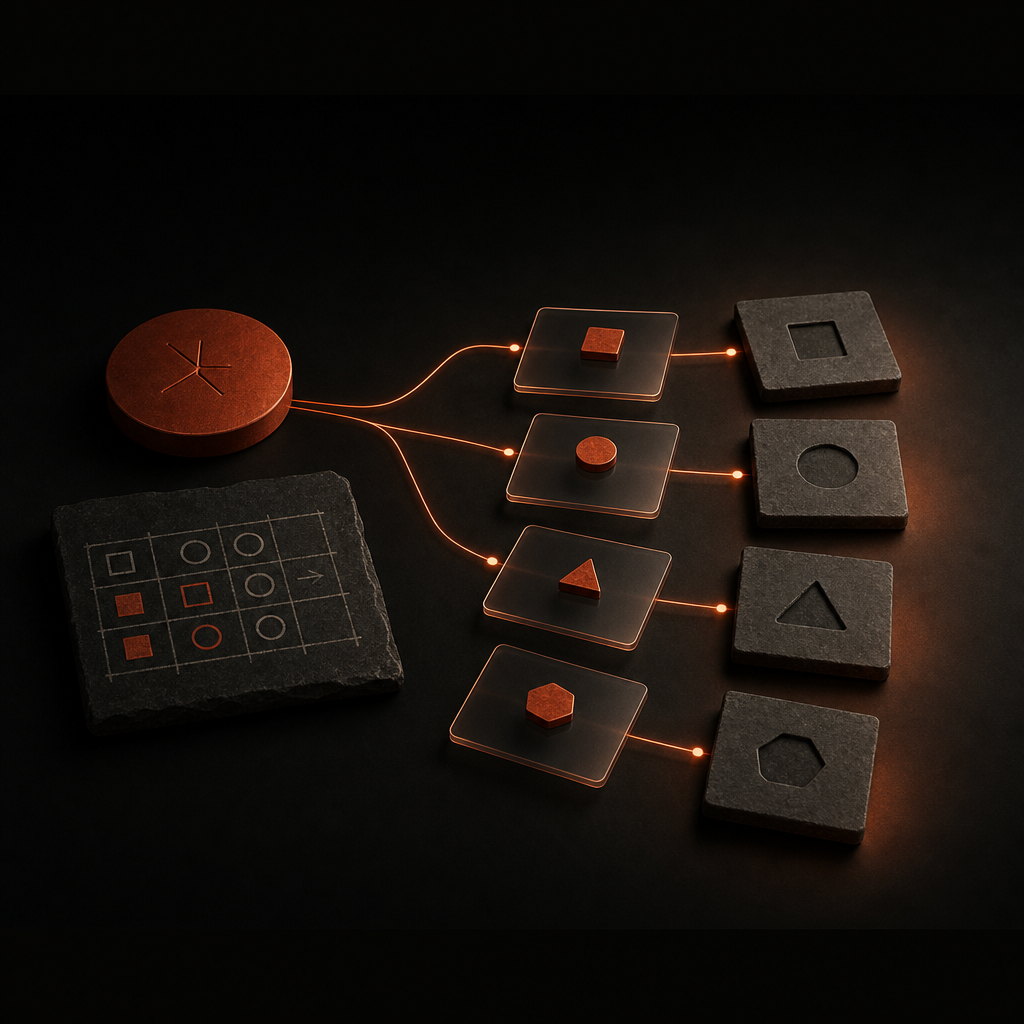
MIRA takes the goal, plans the work and hands each piece to the teammate who owns it. (3)
She is not a generalist AI assistant who writes a bit of everything. She is a coordinator. Her job is to work out what is needed, decide which teammate owns it, pass the brief and keep the thread together. When a head of marketing briefs MIRA with an outcome, such as "run our paid social creative pipeline for seasonal campaigns," she plans the work and routes it, not executes it. (1)
The specialists she routes to are:
DRIS, who owns organic visibility and search
NIA, who owns paid marketing
HOOK, the creative strategy lead for paid social (in beta)
Echo, who owns reputation and brand presence (in beta)
MIRA does not change the brief, rewrite the copy or adjust the targeting herself. She coordinates. That separation matters because it keeps accountability clear: each specialist owns their output, and MIRA owns the plan. (2)
How is this different from an AI productivity tool?

AI productivity tools produce output. MIRA works toward an outcome. (1)
This is the architectural difference that most teams miss when they first try AI for marketing. A writing tool produces a draft. An image tool produces a visual. Each resets after the session ends. You carry the context from one tool to the next, and you do the routing by hand.
An ai chief of staff for marketing holds the thread across every step. MIRA works in a shared team room where people and AI teammates share one context. What HOOK learned about which hooks underperformed last quarter lives in the Knowledge Hub. The next brief MIRA routes to HOOK starts from that record, not from zero. (1)
The practical difference: you brief MIRA once. You do not brief five tools separately.
What does MIRA not do?
MIRA does not write, design, research or publish anything herself.
This is a deliberate design choice, not a limitation. A coordinator who also does specialist work creates the same bottleneck you started with: one person touching everything. MIRA's value is that she stays in the coordination layer. When a brief needs copy, she routes to the right content teammate. When it needs an ad angle, she routes to HOOK. When it needs an organic search play, she routes to DRIS.
She keeps the plan, tracks what is done and what is waiting, and surfaces that to you. The specialist teammates do the work. You approve it.
Does this model change how a VP Marketing spends their time?
Yes. It moves your judgment upstream, away from the production queue.
The traditional marketing leadership job is approval-gated. You review the copy, sign off on the brief, manage the agency relationship. Each of those approvals is a queue. Work sits waiting for you, and you sit waiting for work to review.
When MIRA coordinates the team, your job shifts. You set the parameters: the brand guardrails, the performance thresholds, the market priorities. The AI teammates execute within those parameters. You review outcomes, not drafts in a queue. (1)
For a VP Marketing running a small team, this matters most during high-output periods: product launches, seasonal campaigns, or a new channel test. Those are the moments when routing by hand breaks down first. MIRA holds the coordination layer so your team holds the output.
How do you brief MIRA?
You brief MIRA with the outcome, not the task list.
This is the part that feels unfamiliar at first. Most marketing briefs are task lists: write three ads, schedule four posts, pull the keyword report. MIRA does not need a task list. She builds one from the outcome you give her.
Brief her with the goal: "We're launching a new feature in six weeks and need organic, paid and social working from the same campaign context." She plans the work, routes each piece to DRIS, NIA and HOOK, and keeps the plan visible in the Marketing team room. (3)
The team room is one shared conversation where your people and your AI teammates work. No separate tools, no context switching. Every brief, every output and every approval lives in one place.
What does the Marketing team room look like?
The Marketing team room is one shared context for your people and your AI teammates. (3)
When you choose the Marketing department on Nagent, MIRA is seated as lead. DRIS, NIA, HOOK and Echo are her team. The team room is the single place where you brief MIRA, where she routes work, where teammates return outputs and where you approve them.
This matters because context loss is the real cost of fragmented tools. When every tool is separate, the brief lives in one place, the draft in another, the feedback in a third. MIRA's team room collapses those into one thread. A new brief does not start from zero because the shared record of what worked is already there. (1)
Related reading
Frequently Asked Questions
What is an AI chief of staff for marketing?
An AI chief of staff for marketing is a coordinator who takes a goal, plans the work and routes each piece to the specialist teammate who owns it. She does not do the specialist work herself. On Nagent, MIRA fills this role for the Marketing team. (3)
How is MIRA different from a general AI assistant?
A general AI assistant produces output on demand and resets between sessions. MIRA works in a shared team room with persistent context, routes work to named specialist teammates and tracks what is done and what is waiting. She coordinates toward an outcome rather than completing isolated tasks. (1)
Who does MIRA route work to?
MIRA routes work to DRIS for organic visibility, NIA for paid marketing, HOOK for creative strategy on paid social, and Echo for reputation and brand presence. Each teammate owns their output; MIRA owns the plan. (2)
Do you need an engineering team to set this up?
No. A head of marketing briefs MIRA with a goal in the Marketing team room, and she plans the work from there. No agent-building is required. If you later want an agent the roster does not have, a growth team can build a custom one from one sentence (see how). (1)
What should you do next?
If your team is spending time routing work instead of doing it, the coordination layer is the problem. Book a demo with Nagent and see how MIRA runs the Marketing team room from your first brief.