
Where AI Productivity Tools Stop and Marketing Agents Begin

Where AI Productivity Tools Stop and Marketing Agents Begin
AI productivity tools hit a hard ceiling the moment a workflow requires memory, judgment, or action across systems. They automate discrete tasks — drafting a caption, resizing an image, summarising a brief — but they cannot own the outcome. That gap is not a feature gap. It is an architectural gap. Marketing agents are built for the layer above: autonomous execution that persists context, closes feedback loops, and acts without a human hand-off at every step.
Why do ai productivity tools stop working at scale?

AI productivity tools stop working at scale because they are stateless, siloed, and human-dependent by design.
Each tool optimises one task. The human between tools carries the context. That human is your bottleneck.
Consider a typical content production workflow. A copywriter uses an AI writing tool to draft a campaign email. A designer uses a separate AI image tool to create the visual. A scheduler uses a third tool to post it. A fourth tool tracks performance.
Four tools. Four logins. Four context switches. Zero shared memory.
When the campaign underperforms, no tool knows why. No tool adjusts. The human has to read across four dashboards, form a hypothesis, brief a new round, and start again.
That is not a productivity problem. That is an architecture problem.
"The digital discovery landscape is moving from ranked hyperlinks toward AI-synthesised responses and autonomous agentic workflows." [^1]
The same structural shift happening in search is happening inside marketing operations. Discrete tools are being replaced by systems that execute — not just assist.
What is the actual ceiling of productivity software?

The ceiling of AI productivity tools is the hand-off — the moment a human must carry context from one tool to the next.
Every hand-off has a cost:
- Context loss. The receiving tool knows nothing about what the sending tool produced, why, or for whom.
- Decision lag. A human must interpret output, form a judgment, and re-brief the next tool.
- Error amplification. Mistakes compound silently across steps. No tool audits the chain.
- No learning. Each tool resets. A campaign that failed last quarter teaches nothing to the tool running this quarter.
Gartner research on marketing technology sprawl consistently shows that the average enterprise marketing team runs 20+ tools — yet productivity gains plateau after the first few deployments. The tools are not the problem. The gaps between them are.
AI productivity tools are optimised for the task. Marketing agents are optimised for the outcome.
How is a marketing agent architecturally different from a productivity tool?
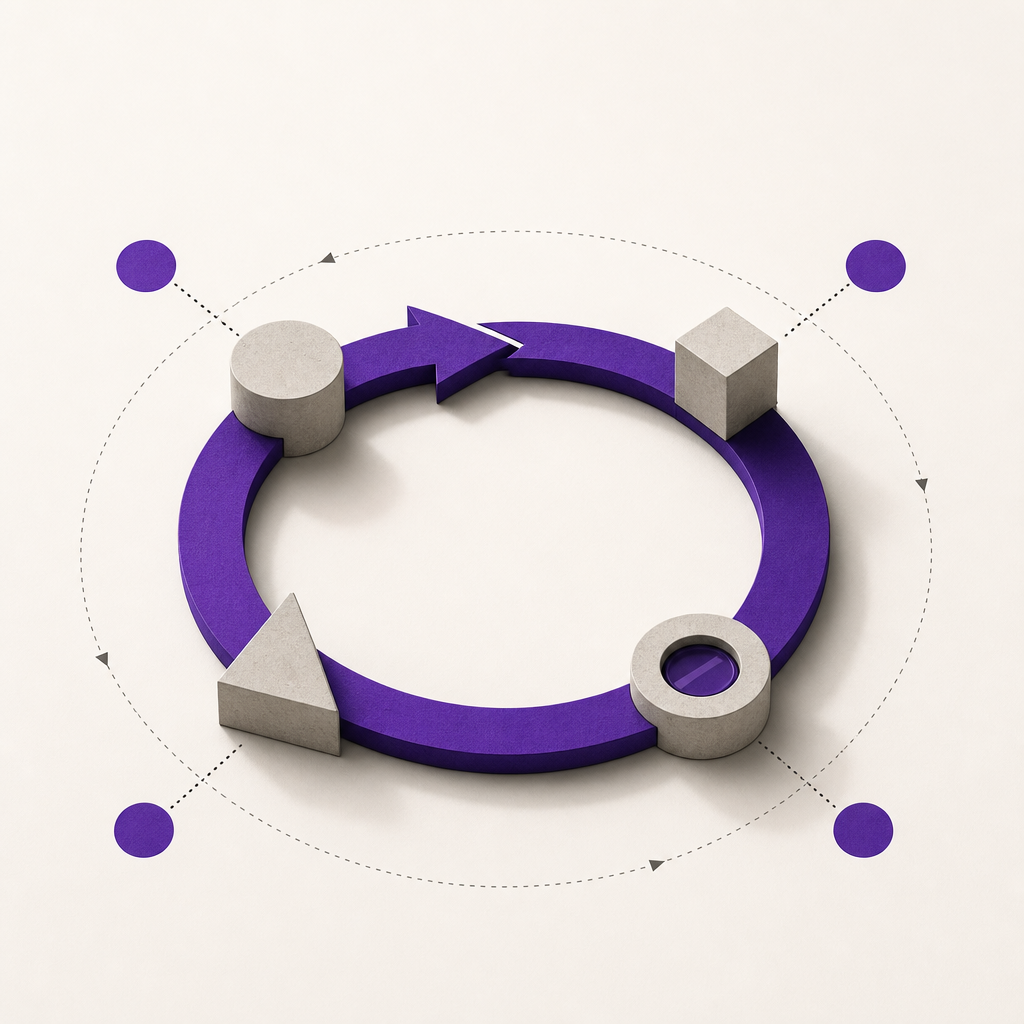
A marketing agent is different because it owns the full workflow loop: it plans, executes, observes the result, and adjusts — without a human relay race between steps.
Here is the clearest way to see the difference:
| Dimension | AI Productivity Tool | Marketing Agent |
|---|---|---|
| Memory | Stateless (resets per session) | Persistent (cross-session, cross-user) |
| Scope | Single task | End-to-end workflow |
| Action | Produces output | Takes action in external systems |
| Learning | None | Continuous feedback loop |
| Human role | Required at every step | Required at decision gates only |
Nagent's Agent Smriti is the memory layer that makes this concrete. Where a productivity tool forgets the moment you close the tab, Agent Smriti retains what worked — which messaging converted for a specific audience segment, which creative angle drove the highest CTR last quarter, which campaign sequence churned subscribers. That memory is available to every agent in the system, every session, across every team member.
That is not a feature upgrade. That is a different category of software.
What does the hand-off tax actually cost marketing operations?
The hand-off tax costs marketing operations an estimated 30-40% of productive capacity — absorbed invisibly in context-switching, re-briefing, and manual quality checks.
Most RevOps leaders can feel this cost. Few have named it precisely.
It shows up as:
- Campaign latency. A brief that should move to live creative in 48 hours takes two weeks because each tool hand-off requires a human review cycle.
- Creative inconsistency. Different team members brief different tools differently. Brand voice drifts. Quality varies.
- Performance blindness. No single system connects creative decisions to conversion outcomes. Attribution is manual, delayed, and incomplete.
- Talent drain. Your best marketers spend their hours in tool-switching overhead, not in strategy.
The Nagent Agentic FMCG Playbook documents this pattern across consumer goods teams [^2]: the organisations that saw the sharpest productivity gains were not those that added more tools. They were those that replaced tool chains with agent systems that held context end-to-end.
When should a marketing operations team move from tools to agents?
A marketing operations team should move to agents when the cost of human hand-offs exceeds the cost of deploying an autonomous system — which typically happens at three or more connected workflow steps.
Three signals that you have crossed the threshold:
Signal 1: Your team spends more time managing tools than using them.
If your MarOps lead is building Zapier chains to connect AI tools rather than executing campaigns, the tools are working against you.
Signal 2: Performance data does not feed back into creative decisions.
If last month's campaign results require a human to manually brief this month's creative, you have a memory gap that no productivity tool can close.
Signal 3: Output volume has grown but output quality has not.
More content, same conversion rates. This is the classic symptom of tools that optimise tasks without understanding outcomes.
At this point, adding another productivity tool adds another hand-off. The fix is architectural.
What does a marketing agent system look like in practice?
A marketing agent system executes the full creative-to-distribution loop autonomously, using persistent memory and continuous feedback to improve without human re-briefing.
Take the Enterprise UGC & Performance Ad Stack as a concrete example [^3]. It chains the Ad Script Writer, UGC Muse, and MetaMorph agents into a single workflow:
- A brief enters the system.
- The Ad Script Writer generates platform-optimised scripts — not one, but multiple variants calibrated for different audience segments.
- UGC Muse produces retention-structured short-form scripts with hooks engineered for the first three seconds.
- MetaMorph Female generates photorealistic AI influencer visuals — no casting, no shoot logistics.
- The stack outputs publish-ready assets, not drafts requiring a human production round.
No tool-switching. No hand-offs. No context loss between steps.
Nagent's KARMIC learning loop closes the feedback cycle. Every asset that runs produces a labeled outcome. KARMIC adjusts the decision policies of the agents in the stack — which hooks performed, which visual styles converted, which CTAs drove clicks. The next campaign brief enters a system that already knows what worked.
This is the architectural difference. AI productivity tools produce output. Marketing agents produce outcomes — and improve toward them automatically.
How does Helix make this accessible without an engineering team?
Helix, Nagent's plain-English agent designer, lets a Head of Marketing Operations describe a goal — "automate our paid social creative pipeline for seasonal campaigns" — and receive a deployed multi-agent system, not a project plan.
No developer required. No six-month implementation. Teams typically deploy their first agent in under two hours.
For organisations that want outcomes without any implementation work, the Agentic AI Lab designs, builds, and runs the agentic system end-to-end.
The entry point is one of eight conversational platform guides — MIRA for marketing teams, CREA for content teams — which map your specific workflow to the right agents and stacks from the Nagent marketplace.
Related reading
- The Agentic Shift: From Instruction-Based to Intent-Based Operations
- AI Content Marketing & Visual Storytelling Suite
- Enterprise UGC & Performance Ad Stack
- Why GTM Agents Are Collapsing the SDR Org
Frequently Asked Questions
What is the difference between AI productivity tools and marketing agents?
AI productivity tools automate individual tasks — writing, image generation, scheduling — but reset after each session and require humans to carry context between steps. Marketing agents own end-to-end workflows, maintain persistent memory across sessions, take actions in external systems, and improve automatically through feedback loops. The distinction is architectural, not a matter of features.
When does it make sense to replace productivity tools with marketing agents?
The inflection point is typically when your workflow spans three or more connected steps and the cost of human hand-offs — in time, context loss, and quality inconsistency — exceeds the cost of deploying an autonomous system. Teams running high-volume creative pipelines, multi-channel campaign execution, or performance-linked content cycles typically reach this threshold faster.
How long does it take to deploy a marketing agent with Nagent?
Teams typically deploy their first agent in under two hours using Helix, Nagent's plain-English agent designer. Pre-built agent stacks — such as the Enterprise UGC & Performance Ad Stack — are available in the marketplace and can be configured without engineering resources.
Do marketing agents replace the marketing team?
No. Marketing agents remove the hand-off overhead — the tool-switching, re-briefing, and manual quality checks that consume 30-40% of productive capacity. The marketing team shifts from managing tools to setting strategy, reviewing outputs at decision gates, and interpreting outcomes. Agents handle execution; humans handle judgment.
What is KARMIC and why does it matter for marketing performance?
KARMIC is Nagent's continuous learning loop. Every agent action produces a labeled outcome — clicked, converted, churned, ignored. KARMIC feeds those signals back into the agent's decision policies automatically, without retraining. For marketing teams, this means each campaign makes the next one smarter — without a human analyst manually connecting performance data to creative decisions.
What's next
If your marketing operations team is hitting the ceiling of AI productivity tools — more output, same conversion rates, growing tool sprawl — the next step is a 30-minute architecture conversation. Book a free demo at nagent.ai and see how a marketing agent system maps to your specific workflow.
Sources
- AI ranking optimisation _(pdf)_
- The Agentic FMCG Playbook _(pdf)_
- Enterprise UGC & Performance Ad Stack _(product doc)_