
Seasonal Campaign Bursts Without Contract Hires

Seasonal Campaign Bursts Without Contract Hires
Seasonal ecommerce marketing automation removes the need for contract hires during peak campaign bursts. Instead of spinning up agencies six weeks before Diwali or Black Friday, brands can run KARMIC-powered agent workflows that produce ad creative, email sequences, and social content at 3–5× normal volume — without adding a single headcount. The output is consistent, on-brand, and ready in days, not weeks.
Why Do Peak Seasons Break Marketing Teams?

Most marketing teams are sized for steady-state output, not burst demand.
Diwali. Black Friday. End-of-year clearance. Each one demands a sudden 3–5× spike in content volume — new ad variants, segmented email flows, daily social posts — compressed into two to four weeks. The traditional fix is expensive: agency sprints, contract copywriters, freelance designers hired in a rush and briefed even faster.
The result is rarely the work you wanted. Briefing takes time. Quality control takes more. And when the season ends, you've paid for capacity you no longer need.
There's a better model. And it doesn't involve a single job posting.
What Does "Agentic" Actually Mean for Seasonal Campaigns?
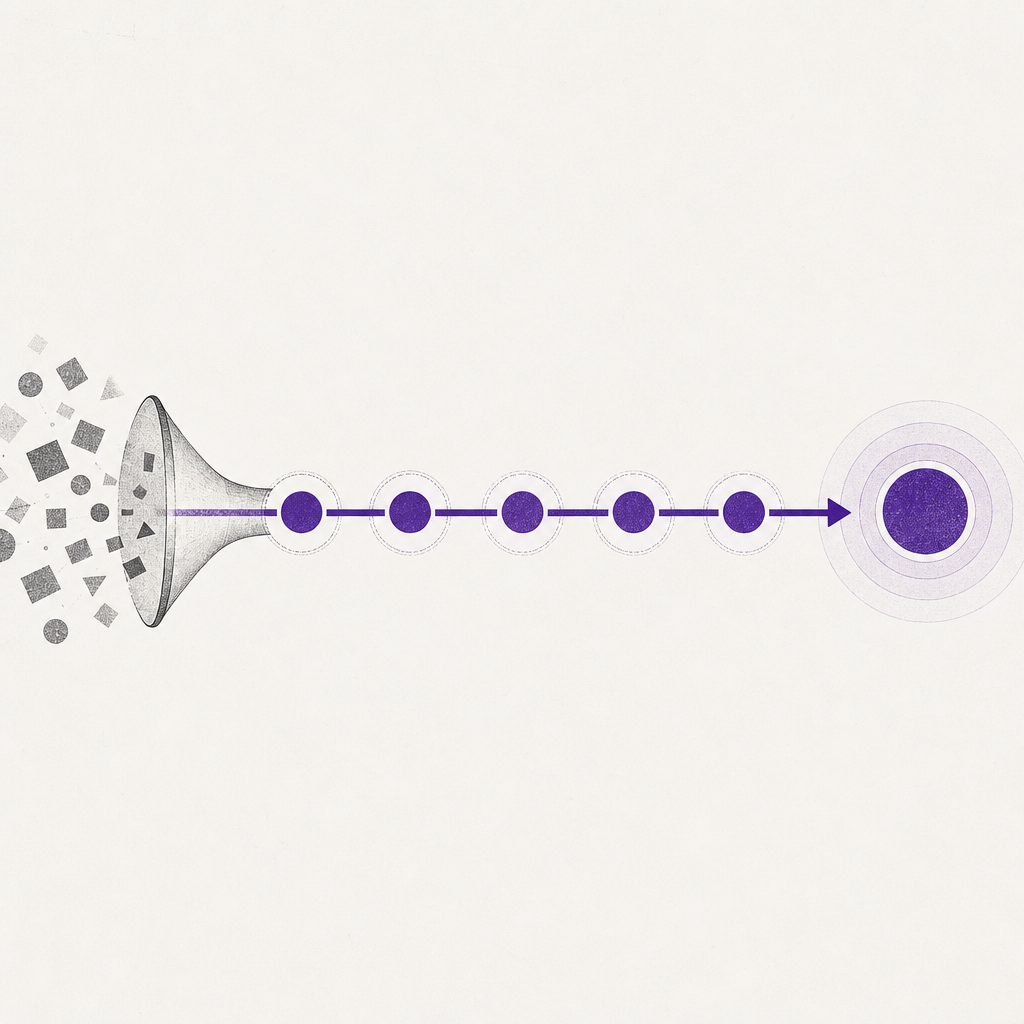
An agentic workflow executes tasks end-to-end — no human in the loop for each step.
Most "AI tools" used in marketing today are suggestion engines. You paste in a brief, they return a draft, and a human rewrites it, formats it, schedules it. That's still a headcount problem wearing an AI costume.
Nagent's agent architecture works differently. Agents like CREA — the Creative Content Execution Agent — don't just draft copy. They pull campaign briefs, apply your brand voice, generate variants across formats (email subject line, ad headline, Instagram caption), and route output for approval. One agent. One workflow. Dozens of assets.
That's what makes burst capacity possible without burst hiring.
How Does Seasonal Ecommerce Marketing Automation Handle 3–5× Volume?

KARMIC's continuous learning loop means every campaign run makes the next one faster and more precise.
Here's what a typical peak-season agent stack looks like in practice:
- Campaign brief ingestion — the Helix orchestrator reads your seasonal brief in plain English ("Run a 10-day Diwali campaign across email and Meta ads, targeting cart abandoners and lapsed customers").
- Audience segmentation — a lead qualifier agent pulls segments from your CRM (Salesforce, HubSpot, or Zoho via native connectors).
- Creative generation — CREA produces ad variants and email copy per segment, using Agent Smriti's cross-session memory to recall what messaging converted for similar audiences last season.
- Multi-channel distribution — a content distributor agent schedules posts across channels, syncs email sequences in SendGrid or Resend, and pushes ad creative to your paid-ads optimiser agent.
- Performance feedback — KARMIC closes the loop. Every open rate, click, and conversion feeds back into agent decision policies automatically.
No retraining project. No agency debrief. The system just gets sharper.

What Does This Cost Compared to an Agency Sprint?
Agency sprints for a major seasonal push typically run $15,000–$40,000 — and that's before revisions.
Nagent's Growing plan starts at $799/month. Even the Enterprise tier at $1,999/month is a fraction of a single agency retainer. And unlike an agency, the agents are available the next season, already calibrated to your brand.
Teams deploying Nagent agents across marketing workflows typically see a 73% reduction in manual hours and a payback period under 30 days. For seasonal bursts specifically, the math is sharper: you absorb 3–5× the workload without 3–5× the cost.
"The ability to run Diwali and Black Friday in the same quarter, without doubling our team, changed how we plan our entire calendar." — composite from FMCG brand deployments [^1]
How Do You Maintain Brand Consistency at Scale?
Agent Smriti stores your brand voice, past campaign performance, and messaging rules across every session.
This is where most DIY automation falls apart. You get volume, but the copy drifts. Tone varies across formats. Legal flags a non-compliant claim in week two.
Nagent's Agent Smriti eliminates that drift. Every agent in the workflow draws from a shared memory layer — the same brand voice guidelines, the same tone rules, the same "do not use" list. A social caption agent and an email writer agent are both working from the same brief, the same brand memory, the same seasonal context.
The result: consistent creative across 50 assets feels like it came from one writer. Because effectively, it did.
When Should You Still Bring in Human Creatives?
Agents handle volume. Humans handle originality.
This is not an argument against human creativity. It's an argument for using it where it matters. Your best creative director should be setting the seasonal concept — the insight, the visual idea, the emotional hook. Agents execute that concept at scale.
Think of it as a 10/90 split. Ten percent human strategy and creative direction. Ninety percent agent execution. That's where seasonal ecommerce marketing automation pays off: it frees your team to think, while agents produce.
How Fast Can You Actually Deploy This?
Most teams run their first Nagent agent in under two hours — no code required.
The Helix orchestrator lets you describe your campaign goal in plain English. It designs the multi-agent system, selects agents from the 200+ in the Agent Marketplace, and deploys to production. For a seasonal campaign workflow, most teams are live within a day.
FMCG and e-commerce brands using Nagent have shifted from five-day content production cycles to same-day output. That's not a marginal improvement — it's a structural change in how seasonal campaigns get built.
Related Reading
- How KARMIC Learns from Every Campaign Run — and What That Means for Your ROI
- The Agentic FMCG Playbook: How Autonomous Workflows Are Reshaping Consumer Goods
- Agent Smriti: Why Cross-Session Memory Is the Missing Piece in Marketing Automation
- What the Nagent Agent Marketplace Includes — and How to Pick Your First Agent
Frequently Asked Questions
What is seasonal ecommerce marketing automation? Seasonal ecommerce marketing automation uses AI agents to produce, schedule, and optimise campaign content during peak periods — Diwali, Black Friday, end-of-year sales — without manual scaling. Agentic platforms like Nagent execute entire workflows end-to-end: from audience segmentation to creative generation to multi-channel distribution. The result is 3–5× content output without proportional headcount growth.
How does Nagent handle brand consistency across high-volume seasonal campaigns? Agent Smriti — Nagent's cross-session memory layer — stores your brand voice, tone rules, past campaign performance, and compliance guidelines. Every agent in the workflow draws from the same memory, so a social caption agent and an email writer agent produce consistent creative without a human editor reconciling each piece.
How long does it take to deploy a seasonal campaign agent workflow on Nagent? Most teams deploy their first agent in under two hours using Helix, Nagent's plain-English agent designer. A full multi-agent seasonal campaign workflow — covering email, social, and paid ads — typically goes live within one business day. No engineering team required.
Is Nagent suitable for mid-market e-commerce brands, or only enterprise? Nagent serves both. The Growing plan at $799/month suits scale-ups running multiple seasonal campaigns per year. The Enterprise plan at $1,999+/month adds unlimited credits, a dedicated customer success manager, and on-premise deployment for regulated industries. A 14-day free trial — no credit card required — lets you test a real workflow before committing.
What happens to the agents after peak season ends? They don't go idle — they get smarter. KARMIC, Nagent's continuous learning loop, processes every campaign outcome (open rates, click-throughs, conversions) and adjusts agent decision policies automatically. By the time your next peak season arrives, the agents are already calibrated to what worked last time.
What's Next
Stop rebuilding your team every peak season. Book a free 30-minute demo at nagent.ai and see how a seasonal campaign agent workflow runs — live, on your brief, in under an hour.
Sources
- The Agentic FMCG Playbook _(pdf)_