
Fashion Lookbook to Video Ad: Close the Gap to Launch
Fashion Lookbook to Video Ad: Close the Gap to Launch
Fashion teams lose the season in the gap between the shoot and the ad server. Your lookbook assets are ready: the lighting is right, the styling is on-brand, the photographer delivered. But by the time those images travel through agency briefs, script approvals and edit rounds, the peak window has passed. AI teammates close that gap, moving from approved lookbook selects to platform-ready video ads in days, not weeks.
Why does the lookbook-to-ad pipeline take so long?
The bottleneck is not creative talent, it is the handoff sequence.
Most fashion brands run a seasonal lookbook shoot once per quarter. The creative brief, shoot day, post-production, and asset delivery cycle takes 3 to 6 weeks. Then the performance team inherits a folder of high-resolution images and must reverse-engineer them into ad scripts, scene compositions, platform formats, and copy variants.
That reverse-engineering step, lookbook asset to video ad brief, is where weeks disappear.
The typical sequence looks like this:
Creative team delivers final lookbook images
Brand manager writes a campaign brief
Agency or in-house team writes ad scripts (3 to 5 rounds of feedback)
Video production converts scripts to storyboards
Storyboards go back to brand for approval
Video is produced, formatted for each platform
Copy variants are written for each ad set
Everything goes live, often 4 to 6 weeks after the shoot
By week 6, the season has already peaked. Early buyers have moved on. Paid media budgets are chasing a trend the market has already priced in.
What does "performance-ready" actually mean for fashion video ads?
A performance-ready ad is not just a pretty video, it is a structured asset built for the platform it runs on.
Platform-specific requirements differ significantly:
| Platform | Format | Hook window | Primary copy |
|---|---|---|---|
| Instagram Reels | 9:16 vertical | 0 to 3 seconds | Caption + voiceover |
| TikTok | 9:16 vertical | 0 to 2 seconds | On-screen text + audio |
| 2:3 or 1:1 | Static or 6s loop | Overlay text | |
| YouTube Shorts | 9:16 vertical | 0 to 5 seconds | Title + description |
| Meta Feed | 1:1 square | 0 to 3 seconds | Primary text |
A lookbook image shot in landscape for editorial use is not automatically performance-ready. It needs reformatting, a hook, copy variants, and scene mechanics that work without sound.
This is precisely why the gap exists. The creative team optimises for editorial beauty. The performance team needs conversion architecture. Those two goals rarely share a brief.
How do AI agents convert lookbook assets into live ads?
AI agents handle the structural translation work (scene decomposition, script, format adaptation and copy variation) far faster than a chain of handoffs.
Here is how the pipeline works with Nagent's AI teammates, with a person approving each step that goes live:
Step 1: Reverse-engineer the scene mechanics
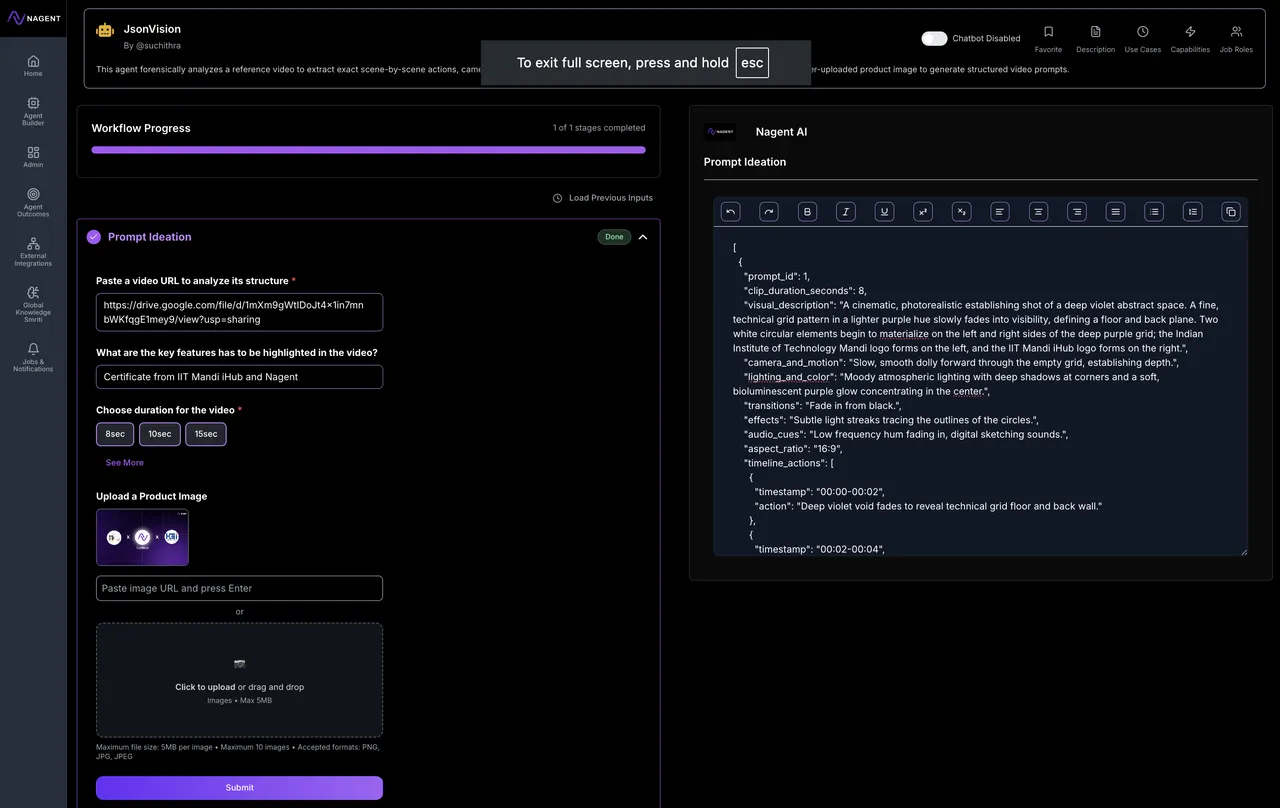
Start by reading the visual mechanics of your lookbook images: lighting style, composition depth, motion potential and mood. On Nagent, HOOK (Beta), the creative strategy lead for paid social, turns those into angles, hooks and a scene-by-scene brief and checks every claim against your proof.
The output is not a vague mood board. It is a scene-by-scene production brief with camera angles, transition logic and styling notes.
Step 2: Generate the video ad
Alpha, the AI video teammate, takes that brief and plans platform-ready video ads to a preset. She quotes each video before anything renders and waits for storyboard approval, and one brief can become several variations for testing.
For a fashion brand running four collections a year, that is the difference between a handful of ads per season and enough variations to learn what sells.
Step 3: Adapt formats across platforms
Plan the formats in the brief rather than cropping afterwards: 9:16, 1:1 and 2:3 each need their own composition, so subject placement, text and visual balance hold up. No more manual cropping that cuts off the model's face or loses the product.
Step 4: Generate copy variants at scale
HOOK (Beta) writes many distinct copy angles for each ad (headlines, body copy and CTAs) and checks each claim against your proof, ready for a person to approve.
This is the step most brands skip entirely. They launch one copy variant per creative, run it for two weeks, and wonder why ROAS is flat. Copy variation is where performance marketing compounds.
Step 5: Produce the final campaign assets
On Nagent, MIRA, the AI chief of staff for Marketing, keeps the brief, the visuals and the copy variants together in the Marketing team room, so your media buyer has every approved asset in one place for trafficking.
What is the real cost of the slow pipeline?
Fashion retail operates on seasonal demand curves. The first two weeks of a season, when trend-forward buyers are actively searching and social algorithms are amplifying new collections, are disproportionately valuable.
A brand that launches paid ads in week 1 of the season captures that early demand at lower CPMs. A brand that launches in week 4 is competing against full-price inventory from faster competitors and fighting rising CPMs simultaneously.
The creative pipeline is not a production problem. It is a revenue timing problem.
Consider what the math looks like for a mid-size fashion brand spending $200K on paid social per season. If 30% of that spend runs in weeks 4 to 6 instead of weeks 1 to 2, because assets were not ready, and CPMs are 20 to 35% higher in the back half of the season, the effective media waste compounds quickly. The slow pipeline does not just cost time. It costs margin.
How does AI-generated creative maintain brand quality?
This is the right question, and the one most brand teams ask first.
The answer is that AI agents do not replace creative direction. They execute it faster.
Your lookbook shoot is still the brand source of truth. RUPA, the AI image teammate, can extend it, rendering additional lifestyle settings and seasonal scenes from your approved selects as references, without a second shoot day.
RUPA works with your brand guidelines attached (Brand Locked), and every asset waits for a person to approve it. You set the guardrails once; the AI teammates work inside them at scale.
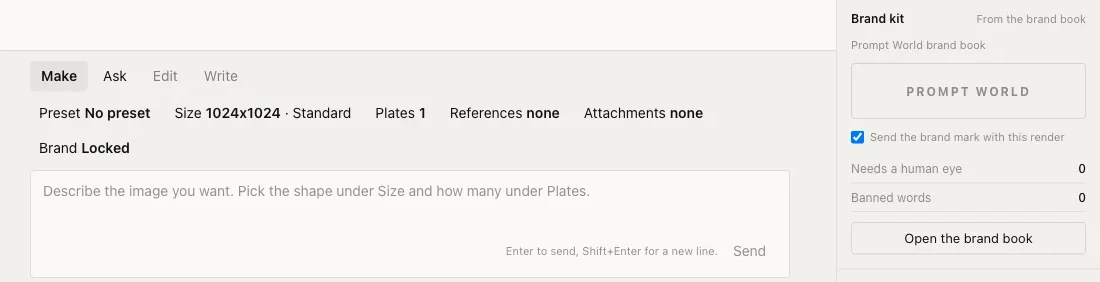
RUPA's composer: a preset, references and Brand Locked, with the brand kit alongside.
Brand quality is a constraint you define. Speed is what the agents deliver inside that constraint.
When should fashion brands start the agent pipeline?
Start the agent pipeline the day the lookbook shoot wraps, not the day the final images are delivered.
Most teams wait for final retouched assets before briefing performance campaigns. That wait costs 1 to 2 weeks. With an agent pipeline, you can begin generating scene mechanics, ad scripts, and copy variants from approved selects while post-production finishes the hero images.
By the time final assets arrive, your campaign structure is already built. Your media buyer has the trafficking sheet. Your copy variants are in the testing queue. You launch in days, not weeks.
This is the structural advantage of working with AI teammates on Nagent: the creative and performance workflows run in parallel, not in sequence.
Related reading
Frequently Asked Questions
What is fashion lookbook to video ad conversion?
Fashion lookbook to video ad conversion is the process of turning seasonal editorial shoot assets (photography, styling and scene compositions) into platform-ready paid video ads with hooks, copy and format variants. Traditionally this takes 4 to 6 weeks of agency and production work. AI teammates compress that to days by handling scene decomposition, scripting and format planning, with a person approving each ad.
How many ad variations can AI agents produce from a single lookbook shoot?
Enough to test properly. A lookbook brief can become several video variations, each with many copy angles from HOOK (Beta), so a single shoot can feed a full seasonal testing plan across platforms. How many you run is a media decision, not a production limit.
Does AI-generated ad creative maintain brand quality standards?
Yes, when the pipeline is set up correctly. AI teammates work inside the brand guardrails you define, and your lookbook shoot remains the creative source of truth. RUPA extends approved assets into new settings with your brand guidelines attached, and every asset waits for a person's approval. Creative direction stays with your team; execution speed is what the AI teammates add.
Which Nagent AI teammates are most relevant for fashion and apparel ad production?
On Nagent: HOOK (Beta) for angles, scripts and copy variants, Alpha for video ads, RUPA for stills and extended scenes, and MIRA, the AI chief of staff for Marketing, who routes the campaign and keeps it together in the Marketing team room.
When in the seasonal calendar should fashion brands start their agent pipeline?
Start the agent pipeline on shoot day, not delivery day. Approved selects from the shoot are enough to begin generating scene briefs, ad scripts, and copy structures. Running the creative and performance workflows in parallel, rather than sequentially, is what allows brands to launch paid campaigns in week 1 of the season instead of week 4, when demand is highest and CPMs are lowest.
What's next
Your next season's lookbook shoot is already scheduled. The campaign launch date is already set. The gap between them is the problem, and it is solvable now. Book a demo to see the lookbook-to-ad workflow with Nagent's AI teammates.
Sources
AI ranking optimisation _(pdf)_
The Agentic FMCG Playbook _(pdf)_
RUPA (product page)