
Who Is Accountable When an AI Agent Acts?

The person who approved the action is accountable when an AI agent acts, and the record shows exactly who that was. On the Nagent platform, every action an agent takes is proposed, approved, run and logged with its trigger, the agent's level at the time, its cost and its result. That audit trail is not a compliance checkbox. It is the mechanism that makes ai agent accountability governance real rather than rhetorical.
Who actually carries the liability when an AI agent makes a decision?

The approver does, and the control plane names them.
Most platforms hand you a log of what the AI did. Nagent's control plane logs what the AI did and who cleared it to act. That distinction matters enormously when a regulator asks, or when a customer complains, or when an action triggers a downstream cost you did not expect. The answer is not "the AI decided." The answer is a named person, a timestamp and a level.
This is the part of ai agent accountability governance that vendors rarely discuss plainly. They talk about "guardrails" and "safety layers." Those are fine. But guardrails without a named human approver are just speed bumps. They slow the agent down; they do not assign responsibility.
What does the Nagent control plane actually record?
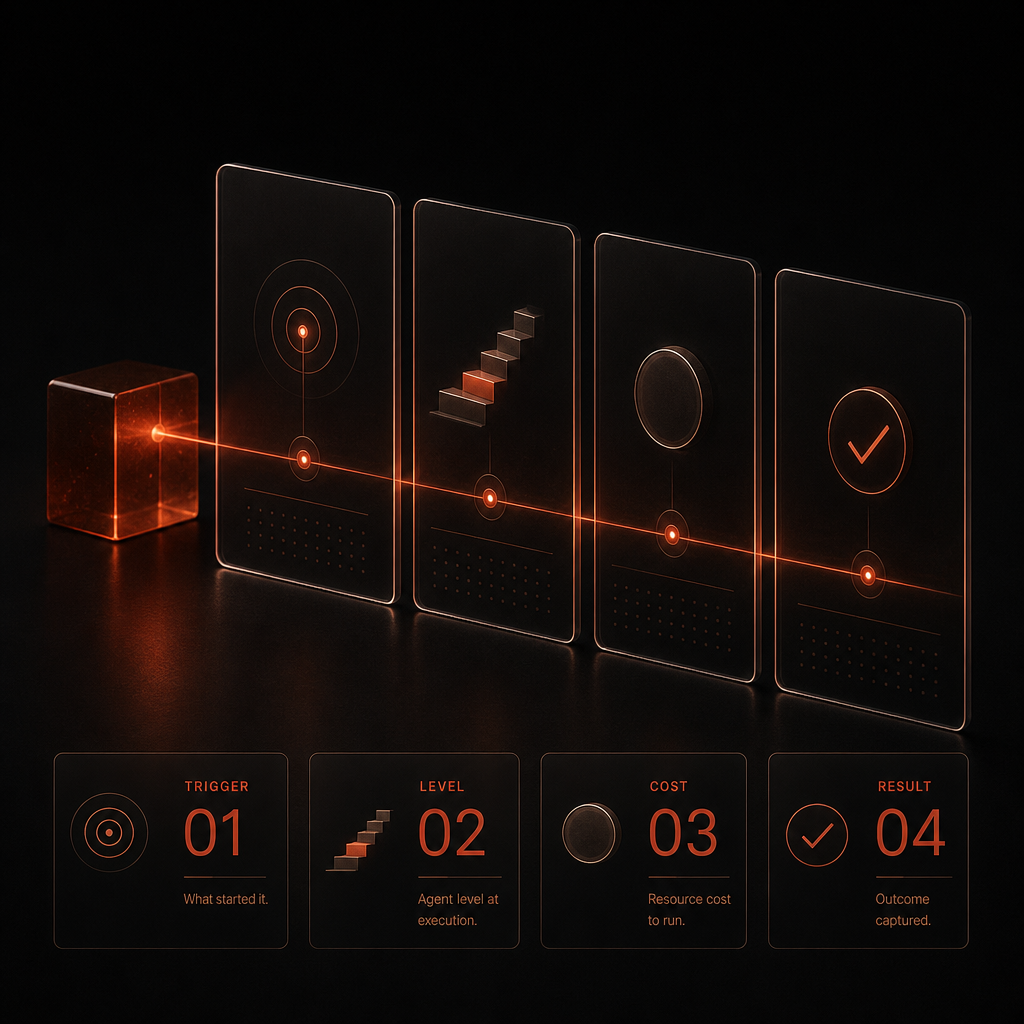
Every action entry captures the trigger, the agent's level at the time of execution, the cost and the result.
When an AI teammate on Nagent tries to act, the control plane makes one of three decisions before anything runs: fire the action, queue it for a human approver or refuse it outright. The decision depends on the agent's current level, the governance profile set by the workspace admin and the type of action being attempted.
Pure reads always fire. Actions with side effects, such as publishing, sending or destructive changes, require a person until the agent has earned a level that allows them, and deleting or changing governance always waits for a person. That boundary is built into the architecture, not bolted on afterward.
The result is an append-only audit trail. Every entry is immutable. You cannot edit what the agent did or who approved it. If a compliance team pulls the record six months later, they see the same entry that was written the moment the action ran.
How does role-based access control prevent the wrong person from approving?
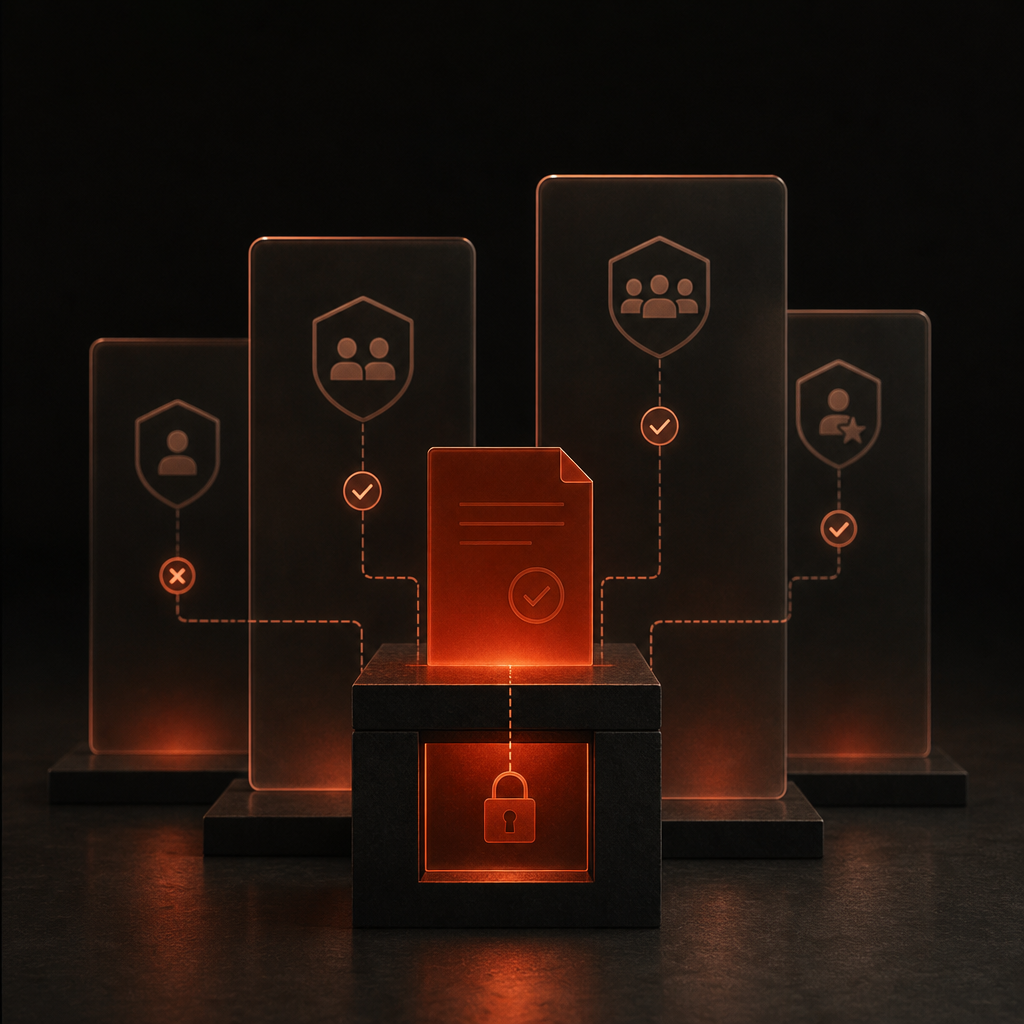
Role-based access control (RBAC) on Nagent ties approval rights to roles, not individuals, so a junior team member cannot unilaterally clear a high-stakes action.
Workspace admins connect the company's tools once and set who can do what. Business teams brief the work and approve what goes live. IT governs connections, access and approval rules. Those two domains stay separate by design. A salesperson briefing an outreach sequence does not have the access rights to approve a CRM write that affects 10,000 records. The admin set that boundary before the agent ever ran.
This separation matters for ai agent accountability governance because it closes the gap that shadow AI creates. When a team member builds a personal automation with a pasted API key, there is no RBAC, no audit trail and no named approver. When something breaks, accountability evaporates.
On Nagent, credentials are never pasted into scripts. Connections are central, access is role-gated and every approval is attributed.
What is the trust ladder, and why does it replace the on/off switch?
Agents start at a restricted level and earn autonomy through a clean record of approved work, rather than being granted full access from day one.
Nagent uses five levels: Observe (L1); Assist (L2); Operate (L3); Represent (L4); Lead (L5). Every agent arrives at L2. At L1, an agent can read and report. At higher levels, it can draft, propose, act and eventually act without per-action approval for defined task types. Promotion from one level to the next is a human decision, made by a workspace admin, based on the agent's track record.
This is the practical answer to the question every VP of Marketing or IT lead eventually asks: "How do I know when to trust it?" You watch the record. If the agent's proposed actions are consistently approved without modification, and the results match expectations, you promote it. If it starts producing actions that need frequent correction, you hold it at the current level or pull it back.
A paused or switched-off agent takes no action with a side effect, regardless of what was previously approved. The kill switch is always available, and it works immediately.
Does Nagent meet the security standards regulators and procurement teams require?
Nagent is ISO/IEC 27001:2022 certified and has a SOC 2 Type II programme underway.
For a 100 to 500 person company, that combination covers the two questions that procurement and legal ask most often. ISO/IEC 27001:2022 is the international standard for information security management. SOC 2 Type II goes further: it tests whether the controls actually worked over a period of time, not just whether they exist on paper.
Tenant isolation means your workspace data does not touch another customer's. That matters when your agents are reading CRM records, drafting outbound messages or accessing pricing data. The information stays inside your boundary.
For regulated sectors, the control plane provides a direct answer to the compliance questions that matter. Can you show which agent acted? Yes. Can you show who approved it? Yes. Can you show the cost and the result? Yes. (3) That is the audit evidence a regulator or an internal risk team needs, and it is produced automatically, not reconstructed after the fact.
Why does the black box problem make ai agent accountability governance harder than it looks?
Wrapping a user interface around a large language model does not solve the black box problem.
If you give a model a complex multi-step workflow, it might execute correctly 90 percent of the time. The 10 percent where it hallucinates or takes an unexpected path is where accountability breaks down, because the error is buried deep in the execution cycle and there is no named approver attached to it.
Nagent's approach breaks complex reasoning into discrete, verifiable steps. Each step is a proposed action. Each proposed action either fires automatically at the agent's current level or waits for a human to clear it. The human who clears it is on the record. The step that fired automatically is on the record too, including the level that authorized it and the governance profile in place at the time.
That structure is what makes ai agent accountability governance operational rather than theoretical. It is not enough to say "a human is in the loop." You need to be able to show which human, for which action, under which authority, at what cost and with what result.
Related reading
Frequently Asked Questions
Who is legally accountable when an AI agent makes a mistake?
The person who approved the action carries the accountability, and the Nagent control plane records exactly who that was. Every action entry includes the approver's identity, the agent's level at the time, the trigger, the cost and the result, giving legal and compliance teams a complete, immutable record.
How does Nagent prevent an AI agent from acting without human approval?
Actions with side effects, including publishing, sending and destructive changes, are blocked until a named approver clears them, unless the agent has earned a level that allows that action. Pure reads run automatically, and deleting or governance changes always wait for a person. The workspace admin sets the governance profile that determines which actions require approval at each agent level.
What security certifications does Nagent hold?
Nagent is ISO/IEC 27001:2022 certified and has a SOC 2 Type II programme underway. Tenant isolation keeps each customer's workspace data separate, and role-based access control ensures that only authorized roles can approve high-stakes agent actions.
What happens if I need to stop an agent immediately?
Pausing or switching off an agent stops all side-effect actions immediately, regardless of what was previously approved. The kill switch is always available to workspace admins and takes effect without delay.
How is Nagent's audit trail different from a standard activity log?
The audit trail is append-only and immutable: entries cannot be edited after the fact. A standard log records what happened; Nagent's control plane records what happened, who approved it, the agent's authority level at the time, the cost incurred and the outcome, producing the full evidence chain that regulators and risk teams require.
What should you do next?
If your team is evaluating AI agent platforms and accountability is a hard requirement, bring your most sensitive workflow to a live walkthrough. Book a demo with Nagent and we will show you exactly what the control plane records and who approves what.