Create Ad Videos From a Website URL in Minutes
Create Ad Videos From a Website URL in Minutes
You can create ad videos from a website URL in minutes — no designers, no briefs, no waiting. An agentic pipeline ingests your product URL, extracts copy and visuals, maps them to proven scene mechanics, and outputs platform-ready video ads across formats. For lean D2C teams running weekly creative cycles, this isn't a shortcut. It's a structural advantage.
Why are ecommerce teams still briefing designers in 2025?
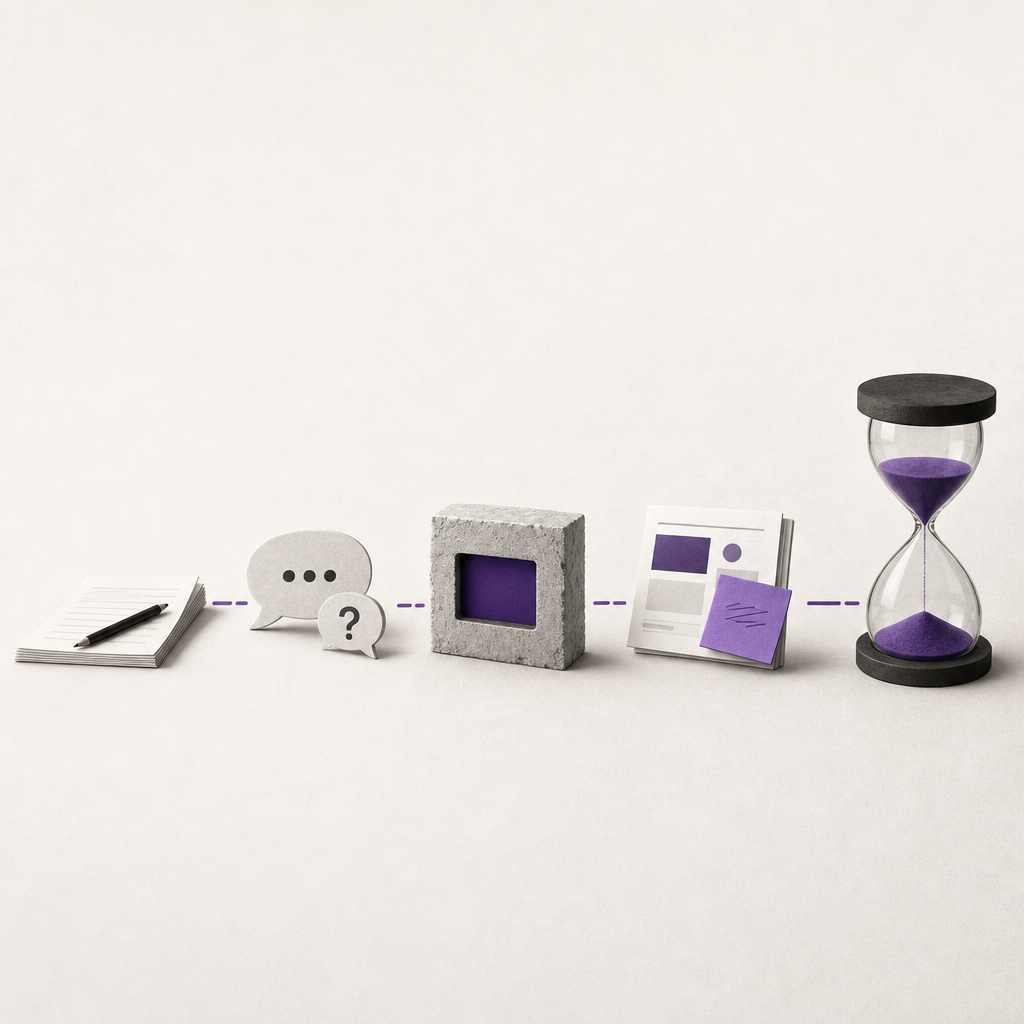
The average creative briefing cycle takes 5–7 business days before a single frame renders. You write the brief. You wait for questions. You review a rough cut. You give feedback. You wait again.
Meanwhile, your competitor is testing 20 ad variations this week.
The process hasn't changed because most teams assume video production requires human creative judgment at every step. That assumption is now wrong.
Agentic AI can handle the extraction, structuring, scripting, and format adaptation — automatically. Your job becomes approving and launching, not producing.
What does "create ad videos from a website URL" actually mean?
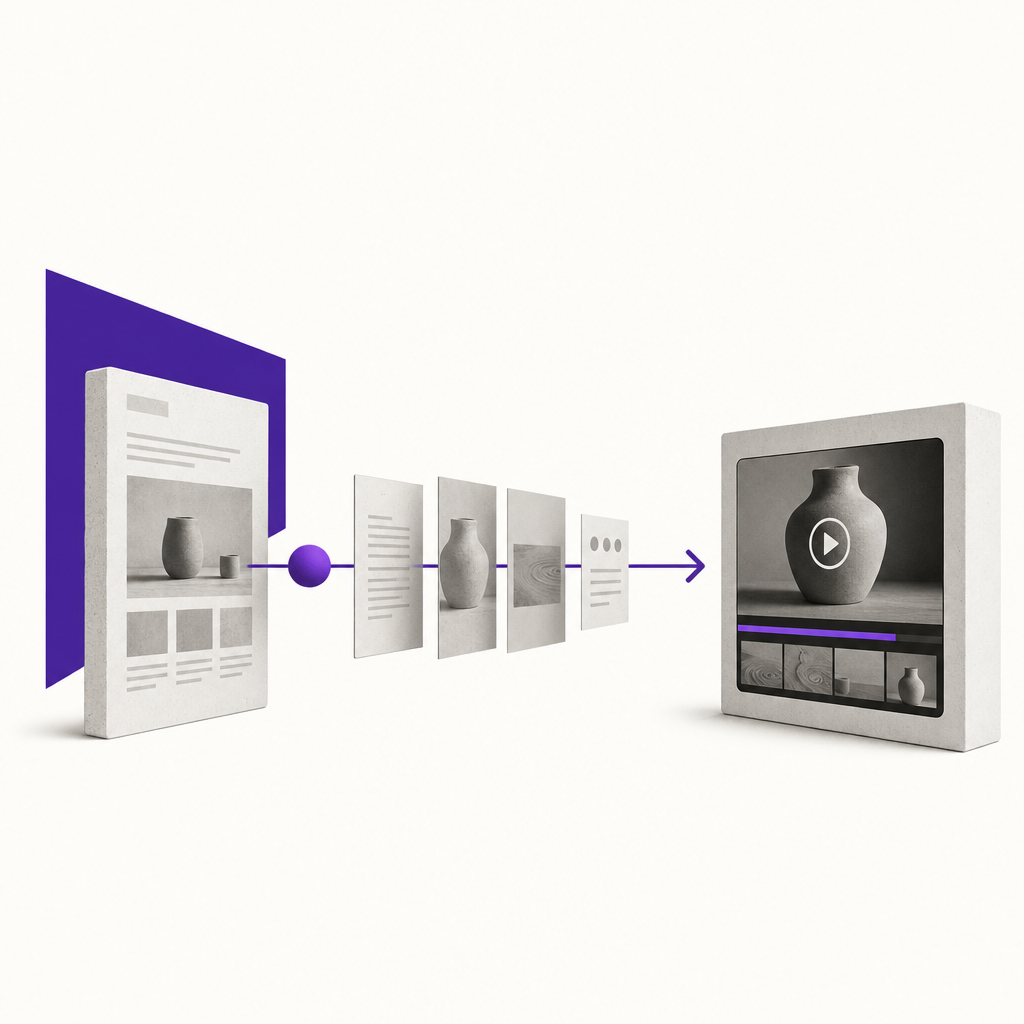
It means an AI agent visits your product URL, reads what it finds, and turns that into video ad output — without you writing a brief or uploading assets manually.
Specifically, the pipeline does four things:
- Extracts product copy, imagery, pricing, and value propositions from the URL
- Structures that content into scene mechanics — hook, product reveal, proof point, CTA
- Generates platform-specific video prompts and scripts
- Outputs format-ready creatives for Instagram Reels, TikTok, YouTube Shorts, and paid social
This is not a template-fill exercise. The agents understand scene composition, motion logic, and platform-native formats.
How does the agentic pipeline actually work?
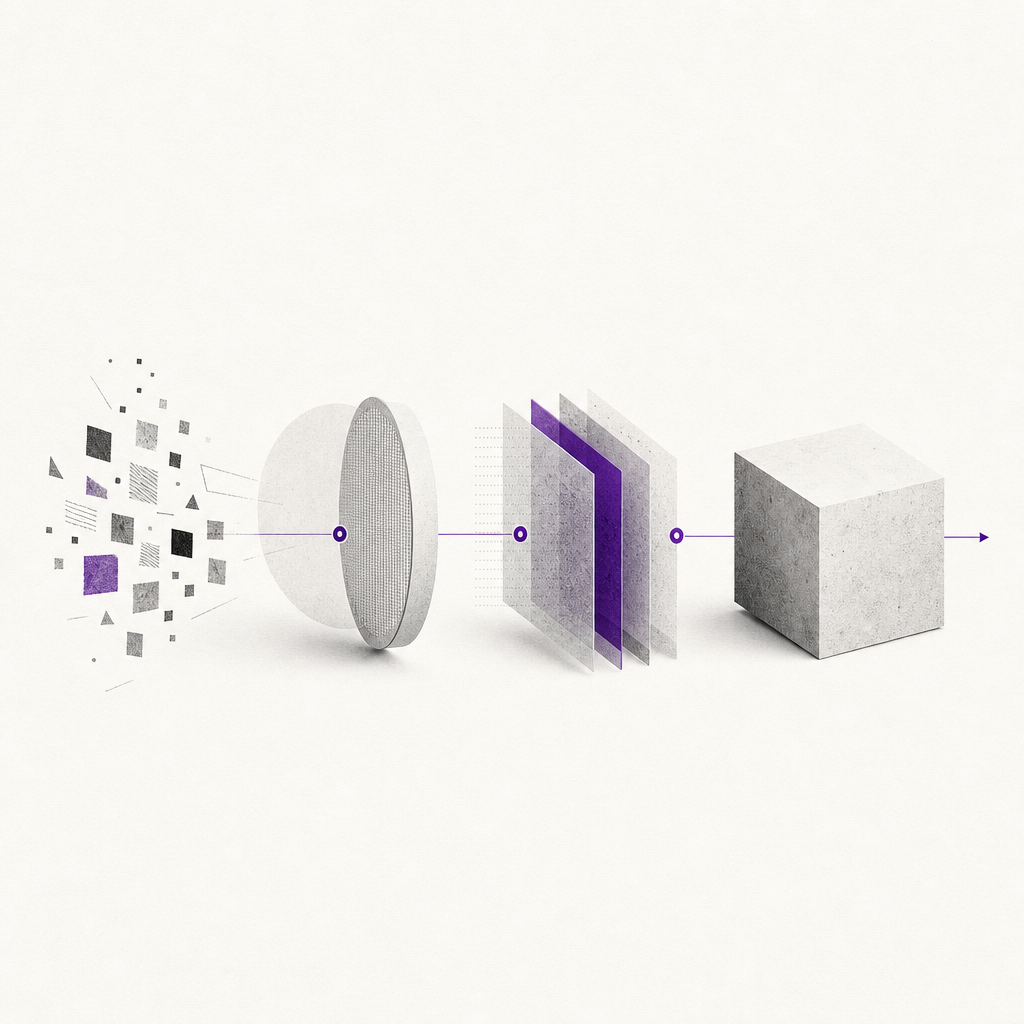
Three agents do the heavy lifting in sequence.
Step 1 — Reverse engineer proven video mechanics
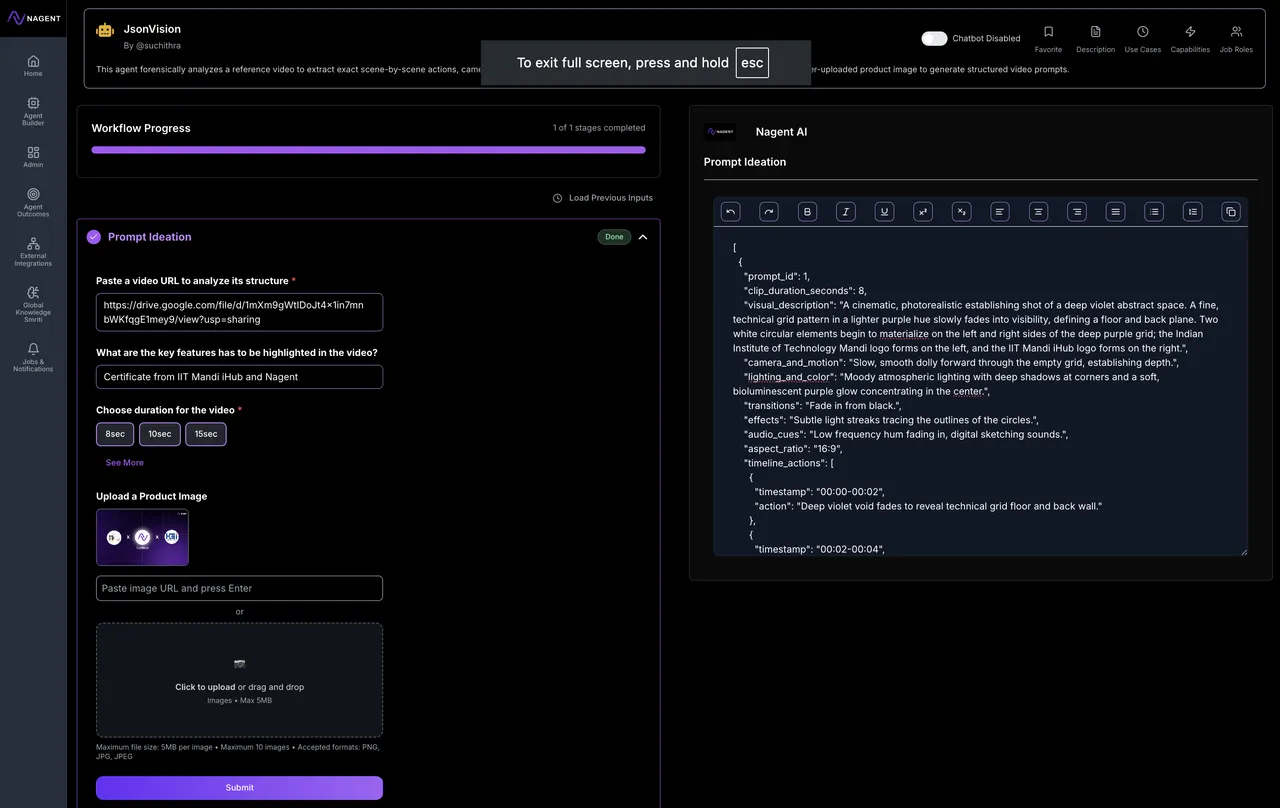
Before any script gets written, JsonVision analyzes existing high-performing videos and extracts their underlying scene mechanics[^1]. It breaks down motion patterns, lighting logic, pacing, and composition — then applies those structures to your product images as structured video prompts.
You're not guessing what works. You're cloning the mechanics of ads that already convert.
Step 2 — Turn product content into a platform-ready reel
ScrollStop AI takes the structured prompts and your extracted product content, then outputs highly engaging, platform-optimized Shorts and Reels[^2]. It handles hook construction, retention pacing, and format adaptation — the three variables most teams get wrong when they brief human editors.
The first 3 seconds decide everything. ScrollStop AI is built around that constraint.
Step 3 — Slot each ad into a publishing calendar
SocialSphere-content-planner) takes the finished creatives and builds an execution-ready content calendar — daily post ideas, platform-specific themes, formats, all exportable as PDF[^3]. Your media buyer has a deployment plan the same day the creative is generated.
No coordination lag. No "what do we post this week?" conversations.
What does this mean for teams with no production staff?
It means a two-person performance marketing team can operate like a ten-person creative studio.
Teams in this position typically see:
- Video ad production time drop from 3–5 days to 10–20 minutes per creative
- Creative output scale from 4–6 ads/month to 100 ads/month per brand
- Agency review rounds cut from 6–8 rounds to 1–2 internal reviews
These figures reflect outcomes observed across ecommerce and D2C deployments on the Nagent platform — not guarantees, but consistent patterns.
The math matters. If you're spending $15,000/month on paid social and testing 4 creatives, you're making decisions on thin signal. Test 40 creatives and you know what works in one week instead of one quarter.
Why do most D2C teams still run the old process?
Three reasons:
1. They've optimised for quality, not velocity.
The assumption is that slower, more considered production means better ads. But performance data consistently shows that volume of testing outperforms individual creative polish.
2. They don't have a system — they have people.
When your creative process depends on one designer or one agency relationship, the bottleneck is structural. Agentic pipelines replace the dependency, not the person.
3. They've tried "AI creative tools" and found them shallow.
One-shot generation tools that spit out generic videos don't solve the briefing problem — they just shift where the manual work happens. An agentic pipeline that starts from your product URL and outputs structured, platform-adapted video assets is a different category entirely.
What should you look for in an agentic video pipeline?
Not all "AI video" tools are the same. When evaluating a pipeline, ask these questions:
- Does it ingest a URL directly? If you still have to upload assets manually, you haven't removed the bottleneck.
- Does it understand scene mechanics? Generating a video is not the same as generating a video that converts. The agent needs to understand hook structure, pacing, and format constraints.
- Does it output platform-specific formats? A 16:9 render repurposed for Reels is not a Reels-native creative. Aspect ratios, caption placement, and motion timing all differ by platform.
- Does it connect to a publishing workflow? Creative output without deployment planning still requires manual coordination.
The Nagent pipeline — JsonVision → ScrollStop AI → SocialSphere — answers yes to all four[^1][^2][^3].
How does Nagent's KARMIC loop improve output over time?
Every ad run on the Nagent platform feeds a signal back through KARMIC, Nagent's continuous learning layer.
KARMIC captures labeled outcomes — which hooks drove clicks, which scene structures held attention, which CTAs converted — and adjusts agent decision policies automatically. No retraining project. No engineering ticket.
The first batch of ads is good. The tenth batch is sharper. The hundredth batch is calibrated to your specific audience, product category, and platform mix.
Agent Smriti adds cross-session memory. The pipeline remembers which creative angles worked for your last product launch and applies that context to the next one. Stateless tools forget everything after each run. Smriti doesn't.
Where does this fit in a broader creative operations strategy?
Agentic video production doesn't replace your brand strategy. It executes it faster.
Use Helix to orchestrate multi-agent creative workflows — brief a goal in plain English, and Helix designs the agent system, connects the pipeline, and deploys it to production. You describe the outcome; Helix handles the architecture.
For teams that want the system designed and run end-to-end, Nagent's Agentic AI Lab builds and operates the pipeline for you.
Either way, the entry point is the same: your product URL.
Related reading
- How agentic AI is changing performance creative for D2C brands
- Ad-Genie: From a single brief to 100 ads/month
- What is KARMIC and why does it matter for marketing teams?
- Explore the full creative agent marketplace
Frequently Asked Questions
Can I create ad videos from a website URL without any design skills?
Yes. The Nagent pipeline — starting with JsonVision and ScrollStop AI — is built for teams with no production staff. You provide the product URL; the agents extract assets, structure scene mechanics, and generate platform-ready video output. No design tools, no brief templates, no asset uploads required.
How long does it take to go from a product URL to a finished video ad?
Teams using the Nagent pipeline typically produce platform-ready video ads in 10–20 minutes per creative. That compares to 3–5 days for traditional production workflows involving briefing, rounds of feedback, and agency turnaround.
Does the pipeline produce different formats for different platforms?
Yes. ScrollStop AI is built to output platform-optimized Shorts and Reels — not a single generic video repurposed across channels. Aspect ratios, pacing, and caption placement adapt to each platform's native format requirements.
What happens to the creative output after the video is generated?
SocialSphere takes the finished creatives and builds an execution-ready content calendar with daily post ideas, platform themes, and formats — exportable as PDF. Your media buying team has a deployment plan on the same day the creative is generated.
How does the pipeline get smarter with each campaign?
KARMIC, Nagent's learning loop, captures performance signals from every ad run — which hooks drove clicks, which structures converted — and adjusts agent decision policies automatically. Agent Smriti adds cross-session memory, so the pipeline applies learnings from past campaigns to every new product launch.
What's next
Your next product launch shouldn't start with a design brief. It should start with a URL.
Book a free 30-minute demo at nagent.ai and see the agentic video pipeline run live on one of your product pages.
Sources
- JsonVision _(product doc)_
- ScrollStop AI The Viral Reel Creator _(product doc)_
- SocialSphere : Social Media Content Planning Agent _(product doc)_