
AI Agents Org Chart: 3 Models That Actually Work
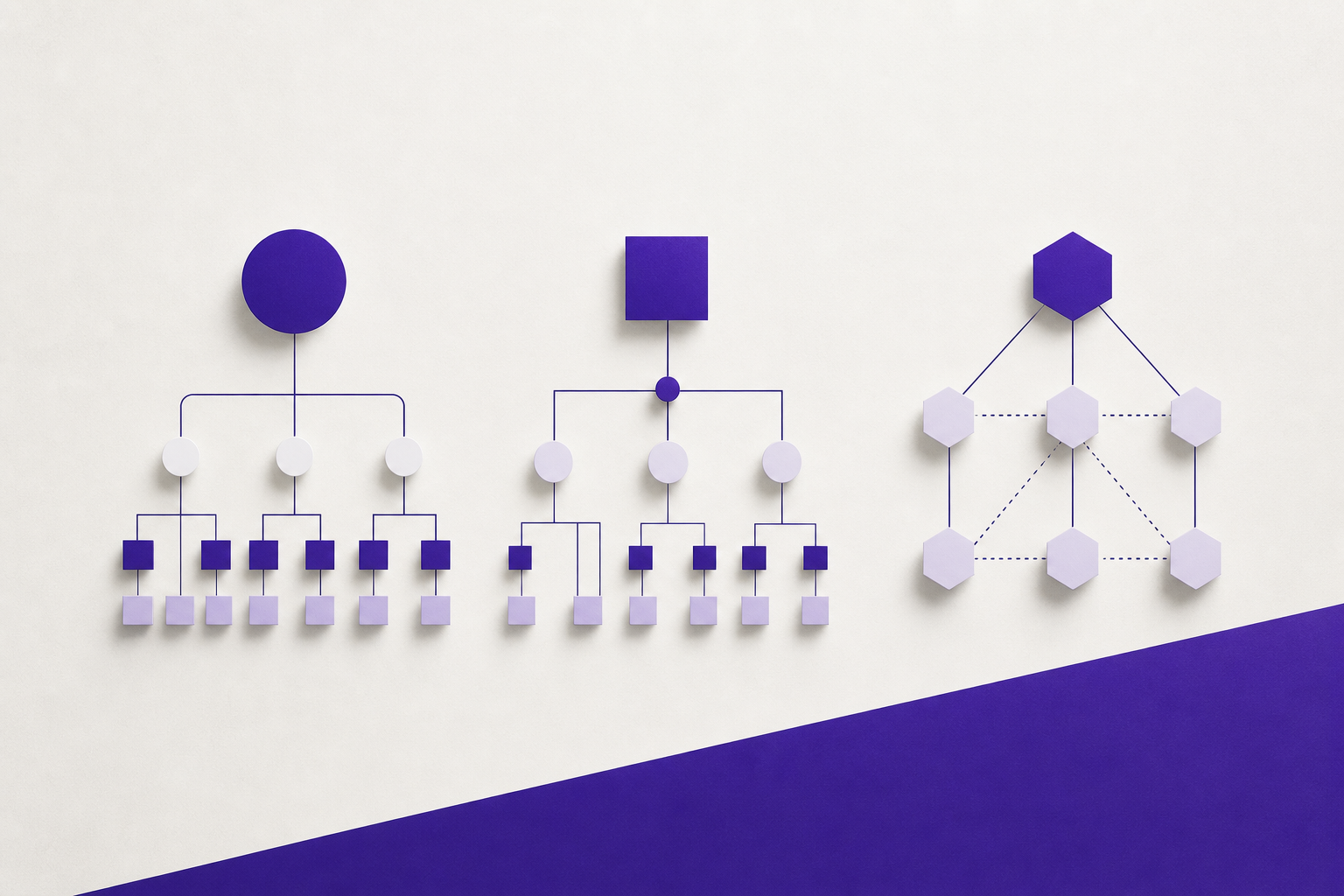
AI agents don't belong in a box on your org chart, they belong in the logic of how work gets done. Most leadership teams treat agent deployment as a technology decision. It isn't. It's a structural decision. The three org-design models that work are: the Embedded Model (agents report to a function head), the Platform Model (agents are centrally owned, cross-functionally deployed), and the Autonomous Function Model (agents own an outcome end-to-end). Which one fits depends on your maturity, team, and how much control you're willing to hand over.
Why does the AI agents org chart question matter now?

Most org chart conversations happen after a deployment fails.
A marketing team deploys an AI agent to run SEO content. Three months later, no one knows who owns the output, who reviews quality, or who the agent "reports to" when the brief changes. The agent produces work. The work sits in a folder. No one ships it.
The tool wasn't the problem. The structure was.
When you add AI agents to your team without answering the structural question, you create a new category of invisible work, tasks that get done but never get owned. That's a management problem, not a technology problem.
The good news: there are three org-design models that resolve this cleanly.
What are the three org-design models for AI agents?
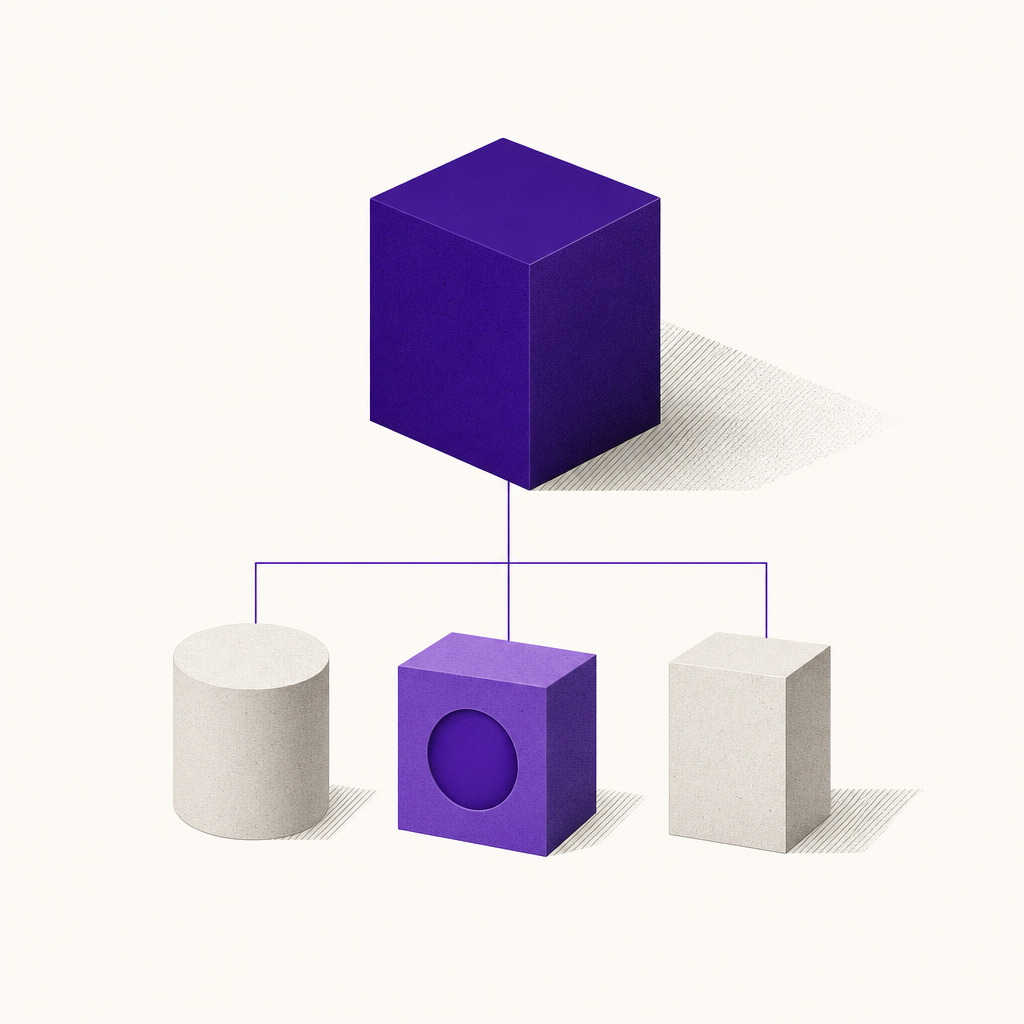
Model 1: Embedded, the agent reports to a function head.
Model 2: Platform, a central team owns the agents; functions consume them.
Model 3: Autonomous Function, the agent owns an outcome, not just a task.
Each model has a different accountability structure, a different cost profile, and a different risk surface. Let's break them down.
How does the Embedded Model work, and when should you use it?

In the Embedded Model, each function owns its agents the way it owns its headcount.
The marketing team owns MIRA. The ops team owns its process agents. The HR team owns its screening agents. Each function head is accountable for agent output, agent quality, and agent cost, just as they're accountable for the humans on their team.
This model works when:
Your functions are already well-defined and siloed
You want clear ownership and fast iteration within a function
You're in early-stage deployment (fewer than 5 agents across the org)
The risk: agents don't talk to each other. The marketing agent doesn't know what the sales agent learned last quarter. You get functional intelligence without organizational intelligence.
This is where shared memory changes the calculus. On Nagent, agents work from the Knowledge Hub plus their own memory, so even in an Embedded Model, agents can retain context across campaigns, handoffs, and users. The memory layer partially compensates for the structural isolation.
But it doesn't fully solve it. If your agents are embedded in silos, your intelligence stays siloed.
How does the Platform Model work, and who should own it?
The Platform Model treats AI agents the way modern engineering teams treat infrastructure: centrally owned, cross-functionally consumed.
A central AI team, often reporting to the CTO, COO, or a Chief AI Officer, owns the agent stack. They deploy agents to functions on request. They maintain quality, monitor performance, and manage the feedback loops that make agents better over time.
Functions don't own agents. They use agents, and they submit requests for new ones.
This model works when:
You have more than 10 agents in production
Compliance, security, or brand consistency is a hard constraint
You want a unified feedback loop across the organization
The upside: your agents learn from each other's outcomes. An insight from a sales agent's conversion data can inform a marketing agent's targeting logic, because the central team can wire that signal in directly.
The risk: it creates a bottleneck. Functions wait on the central team. Speed drops. Shadow deployments emerge, teams spinning up their own agents outside the approved stack.
The fix is a clear SLA and a self-serve layer. On Nagent, a growth team can build a custom agent from one sentence (see how), then give it knowledge, tools and a level on the autonomy ladder, without needing the central team to build every workflow from scratch. The central team sets the guardrails; functions move within them.
What is the Autonomous Function Model, and is your org ready for it?
The Autonomous Function Model is the most structurally radical, and the most misunderstood.
In this model, an agent (or a coordinated stack of agents) owns a function, not a task. It doesn't assist the content team. It is the content production function, with a human lead overseeing output quality and strategic direction.
This isn't science fiction. It's already happening in marketing, where agent stacks handle brief intake, content generation, SEO optimization, and distribution, with one human editor reviewing final output before publish.
This model works when:
The function is well-defined and measurable
Output quality can be evaluated programmatically (or with minimal human review)
You're willing to redesign the human role around oversight, not execution
The structural implication: the human in this model isn't a doer. They're a governor. Their job is to set standards, review exceptions, and push the agent stack when performance dips.
That's a different hiring profile. It's a different performance review. It's a different org chart box, and most companies aren't ready to draw it yet.
How do multi-agent systems change the org chart question?
Single agents are easy to place on an org chart. Multi-agent systems are not.
When a system chains a research agent into a content agent, which feeds a distribution agent, the "who owns this?" question gets complicated fast. Each agent has a different functional home. The system spans three teams.
The answer most high-performing orgs land on: the system has an owner, even if the agents don't.
Assign a System Owner, a human who is accountable for the end-to-end outcome the agent system produces. They don't manage each agent. They manage the result. They escalate when the system breaks. They own the KPI.
This is the org design insight most leadership teams miss. You're not adding agents to your org chart. You're adding outcomes, and every outcome needs an owner.
Which model fits your org right now?
Use this decision framework:
Situation: < 5 agents, early deployment, Recommended Model: Embedded
Situation: 5-20 agents, compliance-sensitive, Recommended Model: Platform
Situation: 20+ agents, measurable function, Recommended Model: Autonomous Function
Situation: Multi-agent systems spanning teams, Recommended Model: Platform with System Owners
Start with Embedded. Move to Platform when coordination costs outweigh the speed benefits of decentralization. Move to Autonomous Function when you can define the outcome precisely enough to govern it with a single human lead.
Don't skip stages. Teams that jump to Autonomous Function without Platform discipline end up with ungoverned agents producing ungoverned output, which is worse than no agents at all.
Related reading
Frequently Asked Questions
Do AI agents need a manager?
Yes, but not in the traditional sense. Every AI agent or agent system needs a human accountable for its output, its quality, and its escalation path. That person is the System Owner. They don't manage the agent's daily work; they manage the outcome the agent is responsible for producing.
Should AI agents sit in IT or in the business function?
It depends on your deployment stage. Early deployments (fewer than five agents) belong in the business function, closer to the workflow they're automating. As you scale past ten agents, a central AI team (often under the CTO or COO) creates better governance, shared learning, and compliance control.
What happens when an AI agent spans multiple departments?
Assign a System Owner, a single human accountable for the end-to-end outcome the multi-agent system produces. The agents themselves may sit in different functional homes, but the system needs one owner who escalates when it breaks and owns the KPI it's optimizing.
How does shared memory help with org design?
On Nagent, agents work from the Knowledge Hub plus their own memory, so they retain context across users, campaigns, and handoffs. In an Embedded Model, this partially compensates for structural silos, agents remember what worked for a function even when team members change. In a Platform Model, it enables shared organizational intelligence across functions.
When is an org ready for the Autonomous Function Model?
When three conditions are met: the function's output is well-defined and measurable, quality can be evaluated with minimal human review, and leadership is willing to redesign the human role around oversight rather than execution. Most orgs reach this point 12-18 months into a structured agent deployment program.
What should you do next?
If you're redesigning your org to include AI agents as a resourcing layer, the structural decision comes before the technology decision. Get the model right first, then deploy.
Book a free 30-minute demo at nagent.ai and walk through which org-design model fits your current stage.