
Festive Launch With a Three-Person Team? Here's the AI Plan

A three-person team can run a complete festive launch ai marketing team setup without contract hires or an agency. The structure is simple: give every job an owner. HOOK writes the angles and scripts. RUPA renders the stills. Alpha plans the video. NIA builds the Google Ads campaign. MIRA holds the plan together. Your three people approve what goes live. That division of labor is the whole strategy. (2)
Why Do Small Teams Fail Festive Launches?
Most small teams fail festive launches because they try to do everything in the wrong order.
The creative brief lands in week five. The video is still being scripted when the ads need to go live. Someone is manually resizing the same image for four different placements. By the time the campaign is live, the peak window is already closing.
The problem isn't headcount. It's sequencing. A three-person team has enough decision-making capacity to run a serious festive launch. What it doesn't have is the production bandwidth to execute every task sequentially. That's where AI teammates change the math. (3)
What Does Each AI Teammate Actually Own?
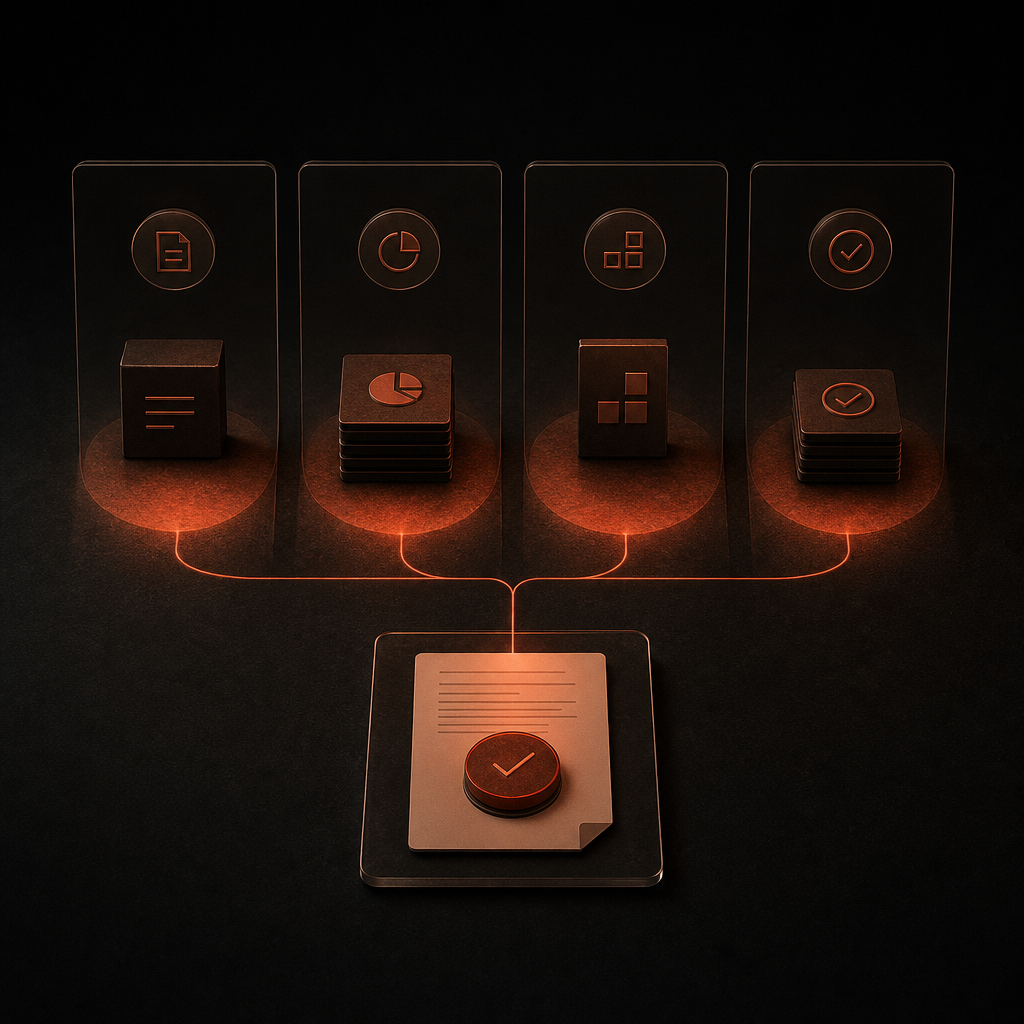
Every AI teammate on Nagent owns one specific job, and none of them go live without a person approving the output.
Here's the division:
MIRA: the AI chief of staff for Marketing. She turns the launch brief into a plan, assigns each piece to the right teammate, and keeps the thread together in one shared team room. (2)
HOOK (Beta): the AI creative strategy lead. She takes the brief and produces angles, hooks, and scripts for paid social. Every claim is checked against your approved proof before it leaves her hands. (2)
RUPA: the AI image teammate. She renders static ad variants for Meta and LinkedIn with your brand guidelines attached, to a preset your team sets once. (2)
Alpha: the AI video planner. She plans the hero video, writes the storyboard, quotes the production cost, and waits for your approval before anything renders. (2)
NIA: the AI paid marketing lead. She builds the Google Ads campaign paused for approval, so your team reviews the full structure before a single dollar is spent. (2)
Your three people do the approvals, the final cut review, and the Meta uploads. That's the model.
What Does a Six-Week Festive Launch Plan Look Like?
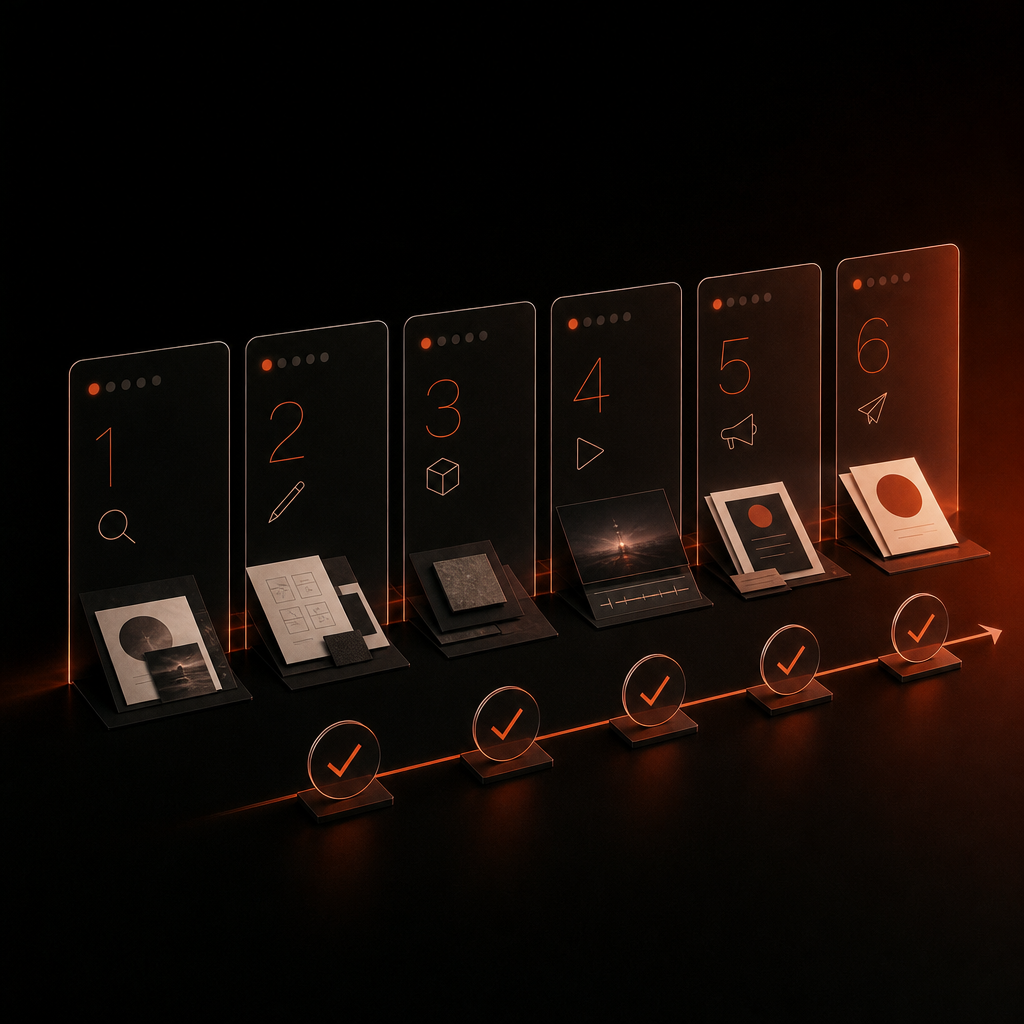
Six weeks is enough time to run a structured festive launch ai marketing team workflow from brief to live campaign, with approval gates at every stage.
Week 1: Brief and plan
Your founding marketer writes the single launch brief: offer, audience, key dates, and the proof points behind every claim. MIRA turns that brief into a six-week plan and assigns each piece to the teammate who owns it. This is the only week where the plan is built from scratch.
Approval point: your team reviews MIRA's plan before any creative work starts.
Week 2: Angles and scripts
HOOK takes the brief and produces the creative angles. For a D2C skincare brand, that means testing "your skin, peak season" against a clinical-proof angle, a gifting angle, and a scarcity angle, all in the same session rather than across three agency review cycles. (2)
HOOK also writes the short-form scripts for Reels and TikTok, checked against your approved claims.
Approval point: your creative lead reviews and selects the angles to take forward.
Week 3: Stills and video planning
RUPA renders the static ad variants using the approved angles and your brand kit. Meta placements, LinkedIn formats, and story sizes come from the same brief, not from three separate requests.
Alpha plans the hero video in parallel. She produces the storyboard with scene-by-scene motion notes: camera movement, product focus, transition style, lighting direction. She quotes the video and waits.
Approval point: your team reviews the stills and approves the storyboard before Alpha renders anything.
Week 4: Video production and Google Ads build
Once the storyboard is approved, Alpha moves to production. NIA builds the Google Ads campaign structure in parallel: ad groups, keywords, copy variants, and bid strategy, all paused for review.
This is also the week HOOK produces the headline and CTA variants for A/B testing across paid channels.
Approval point: your team reviews the Google Ads build before it goes live. Your creative director reviews the video cut.
Week 5: Final approvals and uploads
The video final cut needs a person. The Meta campaign upload needs a person. These are not tasks to hand to an AI teammate, and Nagent's model doesn't try to.
Your three people spend this week on the decisions that require human judgment: does the video feel right for the brand? Does the Meta campaign structure match the audience segments you know from previous launches?
NIA's Google Ads campaign goes live once approved.
Week 6: Live and monitoring
The campaign is running. Echo (Beta), Nagent's AI reputation teammate, reads incoming reviews and checks what answer engines say about your brand against facts your team approved. She has no send path: replies stay with your community manager. (2)
HOOK's PULSE bench agent tracks creative performance signals and flags which angles are pulling. Your team makes the call on what to scale.
What Tools Are Buyers Comparing Before They Decide?
Buyers evaluating a festive launch ai marketing team setup often shortlist three tools before they look at a full AI teammate platform.
Creatify describes itself as an AI video ad platform that turns product URLs into video ads with AI avatars and voiceovers. It's positioned at single-format video production.
Arcads focuses on AI-generated UGC-style video ads using AI actors, aimed at performance marketers running paid social at volume.
Pencil is an AI creative platform for generating and testing ad variations, with a focus on paid social performance data.
Each of these tools solves one part of the festive launch problem. None of them hold the plan, coordinate across formats, check claims against your proof, or connect the video output to the Google Ads build and the reputation layer.
A three-person team using one of these tools still needs to manually coordinate the rest of the campaign. The brief still has to be rebuilt for each format. The brand voice still drifts unless someone enforces it by hand. (3)
The difference with Nagent's AI teammates is that they work from one shared context, in one team room, from one Knowledge Hub that holds your brand voice, past campaign results, and messaging rules. (3) The coordination cost drops because there's one plan, not four separate tools running in parallel.
What Still Needs a Person on a Three-Person Team?
Three tasks always stay with your team, and that's by design.
First, the final video cut. Alpha plans and produces, but the creative director watches the final version and approves it. Tone, pacing, and brand feel are judgment calls.
Second, the Meta campaign upload. NIA's Meta channel is in Beta: with approval she can create an empty campaign, but ad sets, audiences and creative are made by your team. Your team uploads and reviews the targeting before anything goes live.
Third, the brief itself. MIRA can turn a brief into a plan in minutes, but the brief has to come from a person who knows the offer, the proof points, and the audience. That's the founder or the marketing lead, and it's the most valuable hour they spend in the six weeks. (1)
Everything else, the angles, the scripts, the stills, the storyboard, the Google Ads build, the performance monitoring, runs from the brief outward. The team's job shifts from producing inputs to approving outputs.
Related reading
Frequently Asked Questions
Can a three-person team realistically run a festive launch with AI teammates?
Yes. The model works because each AI teammate owns a specific job, and your three people focus on approvals and the decisions that require human judgment. The production tasks, angles, stills, video planning, and ad builds, run in parallel rather than sequentially, which is what makes six weeks workable.
What does MIRA do in a festive launch?
MIRA is the AI chief of staff for Marketing on Nagent. She takes the launch brief, turns it into a sequenced plan, and assigns each piece to the right AI teammate in the shared team room. She keeps the thread together so nothing falls through the gap between formats.
Does Nagent replace tools like Creatify or Arcads?
Creatify and Arcads each solve one format problem, video ads. Nagent's AI teammates cover the full campaign: creative strategy, stills, video planning, paid search, and reputation monitoring, all working from one shared brief and one Knowledge Hub. The choice depends on whether you need one tool or a coordinated team.
What approval points should a small team build into a six-week launch?
There are five natural approval points: the MIRA plan at week one, the creative angles at week two, the storyboard and stills at week three, the Google Ads build and video cut at week four, and the final Meta upload at week five. Every AI teammate on Nagent proposes before it acts; nothing goes live without a person signing off.
How does brand consistency hold across formats on a small team?
Nagent's Knowledge Hub holds your brand voice, approved claims, and messaging rules. Every AI teammate works from it, so the tone doesn't drift between the Reels script and the Google Ads copy. This is the specific failure point of running separate tools for each format. (3)
What should you do next?
See the six-week festive launch plan running in a live Nagent workspace, with your brief, your brand, and your three-person team structure. Book a working session with Nagent.