
What Is an AI Content Team?
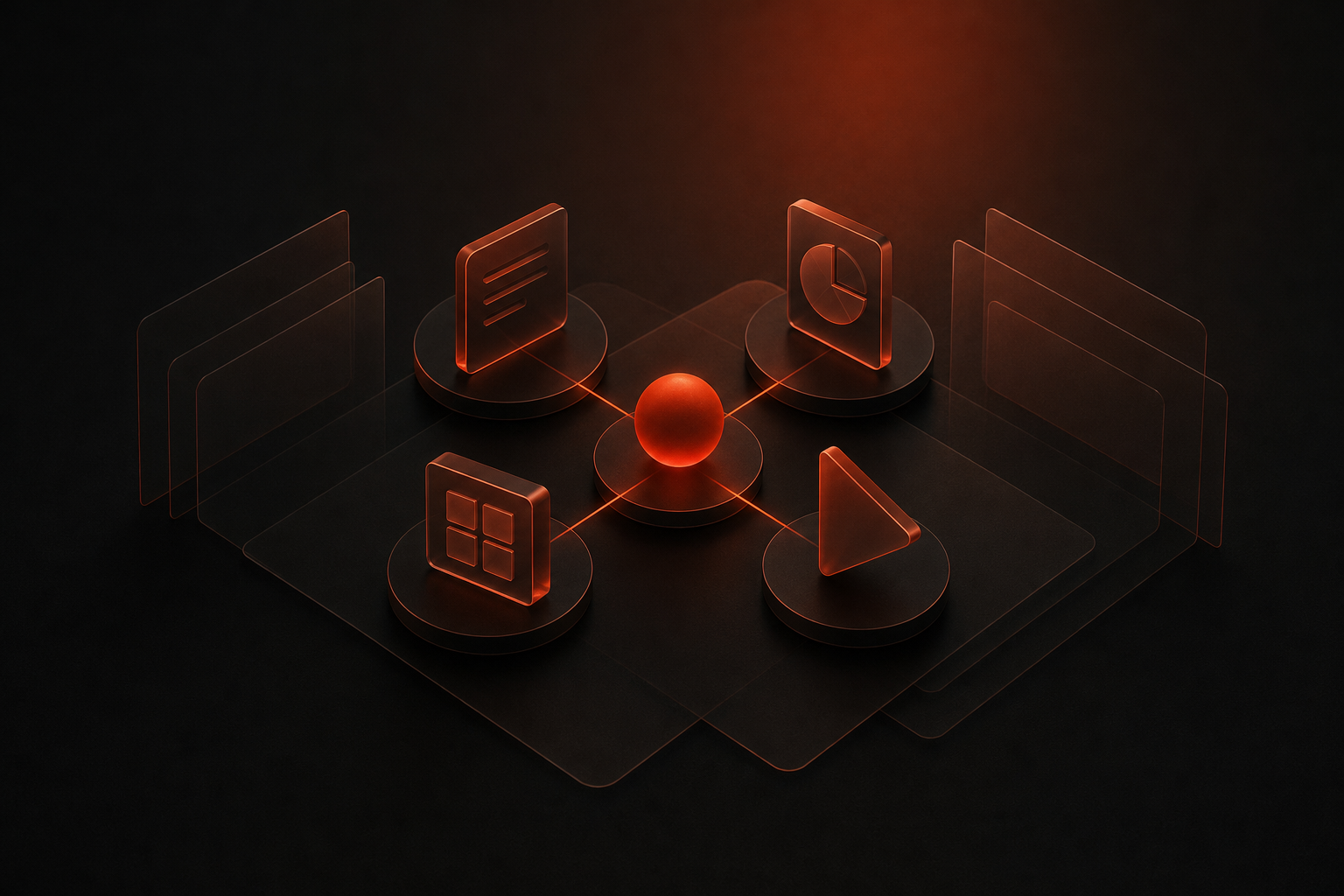
An AI content team is not a writing tool you prompt on demand. It is a coordinated set of AI teammates, each owning a specific role in the content workflow: research, drafting, editing, illustration, internal linking and review. The team works from your own knowledge and brand guidelines, produces a complete, publish-ready asset, then stops until a person approves it. That approval gate is what separates a content team from an autocomplete engine.
What does a writing tool actually do, and why isn't that enough?

A writing tool drafts on request. It fills a blank page when you give it a prompt, and it stops there.
That sounds useful until you think about what actually ships a blog post. Before a word is written, someone has to research the topic against your existing content, check what your competitors have published, and decide what angle your brand should take. After the draft exists, someone has to edit for voice, verify every factual claim, source an image, add internal links that actually exist, and route the post for approval. A writing tool does one step. The other eight still belong to your team.
For a content lead without a full-time writer, that is the real problem. The bottleneck is not the draft. It is everything around the draft.
What makes an AI content team different from a single AI writer?
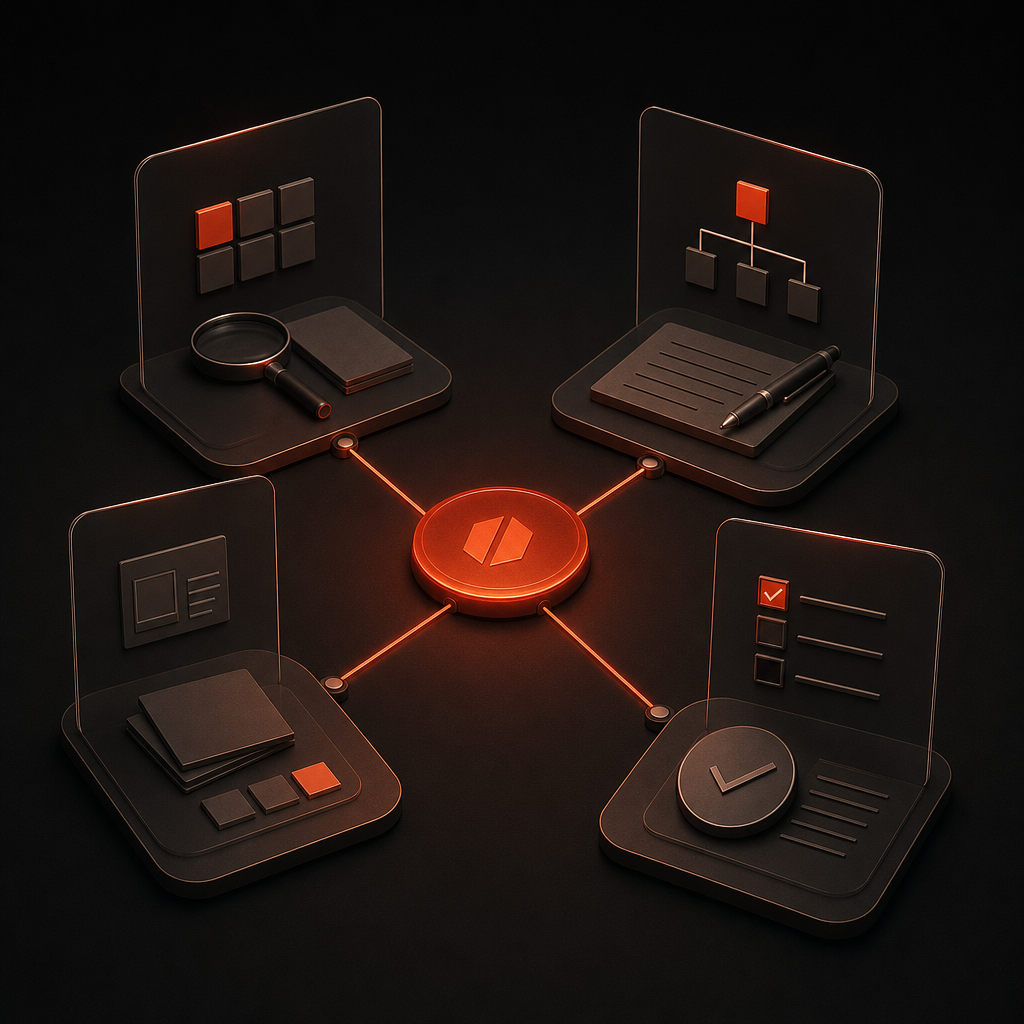
An AI content team assigns each node in the workflow to a specialist, the same way a human editorial team does.
On Nagent, CREA leads the AI Content team. Give the team a topic and CREA researches, drafts, edits, reviews, illustrates and links the post, grounding every step in the company's own Knowledge Hub and brand guidelines. Nothing is published until a person approves it.
That is a structural difference, not a feature difference. A single AI writer produces a draft. CREA's Content team produces a complete, reviewed, illustrated, linked asset that is ready for a human editor to approve, not rebuild.
The distinction matters because most content failures are not draft failures. They are handoff failures: the draft exists, but nobody verified the statistics, nobody checked the internal links, nobody matched the CTA to the conversion goal of that specific post.
How does the team handle research and grounding?

Every draft pulls from your Knowledge Hub before a word is generated, so the output reflects your company's actual position.
A general-purpose AI writer fills gaps with confident generalities. That is the opposite of what a brand needs. CREA reads from the Nagent Knowledge Hub, where tone rules, brand guidelines and audience profiles live as structured inputs rather than freeform prompts. The draft is grounded in what your company knows and has approved before, not in a plausible reconstruction of your industry.
This matters most for B2B content, where the difference between a generic post and a credible one is whether the writer knows your product's actual mechanism, your customer's actual pain, and your company's actual point of view. A Knowledge Hub gives the team that context. A prompt does not.
Who on the team handles images and long-form assets?
RUPA handles images; FOLIO handles long-form structured assets, each working to a preset tied to your brand guidelines.
Illustration is the step most AI writing tools skip entirely. CREA's Content team routes image production to RUPA, Nagent's AI image teammate, which renders product shots, ad stills and social images to a preset with your brand guidelines attached. The image brief comes from the content workflow itself, not from a separate request you have to file.
For long-form work, FOLIO handles structured assets that go beyond a standard blog post. The team coordinates across these specialists inside a shared workspace, so the work does not fragment across tools and inboxes.
This is what a coordinated team produces that a single tool cannot: the full asset, not just the text.
Does a person still approve every piece of content?
Every proposal and every draft waits for human approval before anything goes live.
This is the control point that separates a configured AI content team from an autonomous content machine. The approval gate is not a bottleneck. It is what keeps your brand voice from drifting at scale.
On Nagent, every draft sits in a queue with its source and status visible. A human editor handles the tasks that require judgment: verifying statistics, confirming internal links are real and relevant, and setting the CTA to match the specific conversion goal of that post. The AI team does the production work. The person does the judgment work. Neither replaces the other.
For a content lead managing a full publishing calendar without a full-time writer, that division is the practical answer. You stay in control of what goes out. You stop doing the work that does not require your judgment.
What does this mean for content operations at scale?
The structural shift is from a linear handoff chain to a coordinated team working in parallel, inside one shared context.
Traditional content operations look like this: brief to writer, draft to editor, draft to designer, design to approver, approver to publisher. Each handoff is a delay. Each delay is a reason to publish less.
A coordinated AI content team collapses that chain. CREA's Content team handles research, drafting, editing, illustration and linking in one workflow, inside the Nagent workspace. The human editor receives a complete asset, not a draft that needs four more steps before it is ready to review.
The output is not just faster content. It is a content operation that does not require a full editorial team to function. That is a different kind of capacity.
How do you know the team is doing quality work?
Nagent tracks agent performance and agents earn autonomy as they demonstrate results, not on a fixed schedule.
Nagent's autonomy ladder has five levels: Observe (L1); Assist (L2); Operate (L3); Represent (L4); Lead (L5). An agent starts at L2 with tighter review requirements and earns more independence as its output proves reliable. If quality drops, the system supports demotion and retraining without a full rebuild.
For a content lead, this means the team gets better over time, and you have a visible record of why. The decision ledger is append-only: every action is logged, attributed and reviewable. You are not trusting a black box. You are managing a team with a track record.
Related reading
Frequently Asked Questions
What is an AI content team?
An AI content team is a coordinated set of AI teammates, each owning a specific role in the content workflow: research, drafting, editing, illustration, internal linking and review. Unlike a single AI writing tool, the team works from your own knowledge and brand guidelines and produces a complete, publish-ready asset. Nothing goes live until a person approves it.
How is CREA different from an AI writing tool?
CREA is Nagent's AI chief of staff for Content, and it leads a full content team rather than drafting on request. The team researches, drafts, edits, reviews, illustrates and links a post grounded in your Knowledge Hub and brand, then stops until a person approves the output. A writing tool does one step; CREA's team does all of them.
Who handles images in an AI content team?
RUPA, Nagent's AI image teammate, handles image production inside the content workflow. It renders product shots, ad stills and social images to a preset tied to your brand guidelines, so illustration is part of the same workflow as drafting, not a separate request.
Does an AI content team replace human editors?
No. The AI content team handles production: research, drafting, editing, illustration and linking. The human editor handles judgment: verifying statistics, confirming internal links are real and relevant, and setting the CTA to match the specific conversion goal of that post. The approval gate is the human's role, and it stays that way by design.
How do I get started with an AI content team?
Start by identifying your highest-volume, lowest-differentiation content: SEO blog posts, product update articles, and nurture copy. Hire CREA's Content team into your Nagent workspace, configure your Knowledge Hub with your tone rules and brand guidelines, and run your first post through the full workflow before scaling volume.
What should you do next?
Book a demo and we'll show you how CREA's Content team fits into your current publishing workflow, and what a fully staffed AI content operation looks like for your team. Talk to Nagent.