
What is an AI outbound research agent?
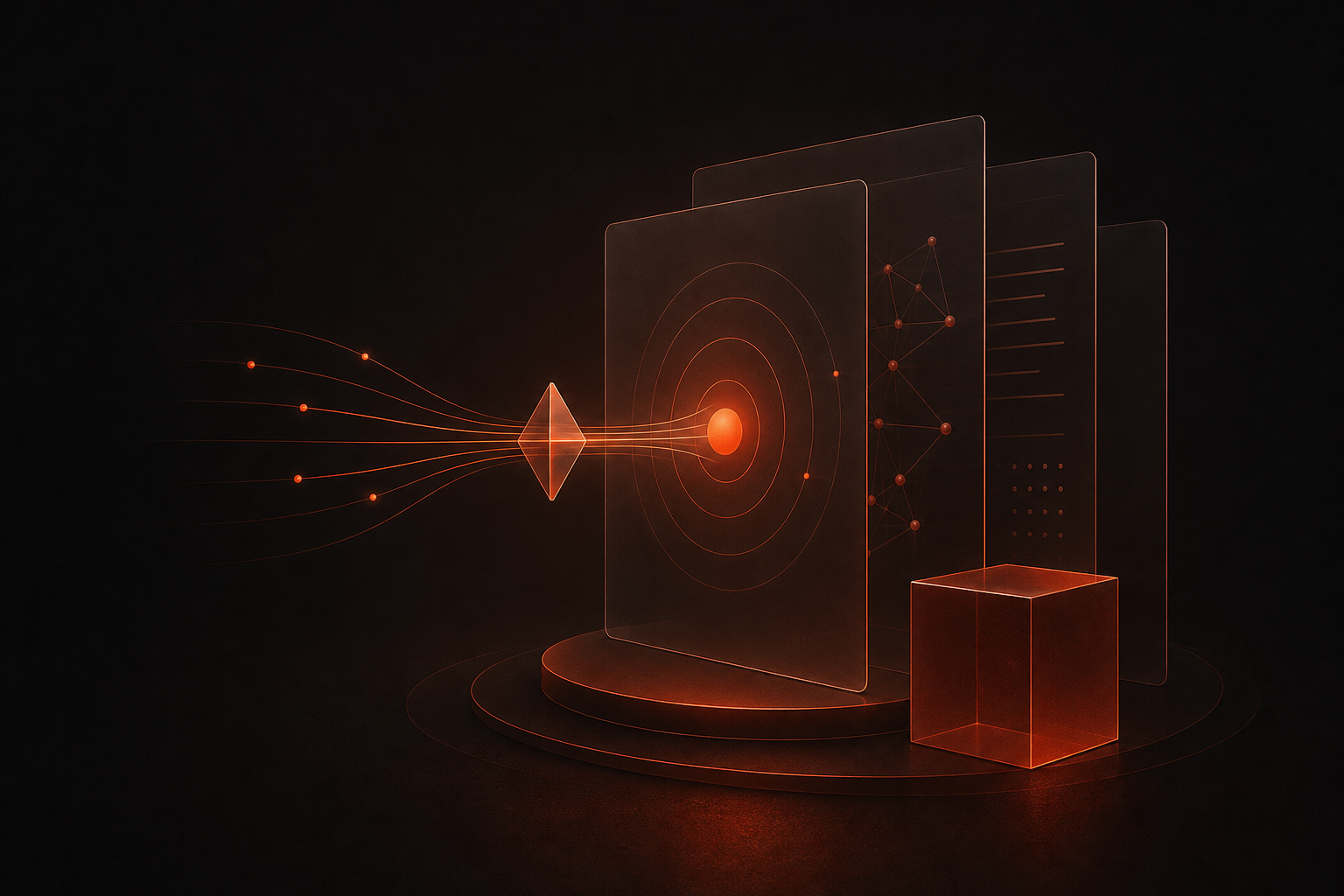
An AI outbound research agent finds accounts that match your ideal customer profile, researches each one into a sourced dossier, and drafts the first outreach email for a human to approve before anything is sent. It is purpose-built for B2B outbound, not bulk email blasting. The research happens first. The email follows from it. That sequence is what separates this category from a sequencer.
What does an AI outbound research agent actually do?
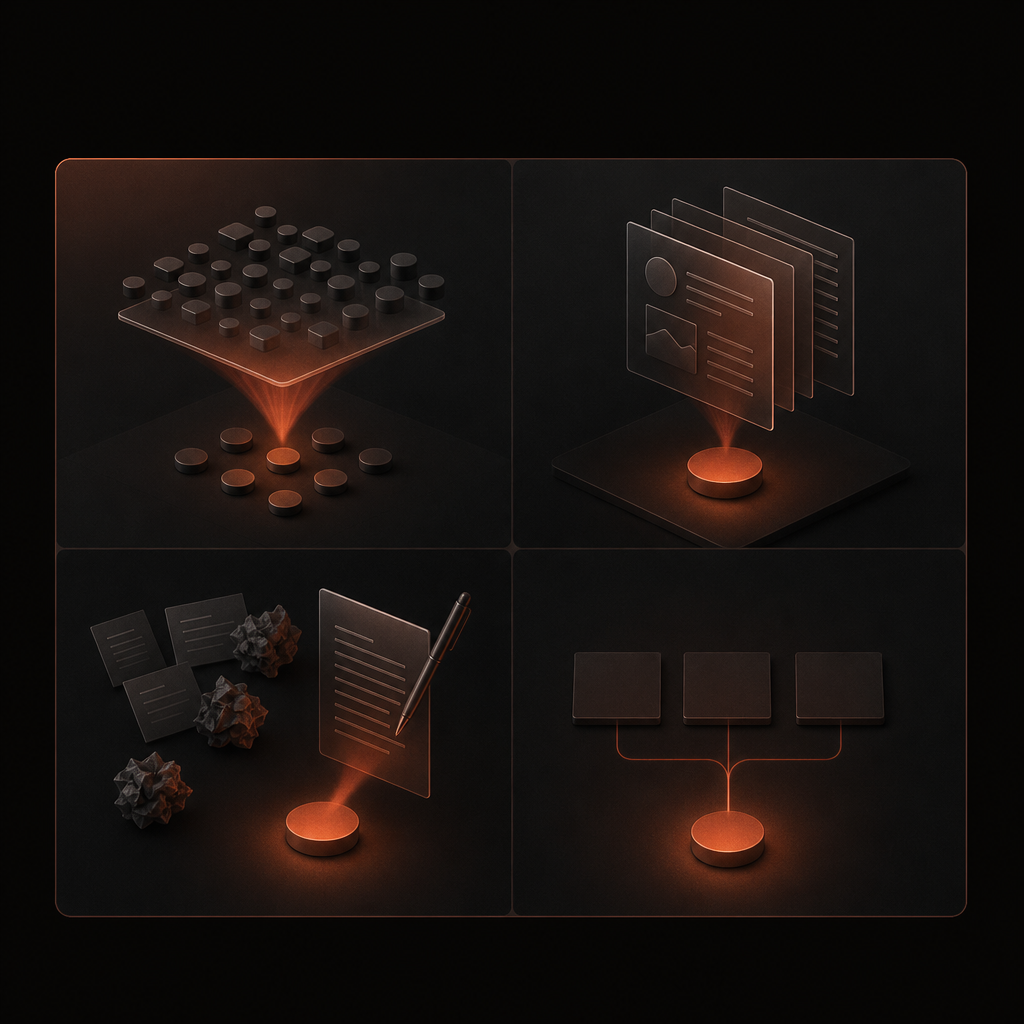
It replaces the three most time-consuming steps in outbound: list building, account research, and first-draft writing.
A traditional outbound motion asks a rep to find accounts, read enough about each one to say something true, and then write a message that earns a reply. That loop takes roughly an hour per account when done properly. Most teams skip the research, send generic sequences, and wonder why reply rates are low.
An ai outbound research agent runs that loop autonomously. It sources accounts against your customer profile, reads each company deeply enough to produce a dossier with citations, and drafts an outreach message grounded in what it found. A person then reviews and approves before anything leaves the building.
The work stops at the handoff. The agent does not close deals.
How is this different from a sequencer or an automation tool?
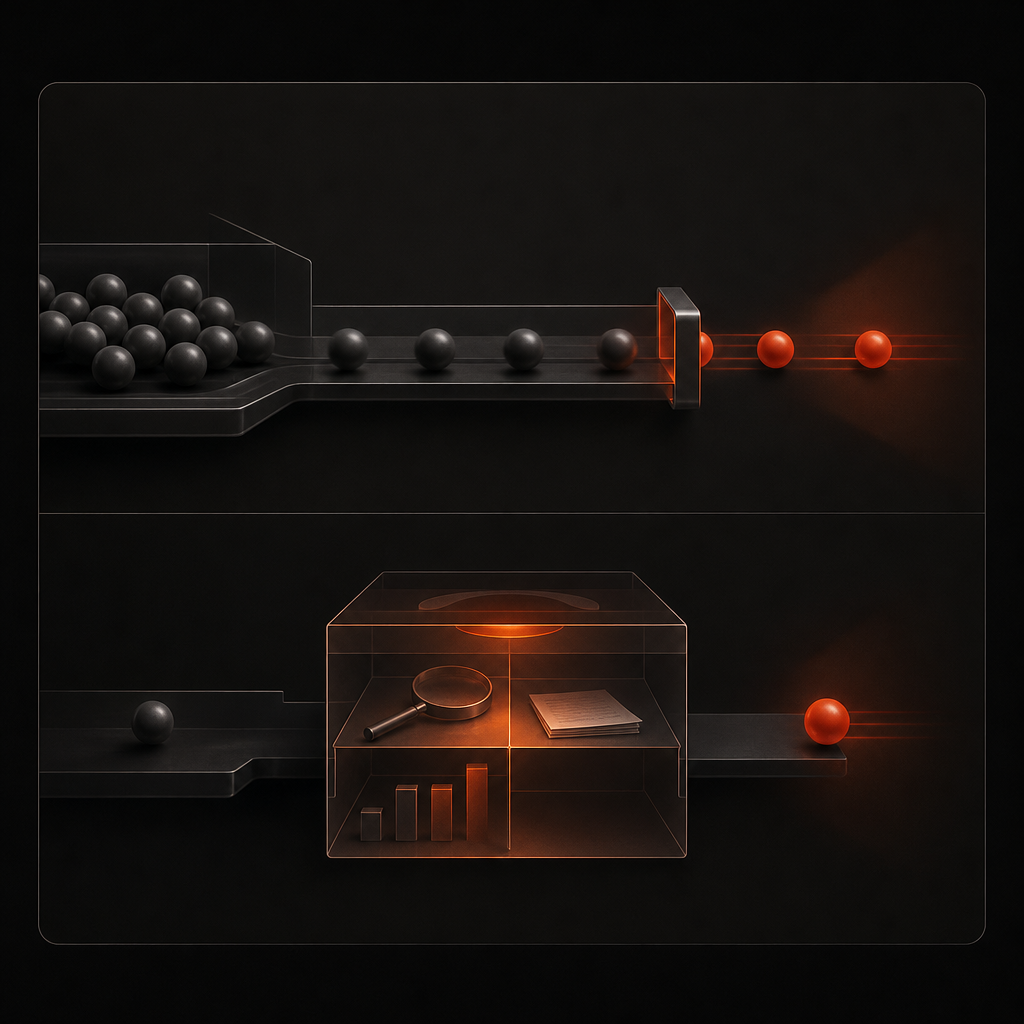
A sequencer sends at volume. An AI outbound research agent researches before it sends.
Sequencers are execution tools. You give them a list, a template, and a schedule, and they fire emails at scale. They are good at consistency and volume. They are not good at knowing whether a prospect actually fits your profile or whether the email says anything worth reading.
The distinction matters because personalization at scale is not the same as research at scale. Inserting a first name and a company name is personalization. Reading a company's recent funding announcement, mapping the buying committee, and writing a message that references a specific business problem is research. Only one of those earns a reply from a senior buyer. (1)
An ai outbound research agent does the second thing. A sequencer does the first.
Who is NORA, and why does she matter here?
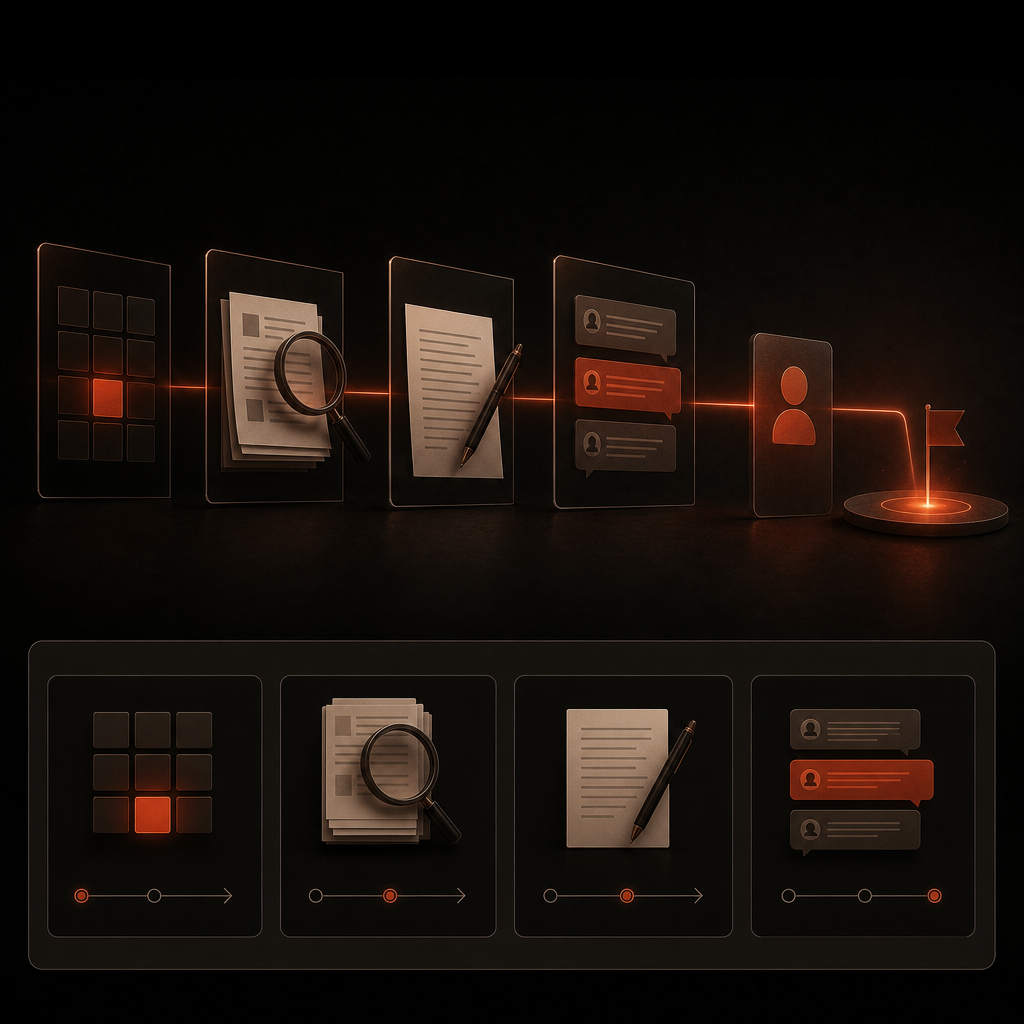
NORA, Nagent Outbound Research and Activation, is the AI teammate who leads the Nagent Sales team's outbound function end to end.
She finds accounts that fit the workspace's customer profile, researches each into a dossier with sources, drafts outreach (which a person approves before it sends), reads replies, and hands a qualified prospect to a human with a meeting ready to run. (1)
NORA operates across coordinated tools, grouped into capabilities: ICP targeting, account research, buying committee mapping, email drafting, reply classification, and attribution. Every action she takes declares the autonomy level it needs to run on its own; below that level it waits for a person, and every send waits for a person's approval. Autonomy is earned, not deployed.
That last point is worth sitting with. Most "AI outbound" tools hand you a list and a draft and call it done. NORA's work is auditable: every account sourced, every dossier built, every message drafted, every reply classified. You can see exactly what she did and why.
What does the research step actually produce?
Each account gets a sourced dossier before any email is written.
The dossier includes what NORA found about the company: its profile, the signals that triggered inclusion, the people in the buying committee, and the specific detail that makes the outreach relevant. The email is then written from that dossier, not from a template with variable fields.
This is the structural difference. A sequencer starts with the message. An ai outbound research agent starts with the account. The message is an output of the research, not the input to it.
The practical result: outreach that references something true about the prospect's situation, not something generic about your product's features.
Why does human approval matter in this workflow?
Human approval is the trust mechanism that keeps outreach on-policy and on-brand.
NORA drafts. A person approves. Nothing sends without that step. This is not a limitation of the technology. It is a deliberate design choice. Outbound that goes wrong at scale goes very wrong: wrong accounts, wrong tone, wrong claims. The approval gate is what prevents that.
It also means the agent gets better over time. Every approval or rejection is a signal. The Nagent platform ties outcomes to trust, so each action has a recorded result that informs how the agent operates on the next campaign.
This is the mechanism that separates a genuine AI agent platform from a prompt template that fires emails. One learns from outcomes. The other just fires.
Is an AI outbound research agent right for every sales team?
It fits founders and heads of sales who run outbound without a dedicated research function.
If your team is spending more time on list building and research than on conversations, an ai outbound research agent addresses the structural problem directly. The bottleneck in most seed to Series B outbound is not the number of emails sent. It is the quality of the accounts targeted and the relevance of the first message.
NORA is built for exactly that situation: a team that needs the output of a research desk without the headcount.
If your team already has a dedicated SDR team doing deep account research and the problem is purely execution speed, a sequencer handles that. But if the problem is that research is being skipped because it takes too long, an ai outbound research agent is the right category.
What should you look for when evaluating an AI outbound research agent?
Four things separate a genuine research agent from a list-building tool with a chat interface.
Research depth. Does the agent produce a sourced dossier per account, or does it return a company name and a LinkedIn URL?
Human approval gates. Can you review and approve outreach before it sends, or does the agent operate without a checkpoint?
Reply handling. Does the agent read and classify replies, or does it hand everything back to a human inbox?
Attribution. Can you trace a booked meeting back to the account source, the dossier, and the message that generated the reply?
NORA covers all four. The Nagent platform records every action so the full chain from ICP to booked meeting is auditable.
Related reading
Frequently Asked Questions
What is an AI outbound research agent?
An AI outbound research agent is a software agent that finds accounts matching your ideal customer profile, researches each into a sourced dossier, and drafts the first outreach email for a human to approve. It is distinct from a sequencer because research drives the outreach, not a template. On Nagent, NORA performs this function.
How is an AI outbound research agent different from a sales sequencer?
A sequencer executes outreach at volume from a list and a template you provide. An AI outbound research agent builds the list, researches each account, and writes a message grounded in what it found. The research step is what makes the outreach relevant to a senior buyer.
Does NORA send emails without human approval?
No. NORA drafts outreach and waits for a person to approve before anything is sent. This approval gate is a deliberate design choice that keeps outreach on-policy and prevents errors from scaling.
What does NORA hand off to a human?
NORA hands a qualified prospect to a person with a meeting ready to run. Her work covers sourcing, research, drafting, and reply classification. The conversation itself, and the close, belong to the human.
Who is an AI outbound research agent built for?
It is built for founders and heads of sales who run outbound without a dedicated research desk, and for account executives who receive the meetings NORA books. If the bottleneck in your outbound is research time rather than execution speed, this is the right category.
What should you do next?
If your team is skipping research because it takes too long, NORA is built for that problem exactly. Book a demo with Nagent and see how she works in practice.